What Energy Jobs Are Capital-Intensive?

The foundation of the modern energy sector rests upon infrastructure—massive physical assets that require enormous sums of money to build, maintain, and eventually retire. When we discuss which energy jobs are capital-intensive, we are really discussing the sectors where the upfront investment, the capital expenditure (CapEx), dwarfs the ongoing operational expenses (OpEx) for a significant period. [6] This dynamic shapes hiring, project timelines, and ultimately, the economic profile of the jobs created.
# Asset Scale
Capital intensity in energy is fundamentally about scale and permanence. Whether it is a nuclear power station, a sprawling network of oil and gas pipelines, or utility-scale solar farms spread across acres of desert, these projects demand billions of dollars locked up in physical equipment for decades. [5][6] This contrasts sharply with lower-capital sectors where operating costs, like staffing or fuel purchase agreements, form a larger percentage of the total expenditure. The jobs associated with these massive outlays are often those requiring highly specialized engineering, complex project management, and highly skilled trade labor during the construction phase, followed by long-term operational teams. [1][9]
The International Energy Agency noted that global energy employment reached nearly 13.7 million jobs in 2022, with significant portions tied to sectors defined by their heavy physical footprint, such as oil and gas, electricity generation, and infrastructure modernization. [3] The sheer dollar volume required to place that much equipment—be it drilling rigs, transmission towers, or battery gigafactories—is what defines these roles as capital-intensive.
# Fossil Fuel Anchors
Historically, the most obvious capital-intensive domains have been the fossil fuel industries, particularly oil and gas extraction and processing, alongside nuclear power generation. [3] These areas necessitate building enduring, high-risk infrastructure in often challenging environments.
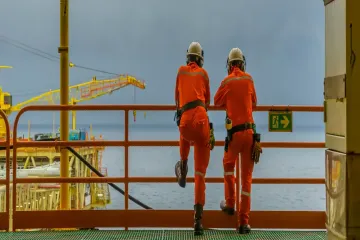
For instance, developing an offshore oil platform or a Liquefied Natural Gas (LNG) terminal involves years of planning, complex permitting, and the fabrication of components that must withstand extreme conditions. [6] A Petroleum Engineer involved in such a project is inherently tied to a capital-intensive role because the success of their design dictates the viability of an asset worth potentially tens of billions of dollars. [1] Similarly, roles in mining, such as a Mining Engineer or Geoscientist, are positioned within capital-heavy environments, as opening a new mine requires immense initial investment in earthmoving equipment, site preparation, and processing facilities. [1]
Nuclear energy remains perhaps the benchmark for upfront capital requirements. Building a nuclear power plant involves unprecedented regulatory oversight and construction timelines that stretch over a decade or more. While the fuel costs (OpEx) are relatively low once operational, the initial financing and engineering complexity place nuclear power generation firmly at the top of the capital intensity scale. [3][4]
# Renewable Infrastructure
The transition toward cleaner energy sources has not reduced capital intensity; rather, it has shifted where that capital is being deployed. Utility-scale renewable projects are fundamentally capital-intensive because the "fuel" (sunlight or wind) is free, meaning the entire cost basis rests on manufacturing, transporting, and installing the physical capture mechanism. [8]
Projects such as vast wind farms, especially offshore wind installations, require specialized vessels, deep-sea foundations, and intricate grid interconnection systems—all demanding massive initial CapEx. [8] Utility-scale solar arrays cover huge swaths of land, requiring significant investment in panels, inverters, tracking systems, and extensive local transmission upgrades to bring the power to the existing grid structure. [8]
The nature of this capital commitment in renewables offers an interesting contrast to traditional fuels. While a massive LNG terminal might be financed based on long-term contracts assuring revenue streams over 30 years, renewable projects, particularly merchant power producers, face greater market exposure to price fluctuations and policy shifts, subtly changing the risk profile attached to that initial capital outlay. [6] An investment in a battery storage facility, crucial for grid stability alongside intermittent renewables, is another clear example; the cost is almost entirely in the battery cells and associated power management electronics, not in a continuous fuel supply. [2]
# The Role of Transmission and Distribution
Often overlooked when focusing solely on generation, the transmission and distribution (T&D) network represents a massive, enduring pool of capital-intensive work. The entire energy system depends on moving electricity from where it is generated—be it a solar farm in a remote desert or an offshore wind hub—to population centers. [5][9]
The California energy workforce study highlighted the need for continued investment in modernizing this infrastructure, which involves upgrading substations, reinforcing transmission lines, and building smart grid capabilities. [2] These are not quick construction jobs; they are multi-year infrastructure programs requiring civil engineers, high-voltage electricians, and specialized project managers. [1] The work involved in maintaining and expanding this network—a necessity highlighted by the sheer volume of electricity jobs tied to the utility sector—ensures that capital intensity remains a defining characteristic of grid-related employment. [3][5]
Consider the economic inertia this creates: once a major inter-state transmission line is built, it must be maintained for forty or fifty years. This commitment locks in a steady demand for a specific set of operational and maintenance jobs in the regions the line traverses, long after the initial, capital-heavy construction crews have moved on. [5] This creates a long tail of employment tied directly to the initial, massive capital deployment.
# High-Skill Jobs in Capital Projects
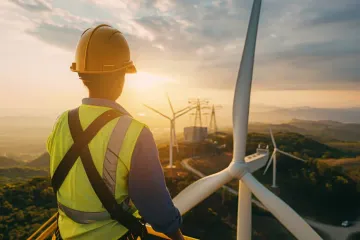
The capital-intensive nature of the industry naturally concentrates high compensation at the engineering and management levels, as these roles are responsible for safeguarding that massive upfront investment. [1] Petroleum Engineers, for example, consistently appear among the highest-paying energy jobs. [1] This high compensation reflects the specialized knowledge required to successfully execute projects where a small design flaw can lead to billions in losses or multi-year delays. [6]
Furthermore, the shift in capital focus affects which high-skill jobs are in demand. As investment flows toward grid modernization and renewables, the demand for roles focused on materials science, large-scale power electronics, and complex environmental permitting for new sites grows. [2][8] While traditional roles remain vital for existing assets, the growth in capital-intensive jobs is often skewed toward those supporting the energy transition's physical build-out. [3]
For example, in the Pacific region, job growth is predicted in areas related to constructing and maintaining distributed energy resources and grid resiliency, indicating that capital spending is diversifying away from solely centralized, conventional generation. [2]
# Financial Structuring and Risk
Understanding capital intensity also requires looking at the financial mechanics of the energy sector, which influences job security and location. Because these assets have such long lifespans, financing them often requires navigating complex regulatory landscapes, especially in the utility space where returns are rate-regulated. [4][5]
The initial capital outlay dictates the required debt service and expected return on equity, which forms the basis of utility rate setting. [5] This process means that jobs supporting regulatory compliance, financial modeling for large-scale project financing, and asset management are themselves inherently tied to the capital structure, even if the individual isn't welding pipe or programming a turbine controller. They are managing the financial implications of the billion-dollar investments required to deploy the physical assets. [4]
# Project Execution Blueprint
Success in executing these capital-intensive energy projects hinges on mastering the deployment process itself. A successful blueprint for these undertakings involves rigorous planning across the entire lifecycle, from initial concept evaluation through to commissioning. [6]
Key stages that demand intensive specialized labor include:
- Front-End Engineering Design (FEED): Defining the precise scope and engineering specifications, which locks in costs and timelines. [6]
- Procurement: Securing specialized, often custom-fabricated equipment (e.g., large transformers, specialized drilling equipment) where lead times can be years. [6]
- Construction and Installation: Mobilizing massive workforces, often involving specialized trades that must be temporarily scaled up significantly for the construction phase of a power plant or pipeline. [1][9]
The management of these phases is what translates raw capital into physical, functioning energy production. A failure to properly manage the transition between the design phase and the physical construction phase is often what leads to the significant cost overruns characteristic of these high-CapEx endeavors. [6]
# Job Profiles Across the Spectrum
To put the discussion into tangible terms, we can see the direct link between asset type and job profile.
| Asset Type (High Capital) | Characteristic Investment | Example Job Roles |
|---|---|---|
| Natural Gas Pipeline/LNG | Route acquisition, right-of-way, compressor stations [1] | Pipeline Engineer, Geoscientist [1] |
| Utility-Scale Solar/Wind | Panel/Turbine manufacturing, land acquisition, interconnection [8] | Renewable Project Manager, High-Voltage Electrician [2] |
| Nuclear Power Plant | Reactor vessel, containment structure, long permitting cycle [3] | Nuclear Engineer, Construction Manager [1] |
| Grid Modernization | Substation rebuilds, advanced metering infrastructure [5][9] | Grid Operations Specialist, Senior Electrical Engineer [9] |
It is worth noting that while construction jobs are intense spikes in employment, the long-term, stable jobs are often found in the operational and maintenance phases. [3] These operational roles, tied to assets that might last 40 years or more, owe their existence entirely to the initial, colossal capital expenditure that established the facility in the first place. [5]
# Workforce Needs and Future Capital
The energy job market is currently navigating a significant transition driven by policy and capital flows. [2][4] As existing fossil fuel assets retire or are constrained, and as new clean energy infrastructure is built, the nature of the capital deployment shifts. California’s experience, for example, points to growing needs in areas like energy storage, transmission management, and specialized manufacturing related to renewables. [2]
This evolution means that while traditional engineers are still needed to manage existing, heavily capitalized fossil fuel infrastructure, new educational and vocational training pipelines must align with the skills needed for the next wave of capital deployment—digital grid management, offshore wind logistics, and advanced materials handling. [2][3] The jobs that are capital-intensive are not static; they move with the capital itself, following where the next multi-billion dollar project is slated to break ground. Whether that ground is for a new carbon capture facility or a new utility-scale battery park, the jobs created around that commitment are fundamentally capital-intensive by nature.
Related Questions
#Citations
The 15 Best Paying Jobs in Energy: Your Complete Salary Guide for ...
California's Energy Workforce: Needs and Opportunities
Overview – World Energy Employment 2022 – Analysis - IEA
Green Energy Jobs in the US: What & Where?
[PDF] Powering America - Edison Electric Institute
Energy Capital Projects: A Blueprint for Success - Accenture
High-Energy Jobs - Illinois Country Living Magazine
Capital Intensive Renewable Projects → Area → Sustainability
Career Paths at NorthWestern Energy