Why choose a creative career?

Choosing a creative career path often feels less like making a decision and more like answering an inherent necessity. For many who gravitate toward fields like art, design, writing, or music, the choice isn't a rational calculation weighed against safer alternatives; it is often described as a fundamental need to express or create. It is the distinct sensation of waking up excited by the prospect of the day's work that solidifies this professional commitment for many practitioners. This driving force transcends standard career motivations like stability or salary, positioning creative work as a core component of personal identity rather than just an occupation.
# Deep Calling
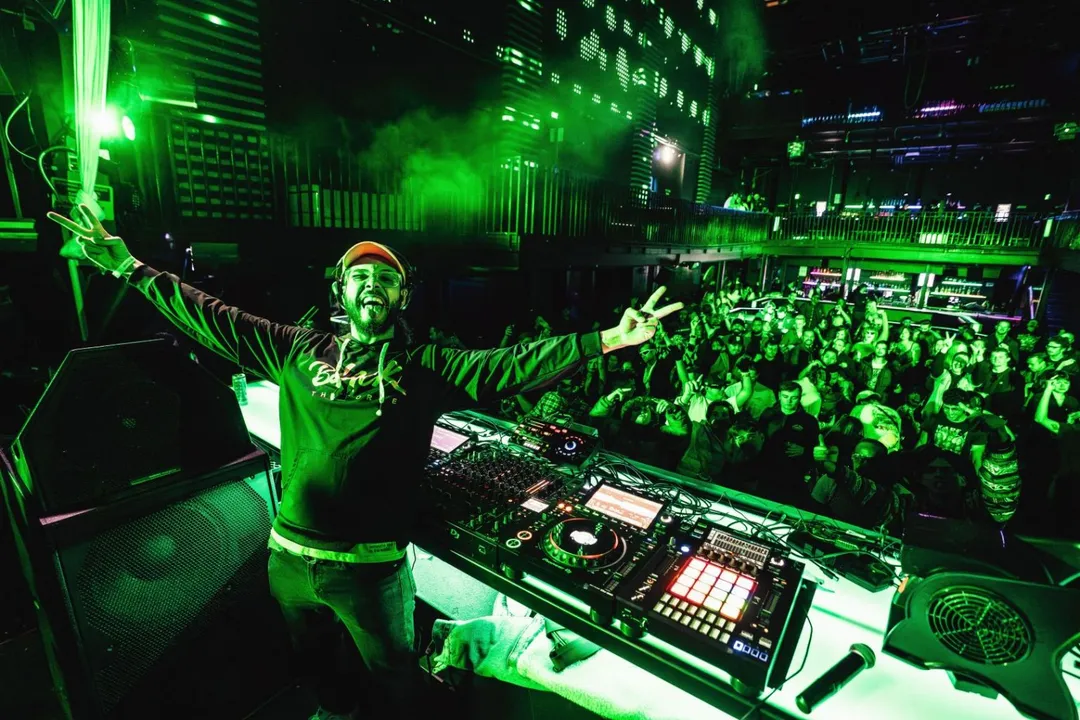
The motivation driving individuals into creative professions frequently centers on an unshakeable internal pull, sometimes described as a "calling" that feels destined. This intense feeling suggests that pursuing anything else would result in a profound sense of misalignment or loss. When creatives reflect on their journey, they often note that the work simply had to be done, regardless of external pressures or perceived stability risks.
This deep-seated passion translates into a willingness to endure the often-unpredictable nature of creative industries. One recurring sentiment is the idea that creative work is not just something people do, but rather something they are. For example, an individual might not simply say they are a painter; they are a painter in the way someone else is necessarily an accountant or an engineer. This intrinsic motivation acts as a powerful ballast when external validation or financial rewards are inconsistent.
The sheer joy derived from the process itself is often cited as a key reward that outweighs other considerations. Unlike roles where satisfaction is purely outcome-dependent, the creative act—the sketching, the composing, the writing—provides immediate and renewable fulfillment. When contrasting this with traditionally high-paying paths that might feel emotionally draining, the creative choice prioritizes psychological well-being over maximizing monetary gain, even when the creative field itself can offer substantial financial rewards. The key differentiation is that in a creative career, the "work" itself is the source of energy, not just the destination.
# Meaning Creation

Beyond personal satisfaction, a powerful reason for selecting a creative field is the desire to make a tangible impact on the world or on an audience. This impact is not always about changing policy or inventing technology; rather, it is about connection, communication, and emotional resonance. Creatives aim to produce work that prompts thought, evokes feeling, or simplifies a complex idea for others.
Seeing one's creation connect with another human being provides a specific type of validation that an internal metric of success cannot replicate. For instance, an artist might find immense reward when a viewer interprets their work in a way the artist never intended, proving the work has taken on a life of its own. Similarly, a designer who crafts an intuitive user interface is solving a human problem, making daily life easier or more pleasant for countless users they will never meet. This ability to leave a lasting impression, whether through a photograph, a piece of music, or an architectural design, provides purpose.
This search for meaning often leads creatives to reject structures where their output feels impersonal or purely transactional. They seek roles where the message is as important as the medium.
# Measuring Subjective Impact
It is challenging to quantify the value of emotional or aesthetic contribution, yet this is often the true measure of success for those in these fields. If we were to create a hypothetical framework for weighing job satisfaction, a creative worker might score highly on Intangible Output Value (IOV)—the ability to provoke thought or feeling—while potentially scoring lower on Predictable Financial Return (PFR) in the early stages. The enduring commitment stems from the belief that a high IOV career, even with lower PFR, is ultimately richer than a high PFR job with minimal IOV. This internal trade-off is a hallmark of choosing creative work.

# Work Control

The structure of a creative career often appeals to those who value autonomy and the freedom to direct their own professional life. Many creatives express a strong aversion to the rigid constraints of the traditional corporate environment, specifically the standard nine-to-five schedule and hierarchical reporting structures.
In a creative setting, whether freelance or running an independent studio, the individual often dictates the pace, the setting, and the direction of their projects. This control over the how and when of work allows for a lifestyle that better integrates with personal energy cycles and life needs. A photographer might choose to shoot only during the "golden hour," or a writer might find their best output at two in the morning; a creative career path makes accommodating these natural rhythms possible.
Furthermore, creative autonomy extends to the what—the actual subject matter and execution style. Being able to maintain creative integrity, refusing to compromise core artistic vision for market demands, is vital for sustaining motivation. If one feels they are merely executing someone else's vision without personal input, the drive diminishes quickly. This self-direction transforms the workplace from a mandated location into a chosen environment for self-expression.
# Path Deviation
A significant component of choosing a creative career involves consciously pushing back against societal or familial expectations regarding "sensible" professions. For many, the creative path represents a conscious rejection of the conventional trajectory that prioritizes high income or established status above all else. This resistance is not always confrontational; sometimes it is simply a quiet decision to follow a less-worn map.
When discussing this choice, many creatives acknowledge that they deliberately sidestepped paths that offered clearer, more linear success metrics. This might involve declining roles in finance or law to pursue skills in film, illustration, or craft. The perceived risk associated with the creative field—the irregularity of income, the required self-marketing—is accepted as a necessary cost for aligning one's life with one's true inclinations.
For those contemplating this switch from a more traditional field, the consensus among established creatives is that while financial stability requires discipline and planning, the emotional return on investment for following the creative urge is unmatched. The trade-off isn't about avoiding hard work; it's about ensuring the hard work is directed toward something that intrinsically matters to the individual.
# Navigating the Practicalities of Deviation
Steering away from the standard road requires developing ancillary skills that aren't purely artistic. A creative who chooses this path must become proficient in self-management. This includes learning basic business acumen—invoicing, contract negotiation, and time tracking—which can sometimes feel like a necessary evil, yet it is precisely what secures the autonomy sought in the first place. An artist might spend 60% of their time creating and 40% marketing and admin, but that 40% is what keeps the 60% pure.
Here is a simple checklist many successful independent creatives seem to follow, synthesized from various experiences:
- Master the Core Skill: Achieve a recognized level of excellence in the craft itself.
- Build a Portfolio: Create work that clearly demonstrates style and capability, even if unpaid initially.
- Learn Business Basics: Understand invoicing, taxes, and client communication protocols.
- Establish a Financial Buffer: Save enough to cover at least six months of living expenses before transitioning fully, if possible.
- Network Authentically: Connect with peers and potential clients based on shared respect for the craft, not just transactional needs.
This practical preparation transforms a risky leap into a calculated professional shift, respecting the necessity of structure even while rejecting the standard structure.

# Sustaining Practice
Choosing a creative career is not a static decision; it demands continuous effort to keep both the skill and the inspiration fresh. The environment of creative work mandates constant learning and evolution because the very nature of creativity involves pushing boundaries and experimenting. Unlike roles where proficiency might mean mastering a set procedure, creative mastery requires perpetual reinvention.
Stagnation is the antithesis of a creative career. Professionals must actively seek new techniques, study different art forms, and expose themselves to diverse perspectives to fuel their output. This requirement for perpetual self-education can be exhausting, yet it is also what keeps the work engaging over decades. The burnout that can occur is often less about the workload and more about running dry of inspiration or facing too many creative compromises.
One crucial element for longevity, often overlooked by outsiders, is cultivating resilience against negative feedback and self-doubt. Because the work is so personal—it is an extension of the self—criticism can feel like a deep personal attack. Learning to differentiate constructive criticism from noise, and developing a thick skin without developing creative calluses, is a necessary, ongoing lesson for any creative professional.
# The Creative Ecosystem
While the final product might appear singular—a solo performance, a single book—the actual maintenance of a creative career requires engaging deeply with the broader creative community. This is where true "authority" and sustained relevance are often forged, moving beyond mere talent.
It’s a common misperception that creative work is solitary. In reality, the most successful individuals often exist within supportive ecosystems. They collaborate, they critique each other’s rough drafts, and they share advice on navigating contracts or software updates. Think of it this way: the solitary act of painting is supported by the collective knowledge base of art history, modern material science (paint chemistry), and the shared marketing strategies discussed in online forums among peers. Building relationships with fellow creatives who are navigating similar non-linear paths provides a unique form of professional security that a standard salary cannot offer, an informal insurance policy against the inevitable lulls in demand. Investing time in mentoring emerging artists or collaborating on tangential projects, even when not immediately lucrative, builds the kind of professional goodwill that sustains a career through leaner years.
# Comparison with Traditional Paths
When weighing a creative career against more traditional, salary-based jobs, the core divergence lies in the definition of risk and reward. A traditional path offers low risk of immediate financial collapse but carries a high risk of long-term existential dissatisfaction for the truly creative person. Conversely, a creative path often presents higher short-term financial risk but promises a higher long-term emotional reward, assuming the individual is dedicated and skilled.
In many high-paying, conventional sectors, the satisfaction derived is often linked to achieving measurable, external goals—closing a deal, hitting quarterly targets, securing a promotion. While these achievements are gratifying, they often remain detached from the individual's innermost sense of purpose. Creatives find that their goals are intrinsically linked to self-expression, making the pursuit inherently meaningful even when the immediate external reward is small.
It is a fundamental difference in what is being sold:
| Career Type | Primary Value Sold | Primary Source of Motivation | Risk Profile |
|---|---|---|---|
| Traditional | Time/Expertise within defined structure | External recognition, stability | Low financial volatility |
| Creative | Unique vision/Aesthetic expression | Internal fulfillment, impact | High financial volatility |
This table illustrates that the decision rests on prioritizing one's personal economy—the internal budget of happiness and purpose—over the external financial economy. For those who choose the creative route, the desire to build a life around their work, rather than simply fitting their work into their life, becomes the deciding factor.
Ultimately, the decision to choose a creative career is a commitment to a specific way of experiencing the world, one centered on continuous creation, self-direction, and the pursuit of work that feels profoundly necessary. It is a choice made by those who value the authentic expression of their unique perspective above the comfort of predictability.
Related Questions
#Citations
Artists & creatives on why they pursued a creative career
Should I choose a high-paying career path I'm not passionate about ...
Why You Should Choose A Creative Career Over Traditional Jobs
Why do you want to have a career doing something creative? - Quora
How A Creative Career Can Change Your Life
Why Creative & Tech Careers Are Worth Every Cent | SAE
Artists & creatives on why they pursued a creative career
Why did you pursue an artistic or creative career? - SHOUTOUT HTX
Why did you pursue an artistic or creative career? - shoutout arizona