What qualifies you for a senior position?

The attainment of a "senior" designation in a job title signifies much more than simply having spent a significant number of years in a field. It marks a distinct shift in responsibility, scope of influence, and the expected level of autonomy within an organization. While job titles can sometimes be inflated or vary widely based on company culture or size, the underlying expectation is consistent: a senior professional operates at a higher tier of competency and impact.
For many employees, the progression from entry-level to mid-level, and finally to senior status, is a primary career goal. Understanding the specific qualifications for that senior leap is key to making a targeted professional development plan.
# Title Meaning
The word "senior" attached to a title generally implies that an individual has reached a level of expertise and experience that positions them as a mature, independent contributor capable of leading projects or mentoring others. A senior role often means you are expected to handle complex issues without constant supervision and that your primary value lies not just in doing the work, but in shaping the work.
In many contexts, seniority is tied to the complexity of the problems you are entrusted to solve. A mid-level employee might solve a defined problem handed to them; a senior employee might be expected to define the problem first, identify potential solutions, and then implement the best path forward.
However, the application of the term is not perfectly standardized. Some companies use senior titles liberally, perhaps to attract talent or justify higher salaries, leading to situations where a "Senior Associate" at one firm might be equivalent to a "Mid-Level Specialist" elsewhere. Conversely, in highly technical fields, the senior designation might strictly require mastery over a specific, deep skillset or technology stack. It is crucial to look past the label and examine the actual responsibilities outlined in the job description or expected by the management team.
# Experience Thresholds
There is no universal time requirement that automatically qualifies someone for a senior position. While some career paths might see an employee reach this level after three to five years, others might require a decade or more of dedicated work. The duration spent in a role is often a secondary indicator; the primary indicator is the quality and breadth of the experience gained.
People with senior titles often report that achieving the status feels less about hitting an arbitrary anniversary and more about a demonstrable shift in capability and mindset witnessed by peers and managers. One person noted that moving into a senior role involved shifting from needing validation on their approach to simply owning the outcome, regardless of the method used.
If an individual has consistently performed above expectations, taken on responsibilities outside their immediate job scope, and proactively addressed systemic issues in their previous roles, they might qualify for a senior position faster than someone who has simply logged the required years without seeking out complexity.
The distinction is subtle but important: tenure gets you in the room to be considered, but demonstrated mastery earns you the title.
# Essential Senior Characteristics
Qualifying for a senior role requires developing specific characteristics that differentiate you from colleagues operating at intermediate levels. These often center around autonomy, judgment, and influence.
# Autonomy and Ownership
Senior individuals are expected to operate with a high degree of independence. This means moving from asking how to do something to communicating what you have done and why. You should be capable of taking a vague goal, breaking it down into manageable steps, executing those steps, and presenting the final result with supporting documentation and rationale. This ownership extends to anticipating future problems, not just reacting to present ones.
# Technical Depth
While generalist roles exist, true seniority in specialized fields demands deep expertise. You should possess the knowledge necessary to act as the subject matter expert when issues arise that stump less experienced colleagues. This depth allows you to make informed decisions under pressure.
# Mentorship and Guidance
A significant aspect of seniority involves scaling your impact beyond your own task list. This often means mentoring junior staff, reviewing their work constructively, and helping to elevate the team's overall capability. You become a resource multiplier for the organization.
# Decision Making
Senior roles hinge on making sound judgments when information is incomplete—a scenario often referred to as operating in the "gray area". This requires excellent analytical skills combined with practical business understanding.
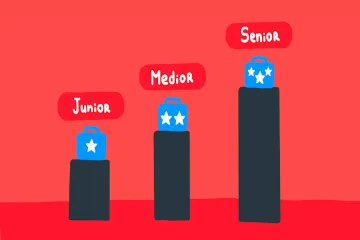
The shift in decision-making scope can be summarized by comparing responsibilities:
| Level | Typical Scope of Impact | Key Deliverable Focus |
|---|---|---|
| Junior | Single task completion; learning processes | Accuracy and adherence to instructions |
| Mid-Level | Defined project segment; independent task execution | Efficiency and timely delivery |
| Senior | System/process improvement; team outcomes | Strategic alignment and risk mitigation |
# Organizational Ambiguity
One of the least discussed, yet most critical, qualifiers for a senior role is the ability to navigate and resolve organizational ambiguity [^original_insight_2]. Junior staff are often shielded from unclear mandates or cross-departmental conflicts. Senior professionals, however, are expected to step into situations where stakeholders disagree, requirements are fluid, or the path forward is not documented, and then create clarity through consensus-building and pragmatic structuring. This ability to bring order to chaos, often without a direct organizational mandate to do so, truly distinguishes the senior contributor.
# Perception Versus Reality
It is important to recognize that the perception of what makes someone senior is often shared between the individual and the employer. In some environments, the title is granted primarily based on technical skill, whereas in others, demonstrated leadership potential outweighs pure technical mastery.
For instance, someone might be a technically senior engineer—the best coder on the team—but if they struggle to communicate complex designs to non-technical stakeholders or refuse to onboard new hires, they might be stalled at a senior-individual-contributor level without ever moving into a true leadership track. Conversely, someone who excels at translating business needs into technical roadmaps and managing stakeholder expectations might earn the senior title even if their day-to-day coding output is less frequent than a peer’s.
A common viewpoint shared by experienced professionals is that the senior title feels earned when you stop thinking about your next promotion and start thinking about how to make the next generation of hires successful. This mindset shift—from self-focus to organizational impact—is frequently cited as the internal marker of readiness.

# Demonstrating Readiness
To qualify for the next step, one must consistently operate at that next level before receiving the title. This is an actionable strategy for achieving advancement.
- Seek Complexity: Actively volunteer for the most challenging, ill-defined tasks that others avoid. These high-risk, high-reward assignments are where senior judgment is forged and displayed.
- Document Impact: Move beyond simply logging completed tasks in performance reviews. Instead, document the consequences of your work. Did your process change save the team X hours per week? Did your architectural suggestion reduce system downtime by Y percent? Quantifiable impact provides objective evidence of senior-level contribution.
- Proactive Knowledge Sharing: Don't wait for requests to mentor. Offer to run internal training sessions, write foundational documentation, or host "lunch and learns" on topics where you have deep expertise. This publicly establishes you as a go-to expert.
- Understand the Business Context: A mid-level specialist focuses on executing their tasks correctly. A senior professional understands why those tasks matter to the business's bottom line, strategy, or customer retention. If you are unsure how your team's daily output affects company revenue or strategic goals, seek that information out immediately.
Ultimately, qualification for a senior position is a demonstration of proven capacity to handle a broader scope of responsibility, exercise superior judgment in ambiguous situations, and actively increase the effectiveness of the team around you, regardless of how long you have been employed. It's a validation of established expertise, not just accrued time.
Related Questions
#Citations
What Is the Meaning of Senior in Job Titles? | Indeed.com
Senior Level – Definition, Overview & FAQ | Recruiteze
Those of you with a “senior” in your job title, do you use it ... - Reddit
Ten Ways To Know You're In A Senior Role - Steven Savage
How long do you have to work at a place to be considered ... - Quora
What does it mean to have "Senior" in your job title? Globally only 12 ...
Senior Level: Definition, process, and examples | JOIN
What Does The Word 'Senior' In A Job Title Really Mean?