What Are Senior-Level Jobs?

The term "senior-level job" gets thrown around frequently in the professional world, often causing confusion about what an applicant should truly expect or how an employer should define the role. While it generally signifies a position demanding substantial experience and a high degree of independent action, the exact criteria can shift dramatically based on the industry, company size, and even geographic location. [1][5] Unlike entry-level positions that focus on learning established procedures, senior roles are where individuals begin shaping the direction and solving problems that lack immediate, documented answers. [1][7]
# Defining Experience
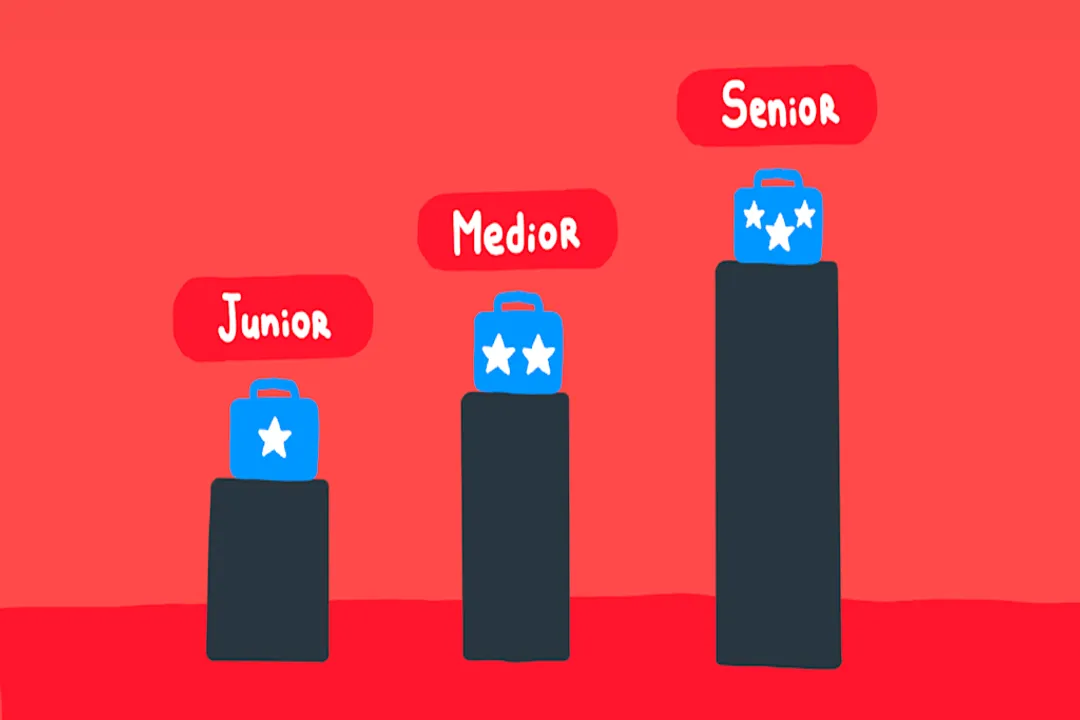
Simply logging a certain number of years in a field is rarely the sole determinant of seniority. While many senior roles informally require five to ten years of professional experience, the true measure lies in the depth and breadth of contribution during that time. [1][7] A senior professional is expected to possess a proven track record of success in their specific domain. [5]
For instance, in a technical career path, a junior employee might master a specific programming language feature, while a mid-level professional might successfully implement a module using known patterns. The senior individual, conversely, is the one who architects the entire system, chooses the appropriate technologies after weighing trade-offs, and perhaps pioneers the adoption of a new methodology within the organization. [7]
Some structured career paths clearly delineate these stages. An individual contributor track might move from Associate to Mid-Level, then to Senior, and potentially onward to Lead or Principal. [7][9] This structured progression attempts to quantify growth based on increasing impact and autonomy, rather than just tenure alone. [9] However, the experience benchmark remains flexible; in rapidly evolving fields like technology, where skills change quickly, a highly proficient individual with fewer years of experience might still qualify for a senior designation based on demonstrated capability. [4]
# Role Expectations

What separates a senior role from a mid-level one is often the shift from execution to ownership and guidance. [1][7] A mid-level employee typically executes tasks assigned within a defined scope; a senior employee defines the scope itself and directs how those tasks should be performed by others. [5][7]
Key responsibilities commonly associated with senior positions include:
- Autonomy and Decision Making: Senior staff members operate with a high degree of independence, making critical decisions within their domain without requiring constant oversight. [1][5] They are expected to anticipate problems rather than just react to them.
- Mentorship and Influence: A significant aspect of the role involves guiding, teaching, and developing less experienced team members. This transfer of knowledge helps build overall team capacity. [5]
- Handling Ambiguity: Senior roles frequently involve novel or complex challenges. The professional must be comfortable navigating situations where the path forward is unclear and must synthesize information to create a clear action plan. [1]
- Subject Matter Expertise: They serve as the go-to expert within their specific area, lending credibility and depth to project planning and problem resolution. [1]
In contrast to private sector expectations, government roles sometimes define "Senior Level" positions through specific regulatory frameworks. For example, the U.S. Office of Personnel Management (OPM) outlines specific criteria for positions classified as "Senior Level" within scientific and professional tracks, often relating to the complexity and impact on agency-wide operations, which may differ from industry standards. [6]

# Context Matters
The meaning of "Senior" is heavily contextual, which contributes significantly to job market confusion. [3] A startup, which might be trying to hire one person capable of building an entire department's foundational structure, may label that role "Senior," expecting output equivalent to what three people might achieve in a larger, more established corporation. [4]
In established, large organizations, seniority is often mapped strictly to hierarchical bands or salary grades. The title might strictly denote that the person operates at Grade X, which historically requires a certain background. [9] Conversely, in smaller or flatter organizations, the title often signifies the highest individual contributor level before someone transitions into a formal management track. [4] If an organization lacks formal management tiers, "Senior" might simply be the designation for the most experienced individual contributor who is expected to lead projects without direct reports. [4]
One interesting divergence appears when comparing these roles across national lines or between public and private sectors. While a private sector Senior Engineer might be defined by product release velocity, a Senior Analyst in a public service agency might be defined by the breadth of policy impact across multiple jurisdictions. [6] In essence, the title describes how experienced you are relative to others within that specific organizational structure, rather than providing a universal benchmark. [3]
# Progression Indicators
Understanding the typical job ladder helps clarify where "Senior" sits. This progression is generally non-linear but follows a pattern of increasing responsibility and scope. [7]
| Level | Primary Focus | Key Measure of Success |
|---|---|---|
| Junior/Entry | Learning, task completion | Accuracy and adherence to guidelines [7] |
| Mid-Level | Independent execution of known tasks | Efficiency and quality of assigned deliverables [7] |
| Senior | Ownership, problem definition, mentorship | Impact, successful navigation of ambiguity [1][5] |
| Lead/Principal | Strategy, cross-functional direction, innovation | Long-term technical vision and organizational uplift [7] |
It is worth noting that sometimes, companies post many senior-level jobs because they are looking for highly capable people who can hit the ground running immediately, minimizing the need for intensive training or ramp-up time associated with junior hires. [4] They are looking for immediate, high-level production, even if the candidate hasn't held that exact title before.
A helpful self-assessment when looking at a posting that lacks detailed progression mapping is to assess the expected risk profile of the role. Junior and Mid-level roles generally deal with known risks—things that could go wrong but are documented failure modes. Senior roles often deal with unknown risks—new technical dependencies, inter-departmental communication breakdowns, or untested market assumptions. If the job description consistently points toward creating solutions for problems you suspect the company hasn't solved yet, you are likely looking at a genuinely senior responsibility level, irrespective of the salary band. [1]

# Assessing Senior Opportunities
When evaluating a job that carries the senior designation, candidates must look past the title and assess the actual work description to ensure alignment with their career goals and experience. [3] A key differentiator between a strong senior role and one that might be mislabeled is the degree of influence over process versus output. [5]
If a job description heavily emphasizes managing small teams or writing code/reports that only affect one project, it might skew closer to a high-performing mid-level role or perhaps a specialized technical expert role, depending on the organization. [7] If the role explicitly demands setting standards for the entire department or ensuring that the output of multiple teams integrates correctly, the seniority claim is much more likely to be accurate regarding scope and impact. [1]
Furthermore, look for evidence that the company values institutional knowledge transfer. A truly senior role isn't just about the individual’s output; it’s about the enduring capability they leave behind. If mentorship or documentation is listed as a measurable output alongside technical deliverables, that indicates the role is weighted toward long-term organizational investment, which is a hallmark of senior positions across various professional services. [5]
Related Questions
#Citations
Seniority Levels in the Workplace: Types and What They Mean
Senior Level – Definition, Overview & FAQ | Recruiteze
What's with all the senior level job listings? : r/cscareerquestions
Senior Level: Definition, process, and examples | JOIN
Senior-Level (SL) & Scientific and Professional (ST) Positions - OPM
The difference between junior, medior and senior | Magnet.me (en)
Seniority Level | Different Types Of Seniority At Work
The Complete Guide to Job Level Classification: Examples, Criteria ...