What jobs exist in solid-state battery development?

The shift toward solid-state battery technology is reshaping the energy storage landscape, creating a distinct set of specialized career opportunities that go well beyond traditional lithium-ion chemistry roles. [2][5] As companies race to commercialize this next-generation power source—which promises higher energy density and enhanced safety—the demand for experts across materials science, engineering, and manufacturing has surged. [7] Finding a job in this cutting-edge sector requires understanding the specific scientific and operational hurdles these innovators are trying to overcome.
# Materials Science
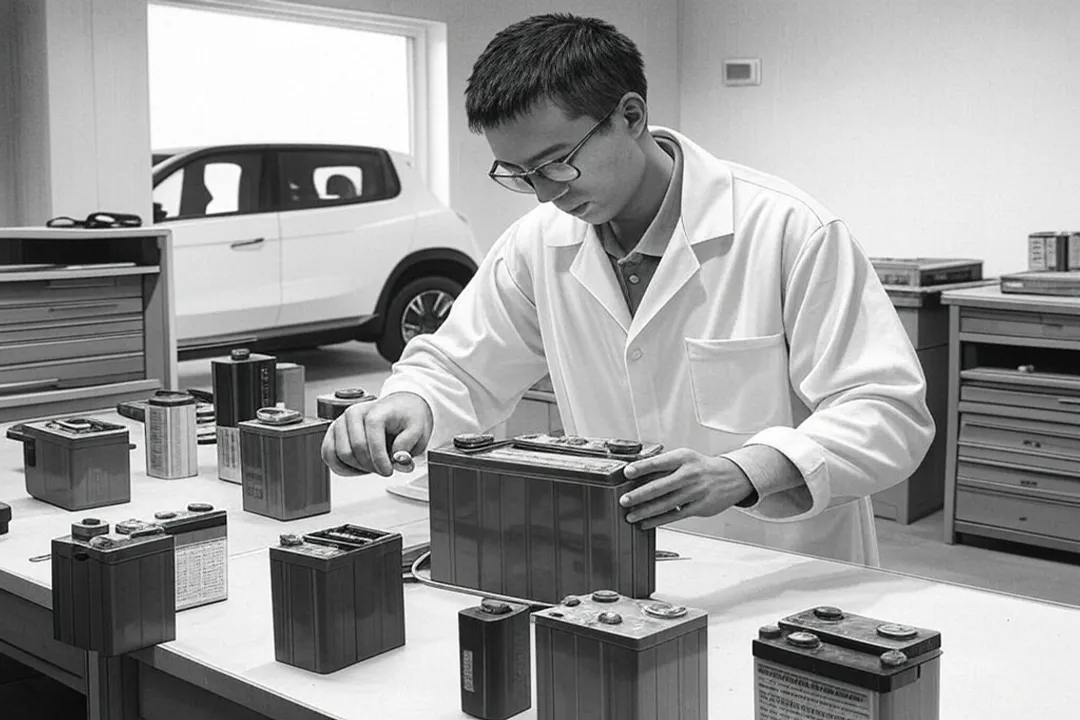
At the heart of any solid-state battery (SSB) effort lies materials research, focusing heavily on the solid electrolyte, which is the defining feature separating this technology from conventional liquid electrolyte cells. [2] This area is rich with positions for highly specialized scientists.
# Electrolyte Development
The development of the solid electrolyte itself requires significant expertise in chemistry and materials science. [2] Jobs frequently appear for researchers focused on synthesizing, characterizing, and optimizing solid electrolyte materials, whether they are sulfide-based, oxide-based, or polymer types. [2] An Associate Member of Technical Staff role focused on solid-state cathode development, for example, implies deep involvement in ensuring the material interfaces correctly with other cell components. [8] These roles often demand a background in electrochemistry or advanced materials engineering to understand ion conductivity and stability at the atomic level. [4][6]
# Electrode Focus
While the electrolyte gets significant attention, the electrodes—the anode and cathode—also require dedicated development teams. [2] A specific job opening, such as a Lead for Solid-State Battery Cathode Development at a company like Johnson Energy Storage, clearly illustrates the need for experts to manage the entire cathode creation pipeline, from initial material synthesis to process definition. [3] This involves not just chemistry but also understanding how electrode structures—like porous architectures—affect overall cell performance and longevity. [2]
| Role Category | Primary Focus Area | Typical Degree Level | Key Challenge Addressed |
|---|---|---|---|
| Materials Scientist | Solid Electrolyte Synthesis & Characterization | PhD | Achieving high ionic conductivity and stability [2] |
| Electrochemist | Interface Engineering & Testing | MS/PhD | Minimizing resistance between solid layers [4] |
| Cathode Engineer | Active Material Integration & Loading | MS/BS+Experience | Optimizing cathode structure for volume/rate capability [3][8] |
| Process Engineer | Material Deposition & Manufacturing Scale-up | BS/MS | Translating lab recipes to high-throughput production [5] |
This table highlights that while fundamental research often requires advanced degrees, the path toward manufacturing viability requires a strong cohort of engineers skilled in scaling up the delicate chemistries involved. [5]
# Engineering Disciplines
Moving the technology from a successful lab prototype to a commercially viable product necessitates a broad spectrum of engineering talent. These roles bridge the gap between pure science and mass production, demanding expertise in applying physical and mechanical principles to complex electrochemical systems. [4][6]
# Design and Modeling
Battery design engineers are crucial for creating the physical architecture of the cell. In the context of SSBs, this involves modeling the intricate mechanical stresses that arise when solid materials are stacked and cycled, as mechanical failure at the interfaces is a common roadblock. [2][4] Job postings in battery design often look for proficiency in simulation software to predict performance under various conditions before expensive physical builds are undertaken. [4] This modeling expertise, rooted in electrochemistry and solid-state physics, ensures the final design can handle real-world thermal and pressure cycling. [6]
# Process Engineering
Perhaps the most immediate need for large-scale manufacturing is in process engineering. If a company like QuantumScape or Solid Power is planning for high-volume output, they need individuals who can design, build, and run the factories. [7][9] Jobs here focus on deposition techniques—getting thin, uniform layers of solid electrolyte and electrode materials onto substrates reliably and quickly. [2] This frequently involves work with vacuum deposition, thin-film processing, or advanced ceramic processing, which are specialized areas outside of standard liquid electrolyte battery manufacturing. [5]
# Quality Assurance
As production begins, quality assurance (QA) and quality control (QC) roles become essential. In solid-state technology, quality deviations are often microscopic—a pinhole in an electrolyte layer or a contaminant atom can cause immediate failure. [2] QA engineers in this space need to develop and deploy highly sensitive metrology tools capable of inspecting every layer of every cell, ensuring consistency that far exceeds the tolerances of traditional battery assembly lines. [4]
An observation here is that unlike traditional lithium-ion manufacturing, where much of the early focus was on electrolyte mixing and filling (a liquid process), SSB manufacturing places a higher premium on precision deposition and stacking technologies, meaning skills traditionally found in the semiconductor industry are rapidly becoming critical in the battery sector. [7] This cross-pollination of skill sets is a hallmark of the current SSB hiring environment.
# Manufacturing and Operations
The actual production phase requires teams dedicated to scaling operations, supply chain management, and equipment maintenance, all tailored to the unique demands of solid-state materials.
# Manufacturing Technicians
Technicians and operators are needed to run the highly specialized equipment used for cell assembly. [9] These are not simply assembly line workers; they are often highly trained individuals monitoring complex vacuum chambers, high-temperature furnaces, or high-precision coating machines. [5] Understanding the why behind the process parameters is vital, as a minor drift in temperature or pressure can lead to catastrophic batch failure in a solid-state cell. [2]
# Facility Development
For companies rapidly expanding their footprint, job roles center on facility engineering—designing the physical plants themselves. [9] A new SSB production facility often requires unique environmental controls or entirely new types of cleanroom infrastructure due to the sensitivity of the solid electrolytes, differentiating these roles from those in traditional chemical or battery plants. [5]
# Business and Support Roles
While the technical roles drive the innovation, the industry’s growth necessitates robust business, legal, and managerial functions that understand the specific market dynamics of energy storage.
# Commercialization Track
Positions in business development, project management, and product management are tasked with taking the mature technology out of the lab and into commercial products, often working directly with automotive OEMs or grid storage partners. [5] These individuals need to translate scientific milestones—like achieving a certain cycle life at a specific energy density—into tangible product specifications that customers can rely on. [7] Experience in complex B2B technology sales, particularly within the automotive supply chain, is highly valued here.
# Intellectual Property and Legal
Given the intense competition among developers like QuantumScape, Solid Power, and others, protecting the novel chemistry and engineering is paramount. [7] Consequently, jobs in patent law and intellectual property management, specifically those with experience in materials science or electrochemistry, are essential to secure the foundational technological advantages. [5]

# Career Outlook and Trajectory
General job portals confirm a strong and growing demand for professionals specifically skilled in solid-state battery technology. [1] Searching for terms like "solid state," "battery," and "engineer" yields a wide variety of opportunities spanning from entry-level technical staff to senior leadership positions. [1][8]
A crucial element in charting a career path is recognizing the necessary foundational knowledge. While a general background in battery design is helpful, specific expertise in areas like nanoelectronics or solid-state devices provides a significant advantage, as the physics governing these systems are closely related to SSB function. [6]
If you are looking to enter this field from a related area, such as general chemical engineering, a strategic move involves dedicating time to understanding interfacial physics and electrochemistry—the two areas where SSB technology faces its stiffest scientific challenges. [2][4] For instance, rather than immediately targeting a senior role, an engineer might look for positions involving cell assembly prototyping where they can gain hands-on experience with the precise mechanical engineering required for stacking the solid components. [9] This applied experience builds the specific trust and authority needed in a sector where every material interaction matters immensely. [4]
The trajectory for many in this field often moves from fundamental academic research or national lab work directly into high-growth startups or the dedicated R&D wings of established automotive suppliers. [7] It is a sector where academic publication and industrial patent filing often happen in rapid succession, leading to a dynamic professional environment unlike more mature technology sectors.
Related Questions
#Citations
Solid State Battery Jobs, Employment | Indeed
Solid State Battery Industry Overview : r/QUANTUMSCAPE_Stock
Open Position - Cathode Dev. Lead - The Future of Energy Storage
Exploring Career Opportunities in the Battery Industry
What are the job opportunities in Solid State Devices and ... - Quora
Top 10: Solid-State Battery Developers | EV Magazine
Associate Member of Technical Staff, Solid State Cathode - Careers
Working With Us - Careers - Solid Power Inc.