What Is Career Satisfaction?

Achieving a state of fulfillment in one’s professional life is more complex than simply earning a good salary or avoiding a bad boss. It involves a deep, internal appraisal of one’s work life, spanning immediate daily experiences to long-term aspirations. This overall feeling—often labeled career satisfaction—is a psychological construct that reflects an individual’s positive or negative feelings regarding their job or career path. [1][2][5][7] It is not a single, static emotion but rather an ongoing evaluation colored by what an individual experiences versus what they expect or desire from their professional existence. [2]
# Measuring Feelings

Satisfaction, at its most basic level, is an affective and cognitive evaluation. [2] Affective refers to the emotional response—are you happy, excited, or perhaps stressed and drained? Cognitive refers to the intellectual assessment—do you believe the work is worthwhile, are the rewards fair, and is the environment supportive?. [5] When these two elements align positively, an individual is experiencing high job satisfaction. [2]
The way this state is experienced can vary significantly based on the specific dimensions of work being assessed. For instance, an employee might feel highly satisfied with their compensation package and benefits, yet deeply dissatisfied with the lack of autonomy over their projects. [2] Because satisfaction is multifaceted, assessing it usually involves examining several key areas, such as the nature of the work itself, relationships with colleagues, opportunities for advancement, and alignment with personal values. [1][4]
# Job Versus Career

A crucial distinction in this topic lies between job satisfaction and career satisfaction, a nuance often missed in casual conversation. [8] Job satisfaction tends to be immediate and focused on the current employment setting—the office, the team, the direct tasks performed today. [8] It can fluctuate quickly based on a recent success or a difficult meeting. [7]
Career satisfaction, conversely, takes a much longer view. [7][8] It measures contentment with the entire professional trajectory, including past achievements, current placement within that trajectory, and projected future growth and alignment with life goals. [2][8] It is entirely possible, for example, to experience low job satisfaction in a current, demanding role because the workload is crushing or the immediate supervisor is challenging, yet maintain high career satisfaction because that very role is providing critical, specialized experience necessary to eventually land a dream position in five years. [8] Conversely, someone might report high job satisfaction at a pleasant, low-stress company, but still experience low career satisfaction if they feel professionally stagnant and that the job is not moving them toward their ultimate purpose. [7]
An interesting area to consider is what might be termed "Sacrificial Satisfaction." This occurs when an individual consciously accepts temporary, low job satisfaction—perhaps enduring a tedious internship or a lower-paying entry-level role—because the experience gained is an essential, non-negotiable stepping stone toward a highly desired, long-term career objective. In this state, the career evaluation remains positive despite the current job evaluation being negative. [8]

# Key Contributors
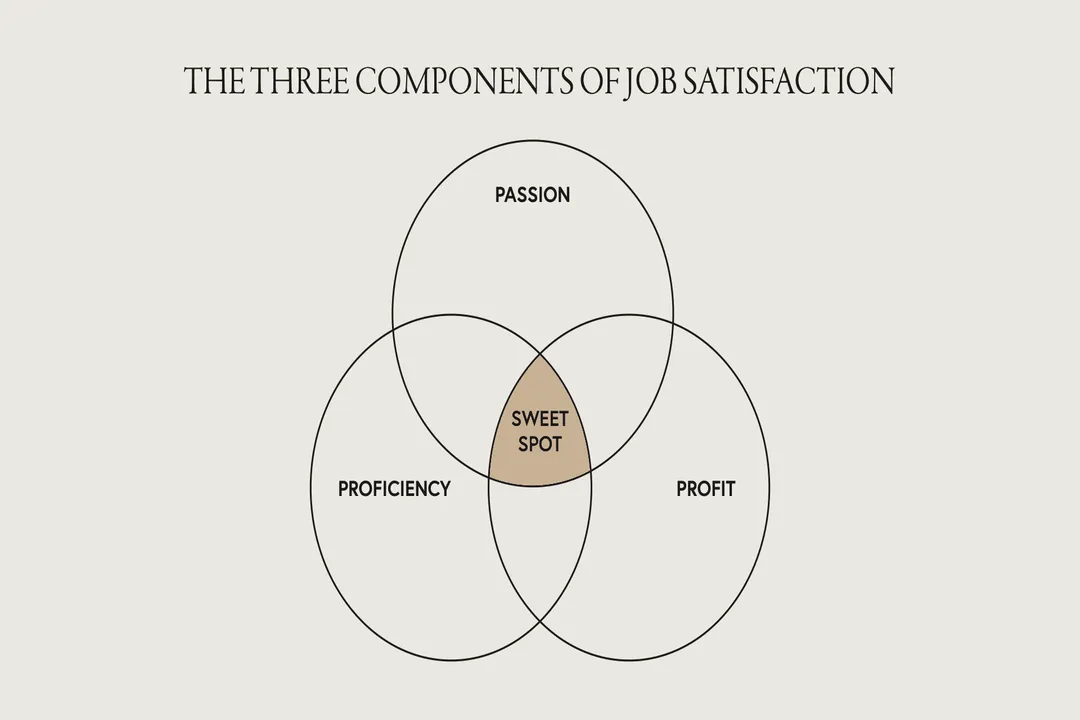
The elements that drive these feelings are well-researched, though their personal weighting differs for everyone. [1][2] Generally, satisfaction is built upon several foundational pillars:
- The Work Itself: This covers whether the tasks are interesting, challenging, meaningful, and allow for the use of one's skills. [1][3] Work that feels pointless or overly repetitive is a major drain on both job and career contentment. [3]
- Compensation and Benefits: Fair pay, adequate benefits, and perceived equity relative to peers significantly impact the cognitive assessment of fairness. [1][2]
- Relationships: Positive interactions with supervisors and coworkers contribute heavily to the affective component. A supportive team can mitigate minor irritations in other areas. [1][2]
- Growth and Advancement: Opportunities for learning new things, taking on more responsibility, and seeing a clear path forward are critical, especially for younger professionals. [2][4] Stagnation is a powerful antidote to long-term career satisfaction. [7]
- Autonomy and Recognition: Having control over how work is done and feeling that one’s efforts are seen and valued by the organization bolsters self-worth within the professional context. [4]
When organizations address these facets, they influence retention. Employees who are satisfied are less likely to seek opportunities elsewhere, which directly reduces turnover costs. [9]
# Organizational Impact
The presence or absence of career satisfaction has demonstrable effects that ripple outward from the individual to the entire organization. [3][9] Highly satisfied employees tend to exhibit greater organizational commitment and engagement. [5] This manifests in concrete behaviors: they are often more productive, demonstrate better problem-solving skills, and are more willing to go the extra mile when necessary. [3]
For customer-facing roles, this internal state translates externally. Satisfied employees typically deliver better customer service outcomes because their positive disposition carries over into their interactions. [9] Conversely, low satisfaction is correlated with higher rates of absenteeism and actively seeking other employment, resulting in costly recruitment and training cycles. [5][9] From a human capital perspective, fostering satisfaction isn't just a morale booster; it’s a key driver of operational stability and output quality. [3]
If an organization tracks engagement scores, for example, the data often correlates strongly with departmental productivity metrics. A noticeable dip in engagement scores across a sales team, for instance, often precedes a measurable downturn in quarterly sales figures, suggesting a tangible financial link to employee contentment. [5]

# Cultivating Contentment
Moving beyond identifying the components, the focus must shift to proactive cultivation, both for the individual and the supporting environment. For the person seeking greater satisfaction, the process often starts internally, before looking externally at the job title or paycheck. [7]
An effective approach involves regularly auditing one's current state against core values. If you value creativity but your job requires strictly procedural adherence, the dissatisfaction is predictable. This doesn't always mean quitting; it might mean negotiating for a small, creative side-project within the existing role, or structuring how a current procedure is executed to allow for personal flair.
Here is a simple self-assessment tool that organizations or individuals can adapt:
| Dimension | Current Rating (1-10) | Desired Rating (1-10) | Gap |
|---|---|---|---|
| Meaningfulness | 6 | 9 | 3 |
| Autonomy | 8 | 8 | 0 |
| Compensation Fairness | 5 | 7 | 2 |
| Relationship Quality | 9 | 9 | 0 |
If the "Gap" column shows high numbers, the individual has identified specific areas requiring attention, which moves the issue from a vague feeling of discontent to an actionable target. [1] If the gap is large in "Meaningfulness," the discussion needs to shift toward the why—linking daily tasks back to the organization's mission or seeking more high-impact projects. [3] If the gap is in "Compensation Fairness," the conversation shifts to negotiation, market research, or recognizing when the current environment cannot meet that specific need. [2] The critical step is quantifying the abstract feeling to create a practical roadmap, turning vague yearning into strategic pursuit. This exercise forces a confrontation with whether the current role is a true career fit or merely a temporary job stopgap. [8]
Related Questions
#Citations
Defining Job Satisfaction | Indeed.com
Job satisfaction - Wikipedia
Job and Career Satisfaction: The Importance of Fulfilling Work
Job satisfaction: HR Terms Explained | Pelago
What Is Job Satisfaction? - Qualee
The 3 Components of Job Satisfaction - Full Focus
What is career satisfaction? – Focuskeeper Glossary
The Difference Between Job Satisfaction and Career Contentment
The importance of job satisfaction - Charleston Southern University
Career Satisfaction in Career Development - IResearchNet