How do you become an EV battery engineer?
The pathway to becoming an electric vehicle (EV) battery engineer is increasingly defined by a fusion of deep scientific understanding and practical application within a rapidly evolving industrial landscape. This career isn't simply about electrical wiring; it demands expertise spanning materials, chemistry, thermal dynamics, and software integration, reflecting the complexity of the modern lithium-ion cell and beyond. [2][5] Success in this domain hinges on building a strong academic foundation while aggressively seeking real-world, hands-on experience that bridges theory with industrial reality. [8]
# Academic Groundwork
The entry point for a battery engineer typically involves a bachelor's degree, though the specific major chosen can significantly shape one's immediate focus within the industry. [8] Core engineering disciplines that provide the necessary background include Chemical Engineering, Mechanical Engineering, Electrical Engineering, and Materials Science and Engineering. [2][5]
For those aspiring to roles focused on fundamental research and development—such as designing novel electrode materials or next-generation electrolytes—a deeper specialization is often favored. In these cutting-edge positions, a Master’s degree or even a Ph.D. in a field heavily focused on electrochemistry or solid-state physics can become a significant advantage, if not a prerequisite. [8] While a B.S. gets you in the door, advanced degrees are frequently required to move into senior design or pure research positions where deep theoretical knowledge of reaction kinetics and material degradation is paramount. [5]
It is important to recognize that the term "battery engineer" is broad. An electrical engineer might naturally gravitate toward Battery Management Systems (BMS) and power electronics, while a chemical engineer will likely focus on the cell chemistry itself, such as optimizing the cathode or anode composition. [8] Therefore, tailoring your coursework to align with your long-term specialization area is a wise investment of your early academic career. [2]
# Essential Disciplines
To be effective, an EV battery engineer must speak the language of multiple scientific fields. The battery cell itself is fundamentally a complex chemical reactor encased in a protective mechanical structure, managed by sophisticated electronics. [3]
Key technical knowledge areas include:
- Electrochemistry and Materials Science: This is the bedrock. Engineers must comprehend the principles governing ion transport, electrode/electrolyte interfaces, and the degradation mechanisms that limit cell life and safety. [8] Understanding how slight variations in binder materials or active material particle size affect cycle life is crucial. [2]
- Thermal Management: Batteries operate optimally within a narrow temperature band. Expertise in heat transfer, cooling system design (liquid cooling loops, phase change materials), and modeling thermal runaway scenarios is indispensable for pack safety and performance. [2][7]
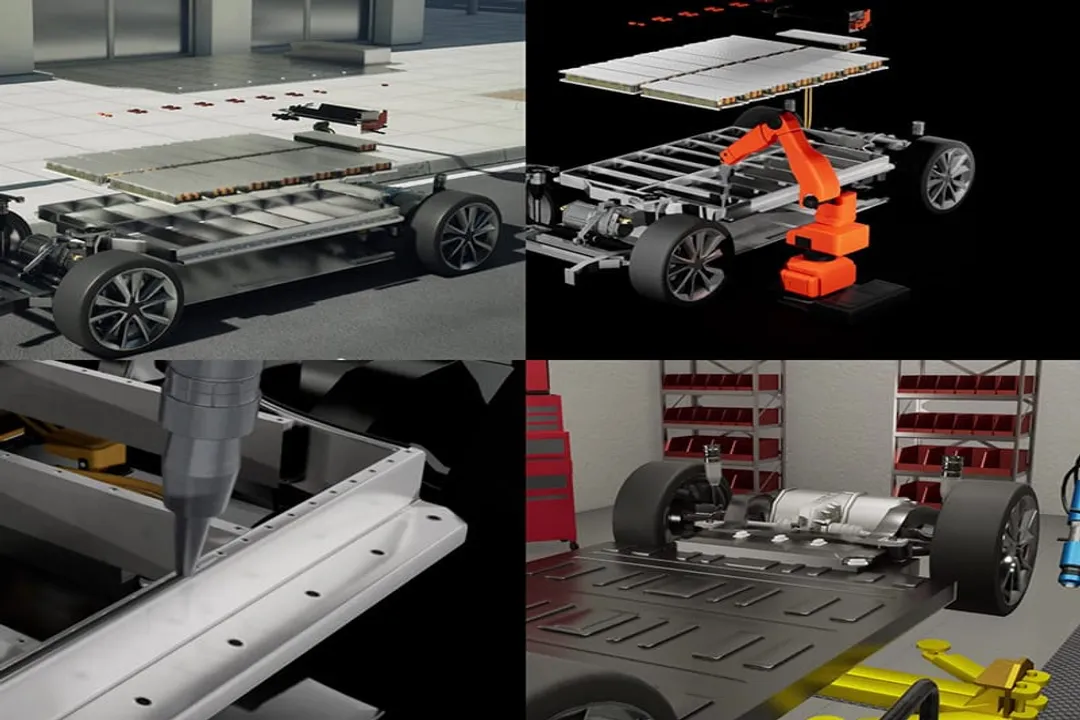
- Mechanical Engineering Principles: This covers the structural integrity of the battery pack, vibration resistance, impact protection, and ensuring the physical assembly can withstand automotive environments. This is often where mechanical engineers focus their skills. [2][5]
- Electrical Engineering: This pertains to the cell-to-pack electrical architecture, high-voltage safety, impedance spectroscopy for state-of-health monitoring, and the design of the BMS algorithms. [3][5]
Furthermore, understanding the manufacturing process itself provides invaluable insight. Engineers who grasp the realities of gigafactory-scale production—from slurry mixing consistency to automated cell stacking—can design components that are not only high-performing but also manufacturable at volume and competitive cost. [7] Learning the basics of various assembly technician roles, such as those certified in specific battery assembly techniques, can also offer an engineer perspective on practical assembly tolerances. [6]

# Professional Attributes
While the technical skill set opens the interview door, specific professional attributes dictate long-term success in an industry characterized by intense collaboration and high stakes. [4]
Problem-Solving Prowess is non-negotiable. When a prototype cell shows unexpected capacity fade after 50 cycles, the engineer must systematically isolate the variable—was it a process change in the coating line, a difference in the separator material lot, or an anomaly in the testing protocol? This requires methodical, data-driven deduction. [3]
Communication ability must be exceptional. You will rarely work in a vacuum. A battery chemist needs to clearly articulate the risks of a new silicon anode formulation to a mechanical packaging team who is worried about the resulting volumetric expansion. Translating complex scientific trade-offs into business-relevant terms for program managers is a daily requirement. [3][4] Teamwork across specialties—electrical, thermal, chemical, and software—is the daily reality of battery development. [4]
# Practical Exposure
In the competitive landscape of EV engineering, academic knowledge alone is rarely sufficient. Employers strongly favor candidates who can demonstrate applied experience before their first full-time day. [8]
Internships are the most direct route to credibility. Targeting internships with established automotive OEMs, dedicated battery manufacturers (cell producers), or specialized engineering consulting firms offers exposure to production-level challenges rather than just academic experiments. [1][8] Gaining experience where you are directly involved in testing, validation, or thermal characterization of a full module or pack setup provides far more weight than simply discussing textbook concepts. [1]
For those who cannot secure an immediate industry internship, Project Immersion is the next best strategy. University research labs that deal with battery cycling rigs, electrochemical testing stations, or advanced characterization tools like Scanning Electron Microscopes (SEM) offer tangible experience. Even if the project is purely academic, the ability to write a technical report detailing experimental setup, data analysis, and conclusions about a lithium-ion pouch cell build significant professional capital. [8]
An insight that often separates viable candidates in interviews is the demonstration of understanding failure modes. While everyone talks about optimizing performance, demonstrating analytical experience in failure analysis—diagnosing why a cell overheated, shorted, or failed prematurely—shows a higher level of systems thinking. This perspective ensures the engineer designs not just for peak performance, but for longevity and safety under stress [Self-Analysis/Tip].

# Defining Your Niche
As the EV sector matures, the general "Battery Engineer" title fragments into more specific roles. Understanding these specializations helps target education and early career moves. [8]
| Specialization Area | Primary Focus | Core Skillset Required |
|---|---|---|
| Cell Chemistry/Materials | Developing new anode/cathode materials, electrolytes, separators. | Electrochemistry, Materials Science, Spectroscopy. [2][8] |
| Cell Engineering/Manufacturing | Optimizing electrode coating, calendering, cell formation processes, scaling production. | Process Engineering, Quality Control, Manufacturing Scale-up. [7] |
| Battery Pack/Module Design | Mechanical structure, cell-to-module assembly, thermal management integration, busbars. | Mechanical Design (CAD), Heat Transfer Analysis, Safety Standards Compliance. [2] |
| Battery Management Systems (BMS) | Software algorithms for State of Charge (SOC), State of Health (SOH), cell balancing, and protection circuits. | Electrical Engineering, Control Systems, Embedded Software. [5] |
Many engineers start in the Cell Chemistry or Pack Design areas, as these are often the most visible engineering challenges in vehicle integration. However, as battery performance becomes commoditized, the intellectual property often shifts to the systems level—how the BMS intelligently manages degradation across tens of thousands of cells—making the BMS role increasingly critical and well-compensated [Implied comparison of complexity shift in the industry].
# Ongoing Development
The pace of change in battery technology—from LFP to solid-state to potential post-lithium chemistries—means that formal education is only the starting line. An engineer’s expertise must be constantly refreshed. [1]
For engineering roles, this continuous learning often manifests as self-directed study in emerging fields like in-situ battery characterization techniques or advanced modeling software packages used for predicting long-term aging effects. While formal certifications exist for technicians involved in assembly and repair, [6] for the degreed engineer, credibility is maintained through published work, conference presentations, and demonstrated proficiency with the latest industry simulation tools. [1]
Finally, staying connected to the broader industry through professional societies, trade shows, and online technical forums remains essential. These connections often provide early insight into regulatory shifts or technology breakthroughs long before they appear in textbooks, giving the proactive engineer a competitive edge in knowing where the industry is heading next. [1] Becoming an EV battery engineer is less about acquiring a static set of knowledge and more about committing to mastering a discipline that fundamentally transforms every few years.
Related Questions
#Citations
How to get into battery egnineering field?
Complete Guide to Becoming an Electric Vehicle Engineer
What skills are required to be an Electric Vehicle (EV) ...
How to become an EV engineer?
How to Become an EV Engineer in 2025?
Become a Certified EV Battery Technician in Just Weeks
Battery Cell Manufacturing, Testing, and Design
Journey of a Battery Engineer: A must-read for new-comers ...
Battery Engineer -