How do professional values help in career?
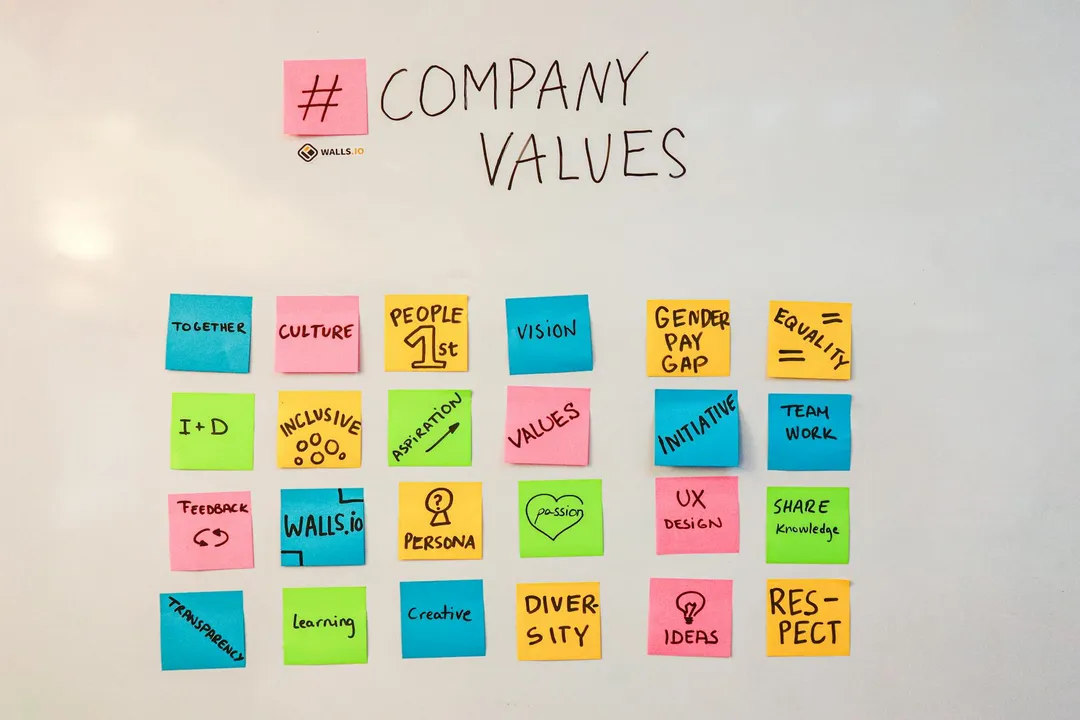
Professional values serve as the internal compass that guides career navigation, influencing everything from initial job selection to daily decision-making and long-term satisfaction. [2][3] These deeply held beliefs about what constitutes good, important, or worthwhile work shape how individuals approach their professional responsibilities and interact with colleagues and organizations. [6] Understanding and actively applying these values transforms a job from a mere source of income into a sustainable, meaningful pursuit, ultimately aiding in career progression and stability. [2][7]
# Core Beliefs

Work values, sometimes called professional values, are the fundamental principles that dictate an individual's approach to their career. [6] They are the standards that influence how one behaves in the workplace and what one prioritizes when making career choices. [2] Examples of such values can range widely, including concepts like autonomy, security, achievement, creativity, helping others, integrity, and recognition. [6] It is important to note that these are not simply preferences; they are deeper convictions about what an ideal work environment or contribution looks like. [3] For example, someone who deeply values integrity will experience significant internal friction in a role where they feel pressured to misrepresent data, regardless of the salary offered. [6]
When these values are clearly defined, they act as a filter through which all opportunities and challenges are processed. [2][9] Without this clarity, individuals often drift, accepting roles based on external validation—like prestige or salary—only to find themselves unfulfilled or mismatched once the initial excitement fades. [3][7]
# Directional Aid

The primary utility of professional values lies in their ability to provide clear direction, particularly during transitions or moments of decision paralysis. [2][7] If a person values work-life balance highly, they can immediately filter out opportunities that demand extensive, unpredictable travel or uncompensated overtime, regardless of the title attached to the position. [6] Conversely, if advancement is a top value, a stable, low-pressure role with limited growth potential becomes less appealing than a challenging position with a steep learning curve and clear promotion paths. [2]
Consider two distinct paths someone might take after gaining experience in a technical field. One path leads to a purely technical consulting role, often involving long hours but high earning potential and intellectual stimulation (appealing to values like achievement and intellect). The other path leads to a management track within a stable corporation, offering greater predictability and team leadership opportunities (appealing to values like collaboration and security). [6] If an individual has not explicitly identified that they rank autonomy higher than security, they might mistakenly choose the management track, only to feel constrained by bureaucracy later on. [3]
A practical way to assess this decision-making impact involves looking at organizational messaging. When evaluating a potential employer, look past the mission statement. For instance, if a company promotes its commitment to community service (a value), but their recent executive compensation package prioritized extreme short-term financial gain for leadership (potentially conflicting with values like fairness or social responsibility), these mixed signals indicate a potential misalignment that the candidate’s values can flag early. [9]

# Navigation Resilience
Careers are rarely linear; setbacks, difficult colleagues, and necessary compromises are inevitable. [4] Professional values are crucial mechanisms for building resilience and handling these inevitable negative experiences. [2] When a challenge arises, having a strong internal moral or professional anchor prevents an individual from making reactive decisions that could damage their long-term standing or well-being. [7]
For example, if an employee’s core value is excellence in their craft, they are more likely to persevere through a difficult project, viewing the struggle as a necessary component of achieving a high-quality outcome, rather than immediately quitting out of frustration. [2] This intrinsic motivation, rooted in values, is far more sustainable than motivation derived solely from external rewards like bonuses. [4] When a manager criticizes work unfairly, the employee anchored by professionalism may choose a calm, documented response rather than an emotional outburst, protecting their reputation and future prospects. [2]
This concept is particularly relevant when facing workplace toxicity. If a core value is respect, an employee might recognize that staying in an environment where that value is routinely violated—even if the pay is excellent—will lead to burnout, not success. [3] The decision to leave, in this case, is not a failure of endurance but a successful application of personal values to preserve long-term career health. [9]
Here is a comparative look at how different core values might influence a response to a major project failure:
| Core Value | Response to Major Failure | Long-Term Career Impact |
|---|---|---|
| Accountability | Immediately takes ownership, focuses on transparent reporting and corrective action. | Builds trust and perceived reliability among leadership. |
| Innovation | Views the failure as essential data; immediately starts prototyping fixes based on lessons learned. | Positions self as a forward-thinker, less concerned with past mistakes. |
| Security | Focuses on risk mitigation documentation and process hardening to prevent recurrence. | Strengthens position by demonstrating prudent, risk-averse management. |
| Collaboration | Focuses team meetings on shared learning and mutual support rather than assigning blame. | Preserves team cohesion for future joint efforts. |
| [2][6] |
# Defining True North
The benefit of values is entirely dependent on accurately identifying them. [9] This process moves beyond superficial job descriptions and requires introspection, often examining past successes and failures for patterns. [6] As one observer noted, success often feels "right" because it aligns with an internal standard, while achievements that felt hollow often violated an unacknowledged principle. [5]
A useful technique involves taking a list of potential work values and attempting to rank your top five. [6] A helpful step in making this tangible is to conduct a "peak experience" review. Look back at three times in your career when you felt the most engaged, proud, or energized. What elements were present in those moments? Was it the level of challenge? The degree of independence? The impact you made on customers?[9] Conversely, analyze times you felt profoundly drained or demotivated. The absent element in those low points is often a neglected core value. [3]
An original analytical approach involves calculating a "Value-Fit Score" during a job search. For every potential job, score how well it satisfies your top three non-negotiable values on a scale of 1 to 10. If a job scores 9, 8, and 3 (for a total of 20), and another scores 7, 6, and 7 (totaling 20), the initial numbers seem equal. However, the fact that the first role actively violates one key value (scoring a 3) suggests a higher potential for long-term friction than the second role, which offers a more consistent (though perhaps lower) level of satisfaction across the board. This forces a conscious trade-off decision rather than relying on vague feelings. [3][7]

# Purpose Passion Alignment
A common area of confusion in career planning is distinguishing between values, passion, and purpose. [4] While interconnected, they serve different roles in career fulfillment. [8] Passion is often an intense emotional drive toward a specific activity or subject matter. Purpose relates to the broader impact one wishes to have on the world or a community. [4] Professional values, on the other hand, are the rules of engagement for how you pursue that passion and purpose. [8]
For example, a person might have a passion for competitive video gaming and a purpose of creating accessible online communities. Their values might be fairness, transparency, and technical excellence. [6] They could pursue this purpose via two different career paths: one as a high-stakes tournament organizer (high pressure, high reward) or another as a non-profit developer creating educational gaming software (lower financial reward, higher social impact). [4] If the organizer role requires opaque financial dealings (violating transparency), the passion and purpose alone will not sustain the career; the misaligned values will create internal conflict. [8] Aligning all three—passion, purpose, and values—is the gold standard for enduring career success. [7][8]
# Organizational Fit
Values help individuals assess cultural fit long before accepting an offer, which is vital because organizational culture is essentially the collective application of shared professional values. [1] When an organization’s espoused values are different from the values practiced by its leaders and employees, this dissonance is where careers stall or morale plummets. [9]
To make this assessment actionable, here is a short Value Filtering Checklist to apply during interviews:
- "The Ask": Ask candidates to describe a time they had to choose between a short-term gain and a long-term principle. Note if the response focuses on process (values) or just the outcome (result). [2]
- "The Conflict": Ask how the team resolves significant disagreements where no clear answer exists. Look for language indicating respect for differing viewpoints (value: respect) or aggressive assertion of the dominant opinion (value: power/hierarchy). [2]
- "The Time Sink": Inquire about how meetings are run or how time is prioritized. Do they constantly discuss "urgent" tasks over "important" strategic work? This reveals the organization's true value placement—short-term reaction versus long-term strategy. [7]
If an executive candidate discusses their career solely through titles and money, it may suggest that their professional values center heavily on status and compensation, which might clash with a candidate whose primary values are service and autonomy. [1]

# Sustained Performance
Ultimately, professional values create the foundation for sustained high performance because they inform intrinsic motivation. [4] When work aligns with what a person fundamentally believes is important, the effort required to perform often feels less like a drain and more like a natural output. [2][9] This intrinsic drive reduces the cognitive load associated with staying motivated, leading to better focus and less fatigue. [4] Furthermore, having clearly defined values helps professionals define boundaries, preventing them from saying "yes" to every opportunity simply out of obligation or fear of missing out. [9] Learning to say "no" gracefully, based on a stated commitment to a higher-priority value, is a hallmark of professional maturity. [2] This deliberate curation of responsibilities, rather than simply accepting what is offered, is what propels many successful careers forward over decades, long after initial bursts of passion have subsided. [8]
Related Questions
#Citations
Professional Values: How Do They Impact Your Career Success?
15 Professional Values for a Successful Career | Indeed.com
Understanding Professional Values: The Key to Career Success
Values, Passion, or Purpose — Which Should Guide Your Career?
What career did you choose and how does it reflect your core values ...
What Are Work Values? 21 Examples and How To Define Your Own
Aligning your values with your career goals - Bethel University Blog
Balancing Passion and Profession: Aligning Personal Values with ...
Identifying Your Values and Aligning Them With Your Career | Guild