How Do I Stay Curious in My Career?

Sustaining genuine inquisitiveness throughout a working life is less about finding a single, perfect job description and more about adopting a mindset of perpetual inquiry. When the initial excitement of a new role fades or the industry landscape begins to shift rapidly, the ability to ask good questions becomes the most reliable career asset you possess. [4][5] Stagnation often creeps in not through sudden failure, but through the slow erosion of why we do things the way we do them. Remaining curious acts as a steady defense against that professional complacency. [4]
# Inquiry Engine

Curiosity is fundamentally the engine that drives innovation and effective problem-solving within any professional setting. [4] If you stop questioning the current process—the established methods, the accepted metrics, or the legacy systems—you limit your capacity to improve anything. This active state of seeking knowledge is far more valuable than passively waiting for training or new mandates to arrive. It requires recognizing that your current knowledge base has an expiration date and proactively seeking the next iteration. [4]
Many successful career narratives are not about sticking rigidly to a plan, but rather about recognizing an interesting tangent and having the courage to follow it. [6] When you look at careers that reward inherent inquisitiveness, you often see roles where ambiguity is high, or where the market changes quickly, requiring practitioners to constantly update their mental maps [Reddit source concept].
# Follow Interest

A common trap is the belief that one must first find a singular, lifelong passion before committing to a career direction. A more effective, and less stressful, approach is to reverse that dynamic: follow your curiosity instead of chasing passion. [6] Passion is often the result, not the prerequisite. When you notice a slight pull toward a certain topic, a particular skill, or an unfamiliar colleague’s project, that is the signal you should act upon. [6]
Contrast this with waiting for the grand, overwhelming feeling of "passion." That can lead to analysis paralysis or disappointment when the reality of the work doesn't match the abstract ideal. Instead, treat those small inclinations as breadcrumbs. If you follow the breadcrumbs, they might lead you to a richer environment where passion can naturally develop through engagement and competence. [6] Furthermore, curiosity allows you to test potential passions cheaply and quickly through small experiments, rather than betting your entire career trajectory on an unverified hunch. [1]

# Experimentation Habit
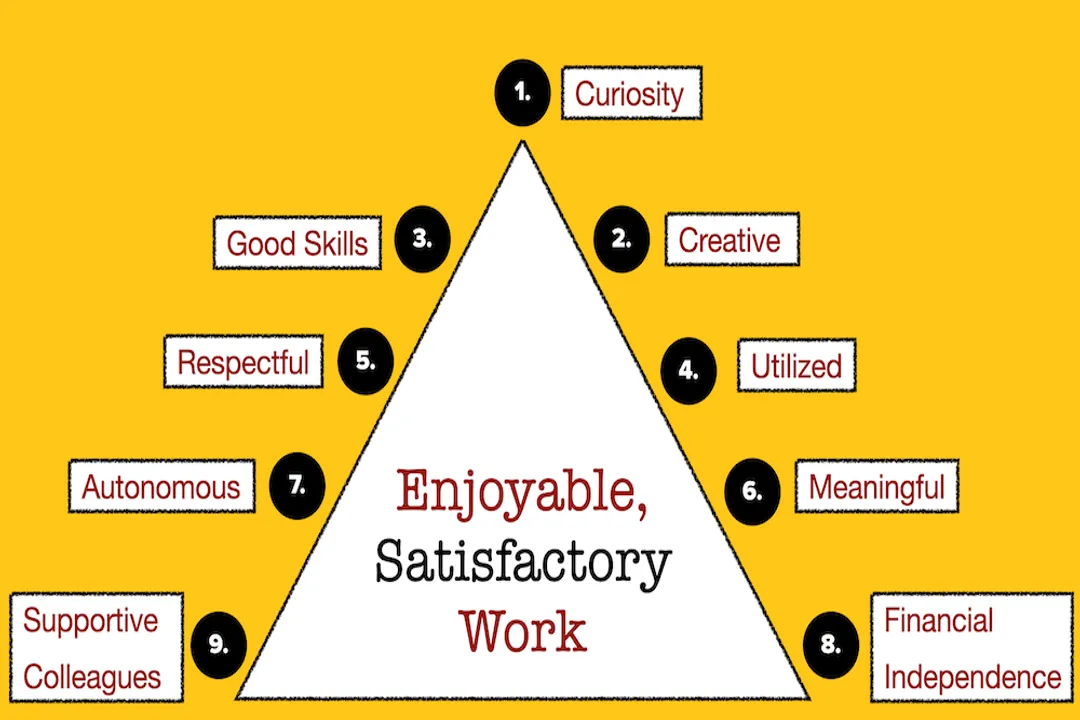
Turning intellectual curiosity into a tangible career advantage demands action. It is not enough to simply think about new areas; you must actively explore and experiment. [1] This means moving from passive learning (reading articles) to active doing (building, testing, failing small, and iterating).
To make this practical, consider formalizing your exploratory time. Think about creating a Curiosity Budget—a dedicated, non-negotiable slice of your work week, perhaps 5% of your time, reserved only for self-directed projects or skill acquisition that lies tangentially outside your immediate quarterly goals. This time is protected for low-stakes research and application, treating it as essential internal research and development rather than optional side work. If your role prevents setting aside work hours, consciously block out one hour every Saturday morning for dedicated learning in an adjacent field, ensuring you apply what you learn by creating a small deliverable—even if it’s just a proof-of-concept script or a one-page summary of findings [Original Insight].
# Ask Why
Deepening your understanding requires moving past surface-level comprehension. When encountering a task or policy, don't just complete it; investigate its foundation. You need to become comfortable asking questions that might seem basic or even disruptive to long-tenured team members [Reddit source concept].
If a process seems inefficient, ask: Why was this process designed this way initially? If a tool is favored, ask: What specific problem was this tool solving five years ago that we might not face today? This practice forces you to look at the historical context and the underlying assumptions that shape the present. A practical way to apply this investigative impulse is to use the Five Whys technique, commonly used in manufacturing and quality control, on career situations. For example: Why is my project always late? Because the data gathering phase takes too long. Why does it take too long? Because the required data lives in System X, which is slow. Why is it in System X? Because that’s how it was set up when the two departments merged. Why hasn't it been moved? Because no one has the capacity to map the transfer. This drill-down reveals systemic friction points you can potentially solve, proving your expertise through diagnosis rather than just execution [Original Insight].

# Skill Acquisition
A primary way curiosity manifests professionally is through continuous skill acquisition. When you remain curious about industry advancements, you naturally seek out new competencies, which guards against skill obsolescence. [4] This doesn't always mean enrolling in a degree program. It can involve deliberately tackling projects that force you to acquire a specific skill set. [1]
When you look at high-demand areas, often the people who excel are those who learned the next necessary skill just before the broader market declared it mandatory. For instance, if you are in marketing, remaining curious about data ethics or AI prompt engineering before they become mandatory knowledge positions you as an expert, not a follower [Inferred from general advice on growth].
# Navigate Direction
There can be a tension between wanting to learn everything (driven by curiosity) and needing to maintain a clear career path. [8] The key is to recognize that curiosity should inform direction, not destroy it. If you feel stalled or unsure about the next step, it is often because your curiosity has flagged an area where your current role is no longer providing sufficient intellectual stimulation. [5]
It’s helpful to categorize your interests:
- Core Competency Interest: Directly improves your performance in your current role. (e.g., learning a new feature in your primary software).
- Adjacent Skill Interest: Relevant to your field but not your direct responsibility. (e.g., a software developer learning basic UX principles).
- Exploratory Interest: Completely outside your current function but sparks genuine fascination. (e.g., a finance analyst learning about urban planning).
The Adjacent and Exploratory interests are where you build optionality and resilience. While you must dedicate time to Core Competency Interest to maintain your primary income, feeding the other two ensures you have transferable knowledge should your primary path narrow or disappear [Inferred comparison of different curiosity types]. This allows you to remain on a defined path while simultaneously scouting out alternative, more engaging routes. [8]

# Professional Context
In many corporate or structured environments, showing curiosity requires a measured approach. While broad questioning is vital, it must be framed within the context of organizational value. When proposing a new learning endeavor or suggesting an off-topic exploration, articulate how that knowledge might eventually solve a known business problem or open an unforeseen opportunity [Implied from needing to maintain a career path].
For example, instead of just saying, "I want to learn about blockchain," try framing it as, "I've been reading about distributed ledger technology and believe there might be a way to streamline our internal auditing process if we understood the security implications better. Could I dedicate a small portion of next quarter to investigating this possibility?" [Actionable phrasing based on context]. This shows you respect the need for results while actively pursuing new avenues of thought. [1][5]
# Connecting Motivations
Staying motivated in a career, which is closely tied to remaining curious, often involves connecting daily tasks to a larger, personal incentive. [9] If the spark of curiosity wanes, it may be because the task feels disconnected from what genuinely interests you or what you value. For some, motivation comes from the pursuit of mastery—the sheer satisfaction of getting noticeably better at something difficult [[9] implied connection to expertise]. For others, it might be the desire to help colleagues succeed, or the ambition to solve a specific, thorny industry problem. Identifying your intrinsic motivator—the reason you want to know more—is as important as what you are learning [Summary of motivation concepts from source]. If your curiosity is only directed toward things you are told to learn, it functions as compliance, not career growth.
# Sustaining the Practice
Curiosity is not a switch you flip on for yearly reviews; it’s a muscle that requires daily exercise. [5] It requires making small, consistent choices to look closer, ask deeper, and connect disparate pieces of information. By making exploration a recognized, low-risk part of your professional routine—whether through dedicating time, asking pointed questions, or seeking out diverse viewpoints—you ensure that your career remains dynamic, relevant, and, most importantly, engaging for the long haul. [1][5]
#Videos
Can you turn your curiosity into a career? | Roadtrip Nation - YouTube
Related Questions
#Citations
In Life and Career: Stay Curious, Explore, Experiment - LinkedIn
Cultivating curiosity: a key to your career growth
What's a career where curiosity is rewarded? : r/careerguidance
Benefits Of Curiosity In the Workplace - Blue Compass
Why 'Staying Curious' Is the Best Career Strategy I Know | Medium
Ditch Passion, Follow Your Curiosity: Build a Career You Love
Can you turn your curiosity into a career? | Roadtrip Nation - YouTube
How do I stay on my career path with a clear direction?
What are some tips for staying motivated in my career? - Quora