Can you get paid biweekly on salary?

Salaried employees absolutely can receive payment on a biweekly schedule. This method of disbursement is quite common, particularly in organizations where the administrative structure aligns neatly with a two-week work cycle. [1][9] Understanding how biweekly pay works is crucial for personal finance planning, as it dictates when money actually hits your bank account relative to the work performed. [6]
# Pay Period Basics
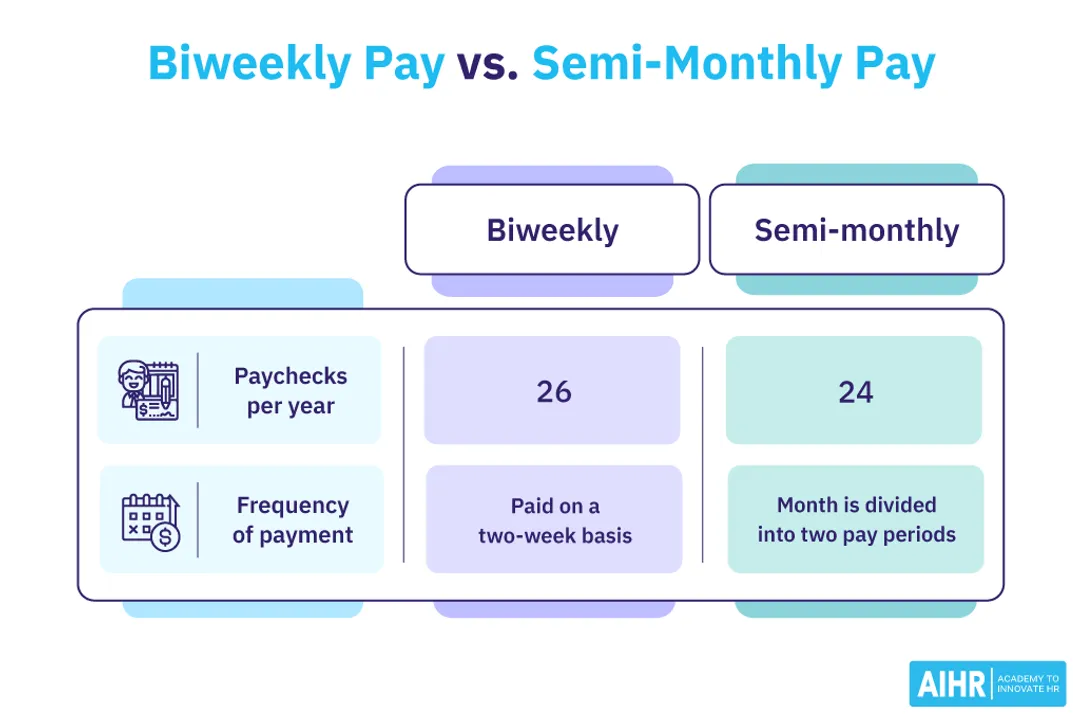
The term "biweekly" simply means that payment occurs every two weeks. [4][8] Since there are 52 weeks in a calendar year, dividing this number by two results in exactly 26 pay periods annually. [1][3][4] For someone earning an annual salary, this means their total yearly compensation is distributed across these 26 checks. [1]
It is important to note that this frequency is distinct from being paid weekly (52 checks) or monthly (12 checks). [6] The consistent, recurring nature of receiving a check every 14 days makes it highly predictable for tracking expenses and managing short-term financial goals. [1]
# Biweekly Versus Semimonthly
One of the most frequent points of confusion in payroll systems is mixing up "biweekly" pay with "semimonthly" pay. [3][6][8] While both sound similar, they result in a different number of annual paychecks and hit the bank on different dates. [4]
| Feature | Biweekly Pay | Semimonthly Pay |
|---|---|---|
| Frequency | Every two weeks | Twice per month |
| Annual Checks | 26 | 24 |
| Typical Dates | Varies (e.g., Friday after a two-week period ends) | Fixed dates (e.g., the 15th and the last day of the month) |
| Yearly Total | Same annual salary divided by 26 | Same annual salary divided by 24 |
Semimonthly pay results in 24 paychecks per year, meaning an employee gets paid on two fixed dates, such as the 15th and the last day of the month. [4] Biweekly pay, however, means the pay dates shift throughout the year because 26 does not divide evenly into 12 months. [8] A critical takeaway here is that if you are salaried and paid biweekly, you are not being paid for exactly two weeks of work on every check; you are being paid th of your annual salary. [7]

# Salary Conversion
Converting an annual salary figure into a gross biweekly amount is straightforward arithmetic. You take your total yearly salary and divide it by the 26 pay periods. [1][3]
For example, if an employee earns an annual salary of $$78,000$, the calculation for the gross amount before taxes and deductions is:
This figure represents the total compensation earned before any mandatory withholdings for federal taxes, state taxes, Social Security, Medicare, or any voluntary deductions like health insurance premiums or 401(k) contributions. [1] The actual net pay received will be lower than this gross amount. [3]
# The Extra Paycheck
Because 26 pay periods do not align perfectly with the 12 calendar months, a standard year will contain two months that benefit from an extra payday. [5][8] In those two specific months, the employee will receive three paychecks instead of the usual two. [5]
For instance, if a pay cycle starts on a Tuesday, the checks might fall on the 1st and 15th for a while, but then a sequence will occur where a third Friday emerges within one month, triggering the third payment. [5] This phenomenon is a direct result of the 26-period structure. [1]
One helpful strategy for managing personal finances is to earmark this "extra" paycheck—the one that appears roughly twice a year—specifically for larger, non-monthly expenses, such as quarterly insurance payments, annual subscription renewals, or contributions toward a specific savings goal, rather than simply blending it into the regular monthly budget cycle. [5] Treating it as a bonus payment rather than standard income smooths out the financial picture for the rest of the year.

# Employer Preference
Why do companies choose biweekly pay? Often, it comes down to administrative simplicity and consistency with how work hours are tracked. [9] In many environments, especially those tracking non-exempt employees, time cards are reviewed and submitted every two weeks. Aligning payroll with this existing reporting cycle can streamline the work of the accounting or human resources departments. [9] Furthermore, some employers might find that processing 26 pay runs annually is administratively simpler than managing the slightly more complex calendar logic required for 24 semimonthly runs. [4]
# Cash Flow View
From the employee's perspective, the most significant factor is cash flow frequency. Receiving money every two weeks is generally viewed favorably over waiting a full month for a paycheck. [6] This faster influx of funds can significantly help cover recurring bills, especially for individuals who manage their finances tightly between paychecks.
If you compare a person earning $$60,000$5,000$ every four weeks, whereas the biweekly earner gets approximately $$2,307.69$ every two weeks (assuming a simplified, non-taxed calculation for comparison purposes). [3][6] While the annual total is identical, the biweekly structure provides smaller, more frequent injections of liquidity. When assessing a job offer, it is worth noting that if the company offers a monthly schedule, you could ask if a biweekly option is available to improve your short-term cash flow management, as this often comes down to company policy rather than legal restriction for salaried staff. [9]
When considering whether biweekly pay is "better" than semimonthly pay, the answer depends entirely on personal budgeting habits. If you prefer the reliability of knowing you will always be paid on, say, the 15th and the 30th of every month (semimonthly), then that fixed schedule might feel more secure. [4] Conversely, if you prefer the higher frequency of 26 checks, accepting the unpredictability of which two months will contain three checks is the trade-off you make for more frequent deposits. [5][8] Ultimately, knowing the exact schedule—whether it is the 15th/Last Day or the every-other-Friday model—is the key to setting up automated bill payments successfully. [1]
Related Questions
#Citations
What Is Biweekly Pay and How Does It Work? (With Benefits) - Indeed
How does Bi-Weekly pay work? : r/internetparents - Reddit
Biweekly Pay Calculator
What Is Biweekly Pay? Plus Calculation | HR Glossary - AIHR
Bi-Weekly Payroll 101: Everything You Need to Know as an Employer
What is Biweekly Pay and How Does It Work? | EarnIn
If I'm paid biweekly, do I get 2 weeks worth of work in one check or ...
Biweekly Pay: Benefits, Drawbacks, and Best Practices - BambooHR
What is Biweekly Pay - ADP