Will AI replace freelancers?
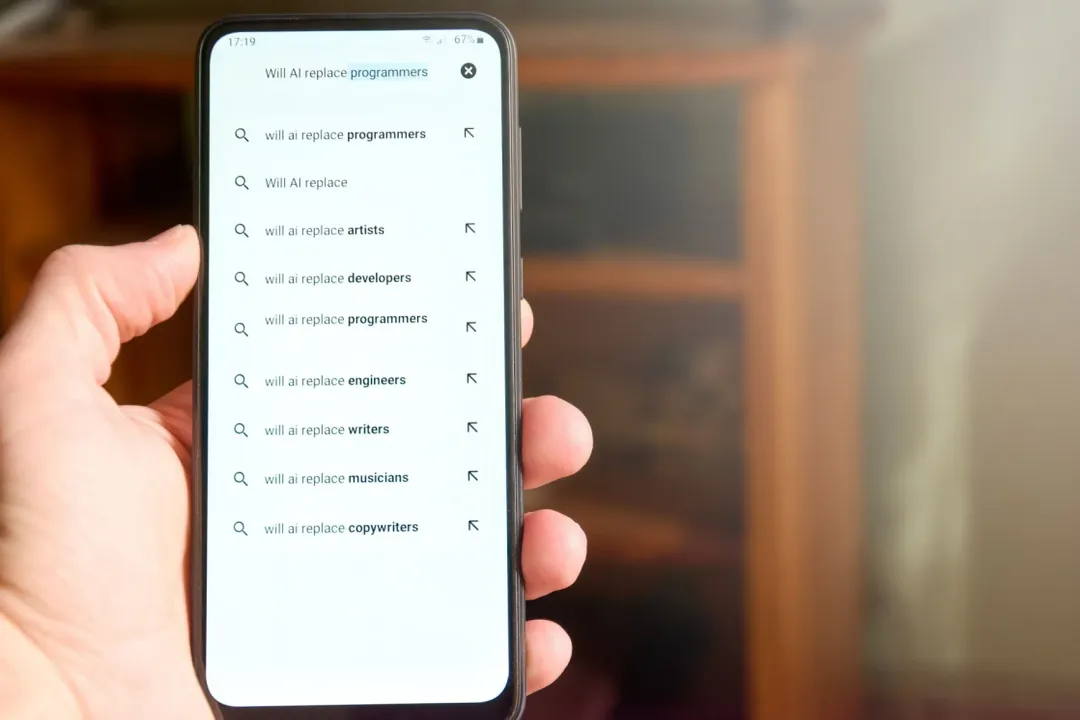
The anxiety swirling around artificial intelligence and the freelance economy is palpable. For many self-employed professionals, the rapid advancement of generative AI tools presents not just a technological shift, but an existential threat to their income streams and career stability. It is undeniable that AI technology is already impacting how work is sourced, priced, and executed across various digital marketplaces and industries, leading some to declare that replacement is inevitable, especially in areas reliant on scalable, standardized digital output. [2][6]
# Short Term Pain

The immediate reality for many freelancers seems grim. Studies and observations point toward a demonstrable cooling effect in certain segments of the freelance market following the widespread adoption of AI tools. [8] For instance, research indicates that the introduction of AI tools has caused a decline in freelance work availability and, consequently, income, particularly in the initial phase of adoption. [9] This drop isn't hypothetical; it's being felt on gig platforms where the sheer volume of output possible with AI can depress standard rates for tasks that were previously priced based on human labor time. [6] This rapid shift creates a difficult competitive landscape where human freelancers are struggling to keep pace with the speed and low cost offered by AI-driven solutions. [6]
# Writing Impact
The writing industry often serves as an early barometer for technological disruption, and this time is no exception. AI is actively reshaping the freelance writing sector. [5] When an AI can draft articles, marketing copy, or social media posts quickly and cheaply, the demand for human writers, especially those handling high-volume, lower-complexity content, naturally contracts. [5] This forces a difficult reassessment for writers whose previous success relied on producing significant quantities of standardized text. The market is now seeing a bifurcation: those who resist risk irrelevance, and those who adapt must move up the value chain rapidly. [5]

# Complementarity Rises
While the initial data shows market contraction in some areas, it is a vast oversimplification to state that AI will universally kill jobs or replace every freelancer. [1][3] A more accurate picture emerging from expert analysis suggests a powerful complementarity between human skill and machine capability. [3] Instead of wholesale replacement, AI is increasingly functioning as an incredibly fast assistant or a force multiplier for skilled individuals. [3] For example, a seasoned graphic designer using AI image generation to create fifty mockups in the time it previously took to sketch five is not being replaced; they are becoming significantly more productive and valuable to the client. [3] This shift moves the freelance value proposition away from execution speed and toward strategic oversight and refinement.
The debate itself, frequently occurring across community forums like Reddit and Quora, reveals a spectrum of experience. [1][4] Some users report direct job losses or lowered rates due to AI competition, [1] while others argue that the technology is simply creating new avenues for opportunity, similar to past technological revolutions. [4] It becomes less about if AI is taking work, and more about what kind of work is being taken and what new work is being created. [4]
# New Skill Stack
To navigate this redefinition successfully, freelancers must consciously evolve their service offerings. If AI handles the rote creation, the premium is now placed on prompt engineering—the art of instructing the AI effectively—and, more importantly, contextual integration. [3]
Consider a freelance marketing consultant. In the past, their value might have been partly in writing the initial six email sequences. Now, the AI can draft those sequences in minutes. The consultant's new, higher-value task is designing the strategy behind the sequences, understanding the client's specific regional customer psychology, ensuring the tone perfectly matches a very narrow brand voice, and then critically editing the AI's output for factual accuracy and nuance. If a local business needs copy specific to the unique regulations of a single state or province, a generalized AI model trained on global data might miss critical legal or cultural context. This specialized, localized knowledge verification and strategic application is where a premium can still be commanded, regardless of the underlying tool used for drafting. This represents a fundamental recalibration where deep, verifiable expertise acts as the moat against generic AI outputs.
Furthermore, the ability to manage and audit AI outputs will become a standard competency. Knowing when an AI hallucination has occurred or when its suggested data is statistically suspect is a high-value skill. Freelancers who can confidently say, "The AI gave us X, but based on my decade of experience in this sector, we need Y instead," become indispensable quality gates. [3]

# Unreplaceable Human Core
Several core human competencies remain stubbornly resistant to automation, forming the bedrock of the future freelance market. These areas often involve high-level cognitive functions, emotional intelligence, and complex, unstructured problem-solving. [2][4]
# Empathy and Nuance
Client relationships rely on trust, understanding, and empathy—qualities AI currently lacks. [2] A freelancer who can truly listen to a client’s vague concerns, translate those anxieties into concrete project requirements, and then manage the inevitable emotional turbulence of a long project cannot be substituted by an algorithm. This is particularly true in fields like consulting, complex project management, or specialized coaching where interpersonal dynamics drive success. [2]
# System Design
AI is excellent at solving defined problems within a given system, but it rarely excels at designing the overarching system itself or handling problems that cross multiple disparate domains without clear prior instruction. For instance, integrating three different legacy software systems for a mid-sized company requires architectural thinking, negotiation with stakeholders, and navigating bureaucratic hurdles—tasks that demand human judgment and political skill far beyond current AI capabilities. [4] Freelancers who position themselves as system architects rather than task-doers will see their value increase.
# Opportunity Landscape
If we look past the immediate contraction in low-skill, high-volume work, the technology suggests entirely new categories of freelance work are emerging, often centered on managing the AI ecosystem itself. [4]
# AI Maintenance
We are already seeing demand for specialized roles focused on training, fine-tuning, and maintaining custom AI models for businesses. A small business might use a freelancer to curate a proprietary dataset from their historical sales records and use that data to fine-tune an open-source Large Language Model (LLM) to act as their internal customer service knowledge base. This requires data curation, ethical filtering, and model deployment expertise—a perfect fit for a technically adept freelancer. [4]
# Ethical Auditing
As AI use becomes widespread, so too does the risk of bias, copyright infringement, or regulatory non-compliance in AI-generated assets. A new niche is forming for freelancers specializing in AI ethics and compliance auditing. They can review a company’s AI-generated marketing materials or code for hidden biases or potential legal risks before publication. This type of service doesn't exist in the same capacity without AI, offering a genuinely new demand curve for specialized experts.
To quantify the shift, one could visualize the freelance market transition not as a straight line, but as a distribution curve. The high-volume, low-complexity tail shrinks rapidly (e.g., "write 50 product descriptions"). The middle band experiences compression as AI handles standardization. The high-complexity, high-touch, and AI-oversight tail expands significantly, demanding higher skill and commanding higher rates. [3] A freelancer who can successfully move from that shrinking left tail to the expanding right tail will not only survive but thrive.

# Redefining Value
The core takeaway from various analyses suggests a transition from competing against AI to competing with AI at one's side. [3] The old contract—trading time for money on repeatable tasks—is dissolving. The new contract is based on delivering uniquely human judgment, strategic vision, and expert oversight of powerful, automated tools. [1][3] Freelancers who treat AI as a powerful, but flawed, junior partner will find themselves able to handle more complex projects, deliver faster results, and ultimately charge more for the strategic layer they provide, rather than the raw execution time. [2] The key isn't avoiding AI; it's mastering how to make AI serve your unique, expert-driven vision.
#Videos
Will AI Agents Replace Freelancers? The Future of Gig Work
Related Questions
#Citations
r/technology on Reddit: AI Doesn't Kill Jobs? Tell That to Freelancers
AI is going to replace freelancers? | by Ashutosh Sharma - Medium
The Rise Of Complementarity In Human-AI Collaboration in ... - Forbes
Is AI replacing freelancers or creating more opportunities? - Quora
Is AI Taking Over the Freelance Writing Industry? - Elna Cain
Freelancers Are Getting Ruined by AI - Futurism
Will AI Agents Replace Freelancers? The Future of Gig Work
Is generative AI a job killer? Evidence from the freelance market
Study: AI tools cause a decline in freelance work and income–at ...