What Are the Best Healthcare Jobs for Introverts?

The healthcare field is vast, often conjuring images of bustling emergency rooms or crowded waiting areas filled with constant chatter. However, for individuals who draw energy from solitude and prefer deep focus over frequent, spontaneous social exchanges, the medical world holds numerous vital and fulfilling career paths. [6][9] Introversion is not a barrier in medicine; rather, the detailed, analytical, and behind-the-scenes nature of certain roles perfectly aligns with the strengths often found in quieter personalities, such as concentration, careful observation, and precision. [9] Finding the right fit means looking for positions where interaction is purposeful, task-oriented, or largely non-existent. [2]
# Defining the Need

It is important to distinguish between introversion and social anxiety. Introverts thrive when they have time to process information and prefer environments with lower sensory input, allowing them to concentrate on complex tasks. [9] In healthcare, this translates to avoiding roles that require constant patient advocacy, high-volume initial assessments, or managing large teams in chaotic settings. [2] Instead, the best positions minimize unscheduled social demands while maximizing the opportunity to work closely with data, technology, or lab samples. [5][6] Many roles that offer substantial impact on patient outcomes happen far from the bedside, supported by rigorous technical expertise. [4]
# Data and Records
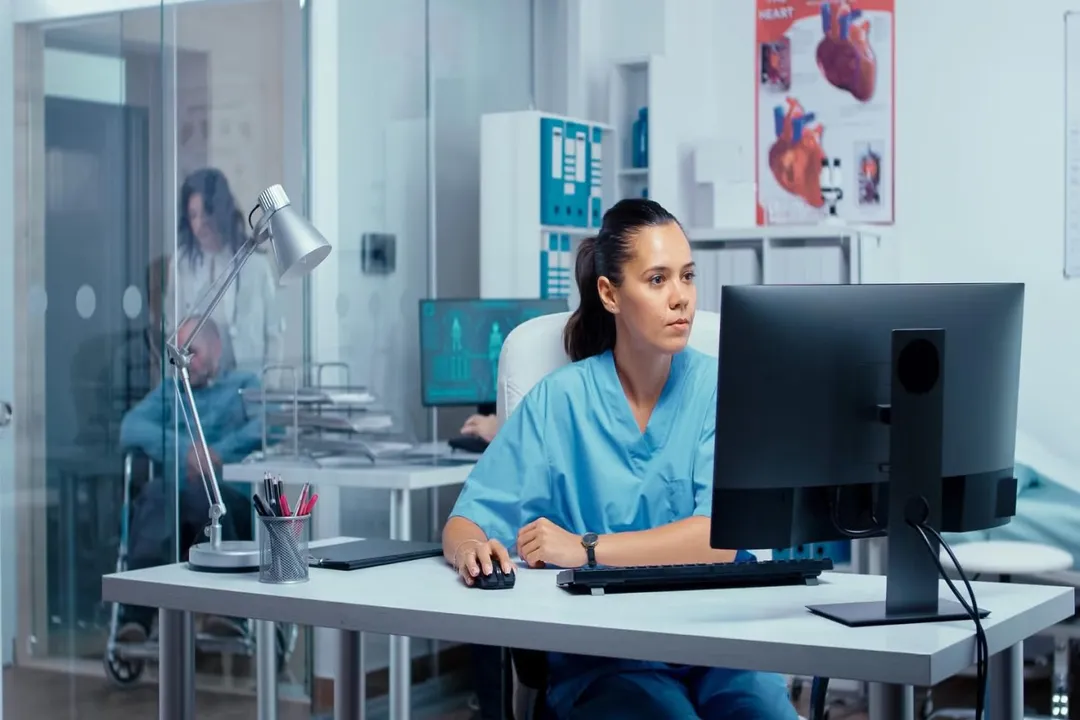
Roles centered on managing the massive amounts of information generated by patient care are excellent fits for introverts who excel at organization and adherence to strict protocols. [2] These positions form the administrative backbone of modern medicine.
# Medical Coding and Billing
Medical coding is a specialized area where professionals translate healthcare providers' diagnoses, procedures, services, and equipment into universal alphanumeric codes. [2] This work is primarily done independently, often remotely, and requires meticulous attention to detail and a deep understanding of coding manuals. [4] While coders may need to consult briefly with physicians or billing departments to clarify documentation, the majority of the day involves solitary analytical work. [2] A key advantage here is the predictable workflow; unlike clinical roles, the social interactions are typically limited to brief, task-oriented communications, which can be very calming for an introvert who dislikes constant, unexpected social demands. [2]
# Health Information Management
Health Information Technicians, sometimes referred to as Medical Records Specialists, manage patient data, ensuring accuracy, confidentiality, and accessibility. [2][5] This involves organizing physical and electronic files, auditing records for completeness, and maintaining compliance with regulations like HIPAA. [2] These roles involve working closely with internal staff and systems, but rarely involve direct, lengthy patient engagement. [2] The satisfaction comes from maintaining the integrity of the patient's medical narrative.

# Laboratory Focus

For those who prefer the company of test tubes, microscopes, and machinery over conversations, laboratory sciences offer deep immersion into the diagnostic process. [5]
# Lab Science Technical Work
Medical Laboratory Scientists and Technicians are crucial, working behind the scenes to analyze blood, tissue, and other bodily fluids to help physicians diagnose diseases. [2][5] This career path allows individuals to spend significant time performing complex procedures, running tests, and analyzing results using sophisticated equipment. [6] The social demands are generally restricted to coordinating with other lab personnel or communicating critical findings—interactions that are professional and highly focused on the task at hand. [5]
# Phlebotomy Procedures
While Phlebotomists certainly interact with patients, the interaction is often very brief and highly procedural. [3][6] They focus on efficiently and accurately drawing blood samples. [6] For an introvert whose comfort zone involves short, defined exchanges rather than extended dialogue, this can be manageable. The necessary social engagement is usually limited to verifying identity and providing simple instructions before moving on to the next task. [3]
# Pharmacy Support
Working as a Pharmacy Technician can range from high-interaction (dispensing counter) to very low-interaction (compounding or sterile preparation). [2] Technicians who focus on inventory management, quality control, or the sterile preparation of intravenous medications spend the majority of their time adhering to precise protocols, often with limited direct communication required. [2]
# Imaging and Technology

Operating complex diagnostic equipment requires intense concentration and technical skill, making careers in medical imaging attractive for introverts who are comfortable with technology. [6]
# Radiologic Technology
Radiologic Technologists are responsible for operating imaging equipment such as X-ray, CT, or MRI scanners. [2] Their primary interaction involves positioning the patient correctly and explaining the brief steps of the scan. [6] Once the image acquisition begins, the technologist is focused intently on the machine's operation and monitoring the resulting images. [2][6] This environment balances necessary patient contact with extended periods of focused technical work.
# Ultrasound Careers
Similar to radiology, Diagnostic Medical Sonographers focus intently on the real-time imaging displayed on their screens. [2] They must understand anatomy deeply to manipulate the transducer correctly and capture diagnostic-quality images. The patient interaction is necessary for comfort and positioning, but the professional satisfaction stems from the precision of the visualization process itself. [2]

# Quiet Clinical Environments
Not all clinical roles demand constant bedside nursing. Certain specialized areas allow for a more controlled, lower-volume social setting. [8]
# Specialized Nursing
While general floor nursing is often too demanding socially for many introverts, specialized nursing can be a better fit. [8] For example, Dialysis Nursing often involves caring for a small, rotating group of patients over several hours during treatment sessions. [8] This allows the nurse to build a rapport over time within a structured, predictable setting, rather than facing a revolving door of new introductions every few hours. [8] Similarly, working Night Shifts in certain facilities can reduce overall activity and administrative oversight, leading to a quieter environment where focus is easier to maintain. [8]
# Surgical Support
Surgical Technologists (or Scrub Techs) are indispensable members of the operating room team. [4] Their focus is entirely on maintaining a sterile field, passing instruments to the surgeon, and anticipating the needs within the sterile environment. [4] The team is small, highly specialized, and intensely focused on the procedure, meaning interactions are strictly professional and task-driven, lacking the typical social pleasantries of general wards. [4]
# Behind-the-Scenes Support
For those who prefer minimal patient contact altogether, roles focused purely on documentation or remote support can be ideal. [5]
# Transcription and Documentation
Medical Transcriptionists convert dictated physician notes into written reports. [5] This is often a solitary job that can even be performed remotely. [5] While modern healthcare leans toward electronic health records (EHRs) inputted directly by providers, documentation specialists remain necessary for reviewing, editing, and ensuring the clarity of complex dictations. [5] This role demands excellent auditory processing and typing speed over social maneuvering.
# Health Research
Working in Health Research, whether in a university lab, a government agency, or a private firm, appeals to introverts interested in the scientific underpinnings of medicine. [4] These careers often involve long hours analyzing data, running simulations, developing protocols, or writing scientific manuscripts—all activities that require sustained, uninterrupted concentration. [4] Communication occurs primarily through written reports or formal presentations, allowing for careful preparation.
When evaluating these paths, it is useful to compare the social demands explicitly. For example, a Phlebotomist experiences many brief, transactional interactions daily, while a Medical Coder might have zero patient contact but several detailed email exchanges with a physician over a complex chart. The best fit depends on whether one prefers many small, low-stakes interactions or few, high-stakes analytical exchanges. [2][6]
# Mastering Written Communication
Since many high-value roles for introverts in healthcare rely on digital interaction, cultivating exceptional written communication skills becomes a proxy for social presence and career advancement. When you are not engaging in spontaneous hallway conversations, your emails, documentation notes, and final reports must convey your expertise clearly and authoritatively. [2] Practice structuring complex technical information into precise, easy-to-digest written formats; this replaces reliance on verbal persuasion and establishes credibility through sheer accuracy and clarity of documentation. [2]
The decision rests on aligning one's energy levels with the job environment. Healthcare needs skilled diagnosticians, meticulous record-keepers, and precise technologists just as much as it needs charismatic patient liaisons. [9] Recognizing that proficiency in detailed, focused work is a significant contribution allows introverts to build rewarding, sustainable careers where their best work happens in quiet concentration. [4][6]
Related Questions
#Citations
What are some careers in the healthcare industry for introverts?
Five Fulfilling Health Care Jobs for Introverts
22 Low-Stress Medical Jobs – Happiest Careers to Consider - Stepful
High-Paying Careers for Introverts in the Healthcare Industry
Careers for Introverts in Healthcare | UMA - Ultimate Medical Academy
4 Intriguing Healthcare Careers for Introverts to Consider
Best careers for 50/50 introverts in healthcare? - Facebook
9 Best Nursing Jobs for Introverts - CareerStaff Unlimited
Healthcare jobs to consider in 2025 based on your personality type