Is switching jobs a risk?

Making the decision to switch jobs is rarely straightforward; it introduces a spectrum of calculated possibilities against potential pitfalls that demand careful consideration. [2] While remaining in a comfortable but stagnant position also carries its own set of risks, such as being subject to organizational downsizing or career plateaus, [8] the act of moving companies inherently introduces uncertainty regarding the new environment, role expectations, and long-term security. [1] The core of the issue isn't if there are risks—because there always are—but rather how one defines, quantifies, and manages those risks relative to the desired rewards. [2]
# Inherent Dangers
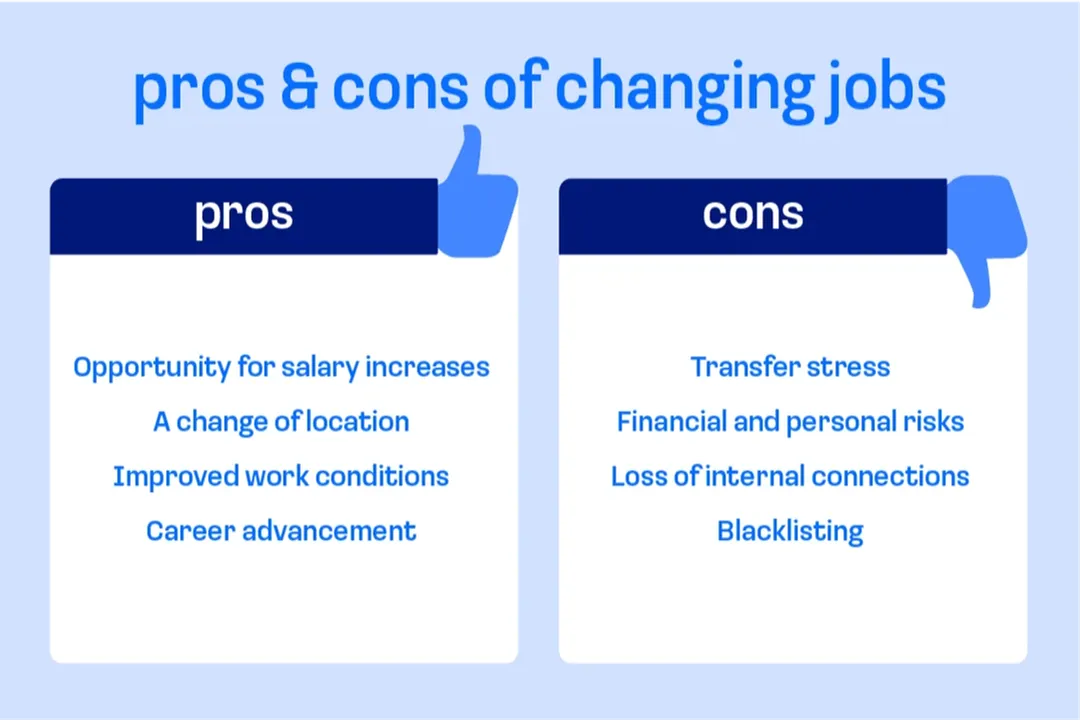
The anxieties surrounding job switching often center on immediate stability and long-term reputation. One significant concern expressed by people discussing career changes is the feeling that the current economic or hiring climate makes any move too risky, suggesting external factors can override personal readiness. [1]
Potential problems associated with rapid or poorly planned job changes are frequently cited:
- Misalignment: You might accept a role based on an initial promise only to discover the day-to-day reality, team dynamics, or company culture are entirely different from what was presented. [4] This can lead to immediate regret or the need to restart the search quickly.
- Reputational Stigma: A history of very short tenures can raise red flags for future employers, leading them to question your commitment, work ethic, or ability to integrate into a team. [4][7]
- Negotiation Errors: Accepting an offer without proper negotiation can leave money on the table or result in accepting terms that are ultimately unfavorable, such as a poor bonus structure or limited growth potential. [6]
When mapping out these potential pitfalls, it helps to categorize them by the type of damage they inflict.
| Risk Category | Description | Impact Severity |
|---|---|---|
| Reputational | Appearing unstable or unable to commit to a role. [7] | High (Affects future access) |
| Financial | Losing immediate benefits or accepting lower starting salary. [3][6] | Medium to High (Immediate cash flow/long-term savings) |
| Cultural | Landing in a toxic environment or mismatched team dynamic. [4] | High (Affects daily well-being) |
| Skill Stagnation | Moving laterally without clear skill improvement opportunities. [2] | Medium (Long-term career ceiling) |
# Career Growth

While the dangers are real, many people switch jobs precisely because they perceive greater risk in staying put—namely, the risk of stagnation. [8] In many industries, the fastest way to secure a substantial pay increase or achieve a promotion is by moving to a new organization, as internal salary bands and promotion cycles can be restrictive. [8] This is often termed "external benchmarking" of your value. [2]
The analysis of whether a switch is beneficial often boils down to an honest appraisal of skill acquisition. Are you gaining new responsibilities, working with modern tools, or being exposed to novel business challenges? If the new role simply swaps one set of tedious tasks for another, the perceived risk of the move might outweigh the incremental gain in compensation. [8] Sometimes, a lateral move into a better-regarded company or industry can serve as a strategic re-anchoring for future, larger leaps.
Consider the concept of internal capital. Every time you join a new company, you start at zero in terms of institutional knowledge, established relationships, and internal political currency. Building this capital takes time—often a year or more—to truly exert influence or secure significant internal wins. Switching jobs every 12 to 18 months means you are constantly reinvesting this social and knowledge capital rather than drawing dividends from it. Knowing this helps frame the necessity of a move: if the benefit isn't substantial enough to justify resetting that clock, perhaps staying put offers a better return on your effort during that period.

# Frequent Moves

The pattern of job-hopping—defined by some as changing positions too frequently—is a specific risk that recruiters watch for. [7] If someone has four jobs in five years, questions arise regarding loyalty, resilience, and project completion capabilities. [4][7] Recruiters might perceive such a history as indicating that the candidate is either difficult to manage or prone to leaving just as they become truly productive. [7]
However, the definition of "frequent" is evolving, especially in fields like technology where movement is common. [1] The context matters immensely. A series of one-year stints across different startups in a burgeoning field might be viewed differently than multiple one-year stays at established, traditional firms. Furthermore, the reason for leaving must be clear and justifiable; short stints due to company closures or clear organizational restructuring are often viewed with more leniency than repeated departures motivated solely by minor dissatisfaction. [7] If you are frequently changing jobs, it is essential to clearly articulate the positive trajectory that each move represented, showing a deliberate pursuit of growth rather than an escape from problems. [2]
# Benefit Vesting
Beyond the visible salary and title, job switching carries often-overlooked financial risks tied to employee benefits, particularly retirement plans. [3] This is a tangible, measurable risk that requires calculation before signing a new offer.
For instance, many employers offer a 401(k) match, but the employee does not fully own that employer contribution immediately. This is known as a vesting schedule. [3] If an employee leaves before being fully vested, they forfeit some or all of the money the company contributed on their behalf. [3] Depending on the schedule—which might be immediate, graded over several years, or subject to a "cliff" vesting where you get everything after, say, three years—a job change at the wrong time could mean leaving tens of thousands of dollars behind. [3]
Similarly, paid time off (PTO) policies differ significantly. Some organizations issue a lump-sum payout for accrued, unused vacation time upon separation, while others may stipulate that unused time is forfeited if you resign before a certain date or if state law doesn't mandate payout. [3] Understanding the specifics of vesting for both retirement funds and earned leave is a non-negotiable step in weighing the true financial impact of a job change. [3] This is often more significant than the difference between two comparable salary offers.

# Due Diligence
To navigate these risks effectively, rigorous due diligence is required before committing to a new role. [6] This involves looking past the impressive job description and salary figure to assess the actual environment and support structure you are moving into.
Key areas to investigate include:
- The Role's True Scope: Ask detailed questions about the team's current challenges and what success looks like in the first six to twelve months. If the hiring manager cannot provide concrete, measurable goals, that ambiguity itself is a risk indicator. [2][6]
- Compensation Structure: Go beyond the base salary. Understand the variable compensation, equity cliffs, sign-on bonus repayment clauses, and health insurance deductibles. A higher salary can quickly be negated by poor health coverage or missing out on an annual bonus because you weren't employed for the full cycle. [3][6]
- Cultural Vetting: Use informational interviews with potential peers (if possible) to get an unvarnished view of the workload and leadership style. Do not rely solely on what HR or the hiring manager tells you. [4] A key trap is accepting an offer too quickly without adequately investigating the culture or the manager’s track record. [6]
When you are evaluating a new opportunity, a helpful approach involves creating a simple comparative ledger. For every point of perceived risk (e.g., "leaving a 100% vested pension match"), you must identify a corresponding, tangible benefit (e.g., "a 15% salary increase with immediate vesting on new 401k"). If the risks are primarily abstract (like vague worries about the new boss) and the rewards are concrete (like a 20% raise), the move leans toward being less risky than if the rewards are abstract (like "better culture") and the risks are concrete (like "losing three years of vesting").
# Final Assessment
Switching jobs is fundamentally an exercise in controlled risk-taking. It becomes overly risky when the decision is driven by an emotional reaction to a current situation—like burnout or dissatisfaction—rather than a clear, strategic plan for what the next role must deliver. [2]
The common thread across evaluating career moves is preparation. If you have benchmarked your market value, understand the vesting schedules of your current benefits, have documented reasons for your departure, and have thoroughly vetted the prospective employer, the transition moves from a gamble to a calculated career investment. [2][3][6] The risk is seldom in the act of moving itself, but in moving without an updated map and sufficient contingency planning. [1]
#Videos
Switching Jobs Too Fast? Hidden Risks You Must Know - YouTube
Related Questions
#Citations
Is it too risky to switch jobs right now? : r/cscareerquestions - Reddit
How do you weigh the risks of changing jobs? - LinkedIn
Talking Points: 5 Ways Changing Jobs Puts (Your) Retirement at Risk
What are the potential risks/problems of switching jobs rapidly?
Is switching jobs a better idea or should I stay at the same company?
Ten Traps to Avoid When Changing from One Job to Another
Is there a risk of changing jobs too often? - LHH
Pros and Cons of Changing Jobs: Making Informed Career Transitions
Switching Jobs Too Fast? Hidden Risks You Must Know - YouTube