Do Agriculture Jobs Require Education?

The educational requirements for a career in agriculture are not a single, fixed line; they form a broad spectrum as diverse as the industry itself. Far from being exclusively for those with advanced degrees, agriculture offers entry points for nearly every level of formal training, from on-the-job learning to specialized doctoral research. Whether you are looking to start immediately or planning a multi-year academic track, there is a niche available within the sector that encompasses production, agribusiness, food processing, natural resource management, and more. Understanding where your current skills fit—or where you aim to be—is the first step in navigating this large occupational cluster.
# Entry Points

For many individuals, a career in agriculture begins without the necessity of a college degree. On-the-job training often serves as the primary credential for entry-level positions directly involved in agricultural production. These roles are the backbone of the industry, focusing on the daily operation of farms, ranches, and growing facilities.
For example, tasks related to fieldwork, operating standard machinery, assisting with livestock care, or basic harvesting often prioritize physical capability, mechanical aptitude, and a strong work ethic over academic transcripts. Many long-established agricultural communities value practical experience gained on the ground, sometimes viewing it as more valuable than classroom theory for these initial production roles. Success in these areas often hinges on demonstrating reliability and a willingness to learn the specific processes of a particular farm or operation.
However, even at the entry level, understanding modern practices is becoming increasingly important. While formal education might not be a barrier to entry, familiarity with basic record-keeping, pesticide application safety guidelines, or equipment maintenance protocols—often gained through short courses or certifications—can significantly boost employability over someone with zero related knowledge.
# Two-Year Value

The Associate’s degree, typically a two-year program, occupies a sweet spot in agricultural employment. It bridges the gap between purely manual labor and roles requiring a four-year theoretical foundation, often leading to higher-paying technical or support positions.
A two-year degree in agriculture, often termed an Associate of Applied Science (AAS), focuses heavily on applied sciences and hands-on technical skills relevant to current industry needs. These programs are frequently developed in consultation with local agricultural businesses, ensuring graduates possess immediately applicable knowledge in areas like crop science, agribusiness management support, or veterinary technology assisting.
For instance, a graduate with an Associate's in Ag Business might step into a role assisting a larger farm manager with inventory, payroll documentation, or basic compliance reporting, duties that might be too complex for someone solely reliant on basic high school education and brief on-site training. Similarly, in the food processing sector, two-year technical training can qualify someone for quality control technician roles, ensuring adherence to safety standards, which is a critical, detail-oriented function.
It is worth noting that the career ceiling for those starting with only an Associate's degree can sometimes be lower than for a four-year counterpart unless the individual aggressively pursues relevant industry certifications or on-the-job promotion opportunities. In many specialized areas, the four-year degree holder is seen as the direct pipeline to supervisory roles, meaning the Associate's graduate might need to wait longer or pursue additional education later to move into management tiers.

# Advanced Careers

When aspirations shift toward management, specialized consulting, research, or highly regulated government positions, the Bachelor of Science (B.S.) degree becomes the established standard, if not a hard prerequisite. Careers categorized under Agribusiness, Agricultural Education, or Scientific Research within the larger Agriculture, Food, and Natural Resources sector typically demand this level of education.
For those aiming to teach the next generation of farmers and agricultural leaders, the requirement is quite clear. Agricultural education careers, such as becoming an agricultural science teacher in a public school system, require a bachelor's degree in the subject area, along with the necessary state teaching certification and often specific experience working within the industry. This dual requirement—subject matter expertise and pedagogical training—makes the four-year degree essential.
Similarly, roles in agricultural sales, finance, or larger agribusiness management—think handling supply chains for national distributors or managing large-scale production facilities—demand the broader business acumen and analytical skills typically developed over four years of university study.
A practical observation in this space is the difference in salary expectation based on formal qualifications. While a highly experienced field worker can earn a respectable living, data suggests that management roles accessible primarily through a four-year degree often come with a significantly higher lifetime earning potential because they involve strategic decision-making and P&L (Profit and Loss) oversight, responsibilities rarely delegated to those without advanced degrees.
# Federal Specialization
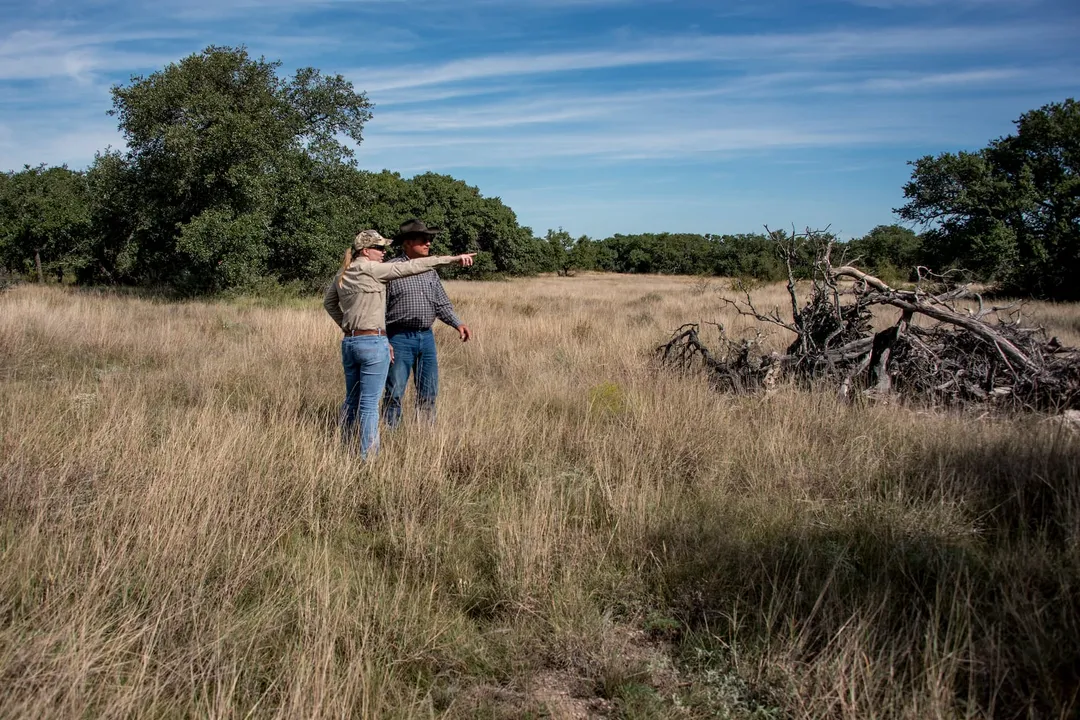
Government and regulatory roles present some of the clearest examples of mandatory educational requirements, often dictated by standardized civil service qualification standards, such as the General Schedule (GS) pay scale. These jobs are not about general farming skill; they are about enforcing standards, managing public lands, or providing specialized technical assistance.
The U.S. Department of Agriculture (USDA) branches, for instance, have specific requirements for their professional staff. A prime illustration of strict requirements comes from agencies like Customs and Border Protection (CBP) when hiring Agricultural Specialists. To qualify for these roles, which involve inspecting imports and exports for pests and diseases at ports of entry, candidates often must possess a bachelor’s degree in agriculture, botany, entomology, or a closely related biological science, or a combination of education and specific, relevant experience. This ensures specialists have the scientific background needed to identify regulated threats accurately.
Contrast this with a role in the Farm Service Agency (FSA), which also operates under federal guidelines. While some administrative support roles might be accessible with less formal education, program analyst or specialist positions intended to advise farmers on federal loan programs or conservation practices will almost certainly require at least a bachelor's degree in an agricultural or economic field to meet the established qualification standards.

# Education Pathways
Navigating these varied requirements means prospective agricultural workers need a roadmap based on their desired destination. One approach involves targeting state or local resources for guidance, as regional departments of agriculture often tailor their support to local economic needs. For example, state departments may offer specific certification tracks that substitute for some formal education for certain technical roles within the state's regulatory system.
If the goal is maximum flexibility across agribusiness, sales, and technical support, the two-year Associate's degree is a quick route to technical employment. If the long-term plan involves managing large enterprises, entering federal service, or teaching, then planning for the four-year degree, perhaps starting at a community college to complete general education requirements before transferring, makes the most sense.
An often-overlooked aspect of this educational calculation is the ongoing need for continuing education, regardless of the starting point. Whether you are a farmhand needing recertification for drone operation or a specialist needing to stay current on new federal subsidy rules, the agricultural landscape demands constant learning. The most successful individuals in agriculture are those who view their initial education—be it a high school diploma, an Associate's, or a B.S.—not as a final credential, but as the foundation upon which continuous, specific skill acquisition is built. This dedication to lifelong learning is perhaps the single most universal requirement across the entire industry, regardless of the job title.
Related Questions
#Citations
Agriculture, Food & Natural Resources occupation list
AG jobs that don't require a degree to get started? : r/Agriculture
Careers | Farm Production and Conservation Business Center - USDA
Careers in Agriculture - The Georgia AG Experience
Agriculture Specialist Qualification Aid - CBP Careers
High-Paying Jobs in Agriculture for Two-Year Degrees
Preparing for Careers in Agriculture / Education / Home
21 Agriculture Jobs for People With Associate Degrees (With Salaries)
How To Start Your Ag Teaching Career - Teach Ag in Texas