Can salaried employees leave work early?
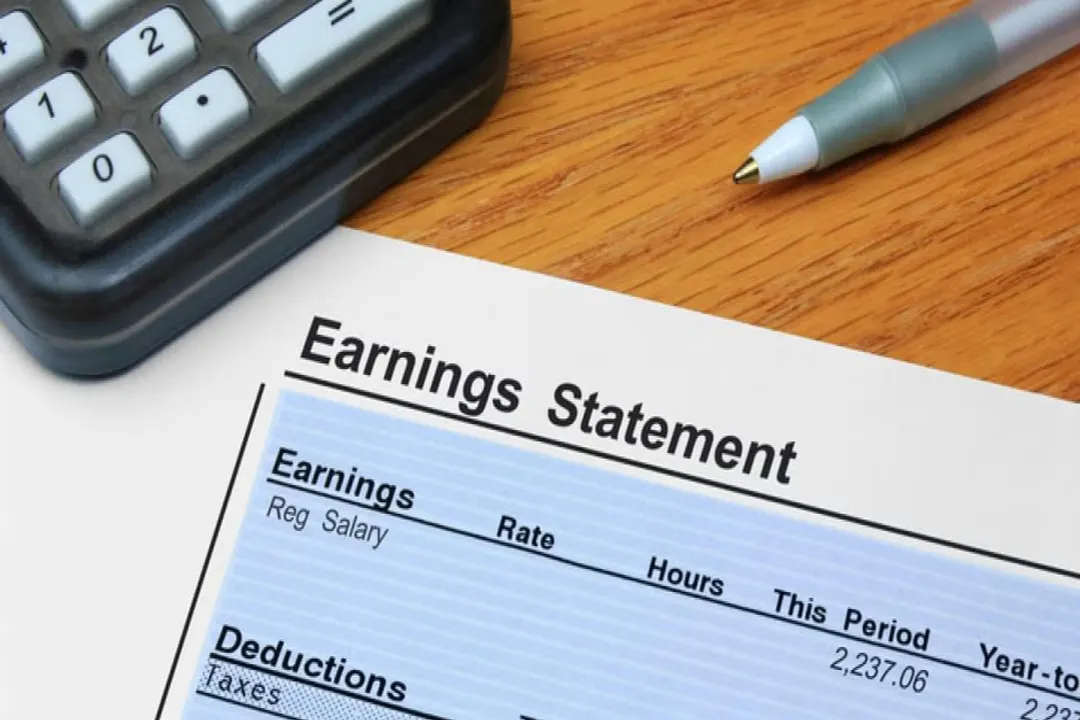
The status of being a salaried employee often comes wrapped in an implied promise of flexibility—a trade-off where consistent weekly pay buys commitment beyond the strict 9-to-5 clock. However, when that clock points to 3:00 PM and the day’s assignments are complete, the question invariably arises: can I legitimately walk out the door? The answer isn't a simple yes or no; it dives deep into federal labor law, company policy, and the nature of your specific job classification. [1][5] Understanding the difference between an exempt and a non-exempt employee is the critical first step, as federal wage laws treat these two groups entirely differently regarding time tracking and compensation deductions. [2][6]
# Classification Matters
For most workers, the distinction hinges on the Fair Labor Standards Act (FLSA). Non-exempt employees are generally entitled to overtime pay for hours worked over 40 in a workweek and must be paid for every hour they are "suffered or permitted to work". [2][6] If a non-exempt employee leaves early, their pay is simply docked based on the hours they did not record working.
Salaried employees, conversely, often fall under the exempt category. To qualify as exempt under FLSA regulations, an employee must typically meet both a minimum salary threshold and specific duties tests related to executive, administrative, or professional roles. [7] If you are correctly classified as exempt, the rules surrounding your salary become the key factor, rather than tracking minutes. You are paid for the job, not the hours. [4][5] This fundamental difference means that the permissibility of leaving early isn't about tracking time, but about how an employer can deduct from your established guaranteed salary.
# Salary Basis Rule
The core legal protection for an exempt salaried employee is the salary basis test. [7] This test mandates that an exempt employee must receive their full predetermined salary for any week in which they perform any work, regardless of the number of days or hours worked in that week. [4] This is what provides the famed salary protection: if you work even one hour on Monday, you generally must receive your full weekly pay, even if you take Tuesday through Friday off for personal reasons (though specific exceptions apply, as we will discuss). [4][7]
This same principle is what complicates the issue of leaving early. If an exempt employee works a standard day, completes all necessary tasks, and leaves two hours early on a Friday, the employer generally cannot deduct pay for those two hours because the employee performed some work during the week. [4][7] The employer is essentially paying for the expected output and availability, not the precise time sheet entries for partial days. [5]
# Absence Deductions
While the salary basis rule protects against deductions for working part of a day, the FLSA allows for deductions under specific, limited circumstances, primarily when an employee is absent for an entire day for personal reasons. [4][7]
The exceptions where an employer can legally dock an exempt employee’s pay include:
- Absences of one full day or more taken for personal reasons (vacation, personal business, etc.), provided the employee has no paid leave (like PTO) remaining to cover the absence. [4][7]
- Absences of one full day or more due to sickness or disability, if the deduction is made pursuant to a bona fide plan, policy, or practice of providing wage replacement benefits for sickness or disability. [4] If the employee exhausts paid sick leave, further full-day absences can result in pay deductions. [7]
- FMLA leave, where deductions can be made consistent with FMLA regulations. [7]
It is crucial to note that an employer generally cannot deduct pay for absences of less than a full day for personal reasons. [4] If an exempt employee leaves two hours early for personal time and has accrued PTO, the employer must use the PTO first. If they don't have PTO, the employer usually cannot dock the pay for those two hours because the employee worked the rest of the week, unless a specific company policy allows for partial-day deductions under these narrow circumstances. [4][7][6] An employer docking an exempt employee's pay for a few missed hours when they are otherwise working the week risks violating the salary basis test, which could unintentionally make the employee non-exempt under the law, requiring back overtime pay. [7]
# Policy Precedes Law
The FLSA sets the minimum floor for employee compensation and treatment. [6] This means that while federal law restricts how and when an employer can dock an exempt employee’s pay, company policy can offer more flexibility, but not less. If an employment contract or employee handbook explicitly states that exempt employees are expected to work a set schedule, or details a specific mechanism for managing early departures, that policy generally governs the day-to-day expectation. [5]
For instance, one company might have a clear policy stating that while salary is guaranteed, leaving early without manager pre-approval, even if work is done, is discouraged as it impacts team cohesion or availability for ad-hoc needs. Conversely, another organization might genuinely embrace a results-only work environment (ROWE) where leaving early upon task completion is the explicit goal. When in doubt, checking the internal guidelines is essential, as this documentation is what an HR department or manager will typically rely on to justify any time-off requests or perceived policy violations. [5]
A pragmatic approach when considering an early departure, regardless of classification, involves understanding the visibility and communication impact. If you are classified as exempt and have wrapped up your deliverables, leaving early is often acceptable in practice, provided you communicate clearly. If your role requires you to be available for clients or internal check-ins later in the afternoon, leaving early compromises that availability, even if the work is done. A simple email or Slack message stating, "All priorities for today are addressed, I'm signing off at 3:30 PM, but I’ll monitor urgent messages remotely until 5:00 PM," often smooths the transition between an expectation of hourly work and a reality based on output. [1] This transparency transforms a potential gray area into a managed agreement.

# Work Complete Flexibility
Many salaried employees operate under the assumption that if they complete their required work, they have fulfilled their end of the bargain and should be permitted to leave. This perspective is common on platforms where employees discuss their workplace norms. [1][5] If you are an exempt employee and you have finished all high-priority tasks, leaving early is often permissible unless it violates an explicit agreement regarding required daily availability.
Consider this scenario: two employees, both exempt, both finish their work by 2:00 PM. Employee A leaves. Employee B stays until 5:00 PM "just in case" something comes up. Legally, under the salary basis test, Employee A cannot have their pay docked if they worked any part of the week. [4] However, from a career management perspective, Employee B might be viewed more favorably by management for demonstrating commitment to the presence aspect of the role, even if the productivity was identical. [5] This highlights the tension: the law guards your pay, but company culture guards your reputation.
To truly assess what an early departure means for your effective compensation, it helps to calculate your baseline hourly rate, even as an exempt employee. If you are paid $$100,000$50,000$ for a 40-hour week, or $$2,000$50$ per hour $($2000 / 40)$52.63$ $($2000 / 38)$. While the employer cannot legally mandate a pay cut for these partial days, being aware of the extra time you are actually contributing above your contractual minimums can inform your discussions about future compensation or workload expectations. [3][5]
# Recourse for Mismanagement
What happens when an employer misunderstands the FLSA and incorrectly docks the pay of an exempt employee for a partial-day absence? If an employer reduces an exempt employee's weekly pay for missing only a few hours of work for personal reasons, they may have violated the salary basis requirement. [7] This is a significant legal risk for the employer because if the pay reduction is improper, the employee may lose their exempt status altogether, potentially making the company liable for unpaid overtime stretching back years. [7] If you suspect your pay has been improperly docked, consulting with an employment law resource or an attorney is advisable, as wage claims can be complex and depend heavily on the specific salary structure and policy documents. [10]
Ultimately, for salaried employees, the freedom to leave early is less about a legal right to a flexible schedule and more about the fulfillment of output expectations within the boundaries set by the FLSA regarding salary continuation. [4][5] When work is demonstrably complete, communication is clear, and the absence doesn't violate a specific, legally permissible policy (like exhausting full-day PTO), an early exit is often an acceptable byproduct of being paid for the job rather than the clock. [1][2]
Related Questions
#Citations
Ok for salaried workers to leave early? : r/antiwork
Salaried Employee | How Does Salary Pay Work?
Handling Excessive Early Departures of Salaried Employees
7 Instances When It's Legal to Dock the Pay of Salaried ...
Is it acceptable to leave work early if you are salaried and ...
elaws - FLSA Overtime Security Advisor
FLSA Rules for Docking Salaried Employees' Pay
I am a salary employee and had to leave 2 hours early from ...
Salaried Employees Policy - Consistently Late or Exiting ...
Overtime - Salaried Employees Have Wage and Hour Rights