Are careers in underwater robotics growing?
The currents pulling talent toward careers in underwater robotics are demonstrably strong, reflecting massive growth in the market itself. It is no longer a fringe area dominated solely by military applications or deep-sea scientific expeditions; instead, commercial interests across energy, infrastructure, and environmental monitoring are driving unprecedented demand for specialized technology and, consequently, the engineers and technicians who build, operate, and maintain it. [1][2] Reports consistently indicate a steep upward trajectory for the global underwater robotics market, with projections showing significant valuation increases over the next decade. [1][3][4] This expansion isn't just theoretical; it translates directly into more projects, more deployment time, and a pressing need for personnel skilled in navigating these challenging environments without a human presence.
# Market Expansion
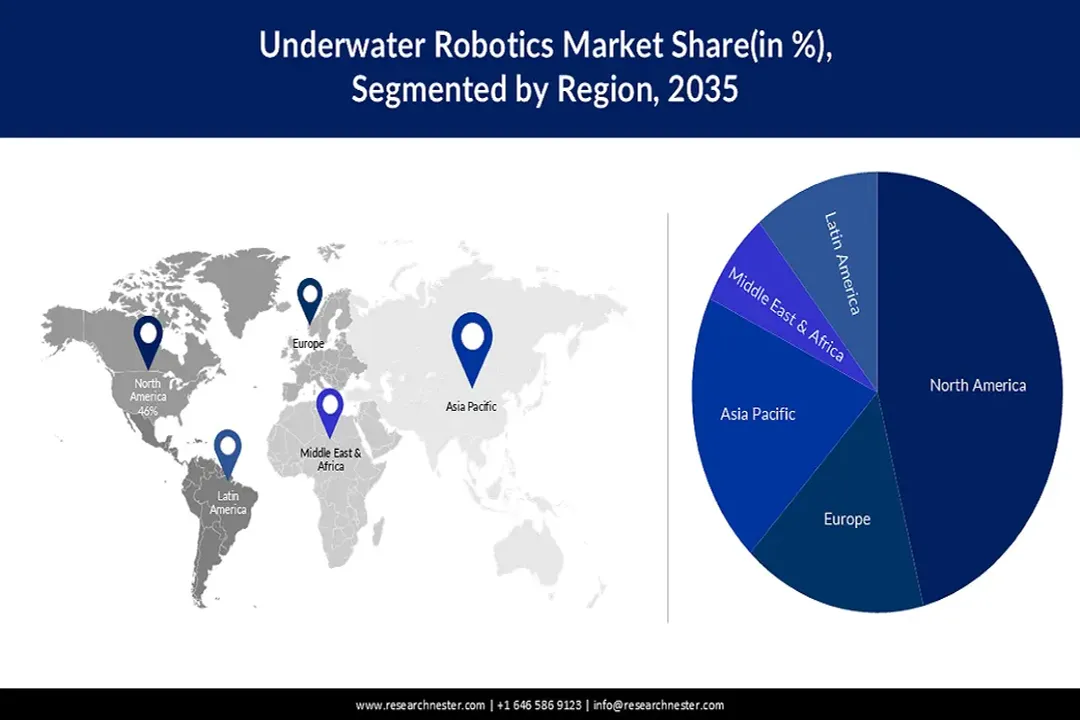
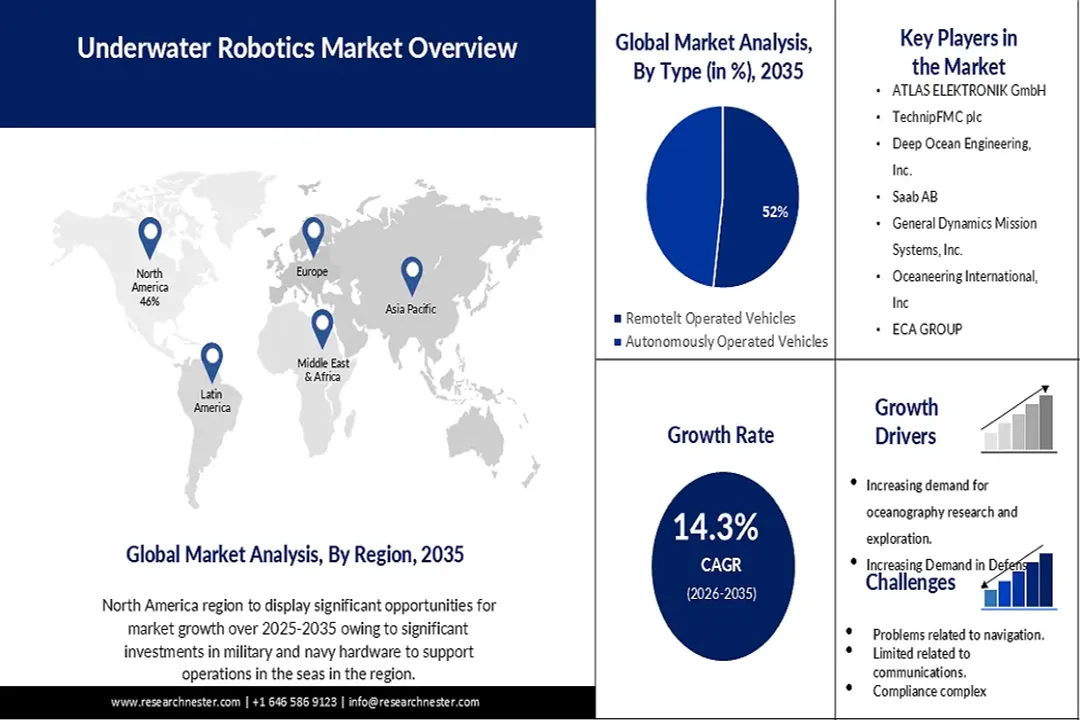
The financial indicators for underwater robotics underscore the career opportunity. The global underwater robotics market size was valued at a substantial figure and is expected to expand at a consistent compound annual growth rate (CAGR) over the forecast period. [1][4] Specific reports place the market value crossing the USD 4 billion mark in recent years, with forecasts showing it nearly doubling or even approaching USD 6 billion by the early 2030s, depending on the scope of inclusion. [3][4] This vigorous growth rate signals robust investor confidence and increasing industrial adoption of remotely operated vehicles (ROVs) and autonomous underwater vehicles (AUVs). [1][2]
The drivers behind this economic acceleration are diverse. While traditional sectors like the oil and gas industry continue to require subsea inspection, maintenance, and repair (IMR) services—often utilizing ROVs for complex tasks like pipeline surveys and wellhead intervention—emerging sectors are rapidly catching up. [2][6] The burgeoning offshore wind energy sector, for instance, requires extensive seabed surveys, foundation inspection, and cable monitoring, tasks perfectly suited for autonomous systems operating year-round, regardless of surface weather conditions. [1][6]
# Sector Needs
Diving deeper into where these robots are being deployed helps clarify the resulting job landscape. Subsea infrastructure monitoring remains a cornerstone, protecting assets worth billions in deep water. [6] However, the expansion into areas like aquaculture, search and recovery, and even cable laying for telecommunications illustrates a broadening industrial base. [2] For example, a major subsea communications cable installation requires precise mapping and trenching operations, which increasingly rely on AUVs for efficiency and safety compared to traditional diver support. [6] Scientific research also continues to be a significant user, employing these tools for tasks ranging from mapping hydrothermal vents to monitoring Arctic ice melt, demanding highly capable, bespoke robotic platforms. [9]
The nature of the work is shifting from pure remote operation to complex autonomy. Early systems were primarily tethered ROVs requiring a dedicated surface crew to pilot them in real-time. [6] Today, the push is toward AUVs capable of executing pre-programmed missions, mapping vast areas autonomously, and returning with high-fidelity data. [9] This shift necessitates engineers proficient in areas like machine learning, advanced sensor integration, and robust navigation algorithms—skills that are in high demand across the broader tech industry but specifically applied to the marine domain. [5]

# Demand High
The increased complexity and volume of deployment directly inflate the requirement for qualified human capital. One analyst noted that the demand for robotics engineers, generally, is indeed growing and comes with competitive compensation packages, a trend that holds true, if not amplifies, within the specialized underwater sector. [7] The scope of marine robotics is expanding beyond just building the vehicle; it encompasses the software, the data analysis, and the operational planning. [5]
Consider the required roles that emerge from this growth:
- Robotics Engineers: Focusing on the mechanical design, propulsion systems, and structural integrity for deep-sea pressures. [8]
- Software Developers: Creating the navigation stacks, control logic, and user interfaces for both ROVs and AUVs. [5]
- Data Scientists/Oceanographers: Interpreting the vast amounts of sonar, video, and environmental data collected by autonomous missions. [9]
- Field Technicians/Operators: Deploying, recovering, and performing maintenance on equipment often in harsh, remote offshore environments. [8]
A significant barrier to entry, which keeps the value of existing professionals high, is the required interdisciplinary fluency. It is not enough to be an excellent control systems engineer; one must also possess an intuitive understanding of the marine environment—how salinity affects acoustics, how corrosion impacts materials, or the specific regulatory hurdles in offshore energy sectors. [8] This combination of deep technical skill and domain expertise creates a talent bottleneck, meaning that individuals who can bridge the gap between computer science/mechanical engineering and ocean operations are exceptionally valuable assets to any firm operating in this space. [6]
# Skill Pathways
For those looking to enter this expanding field, the educational path must be intentionally crafted. While a degree in robotics, electrical engineering, or mechanical engineering provides the technical foundation, specialization matters immensely. [8] Many successful professionals in this domain have backgrounds that blend traditional engineering with marine science or naval architecture. [9] For instance, mastering advanced sensing technologies like Synthetic Aperture Sonar (SAS) or high-resolution multibeam echo sounders requires specialized knowledge that goes beyond standard undergraduate coursework. [1]
If you are currently in university or considering a pivot, actively seeking out projects involving hydrodynamic modeling, underwater communication (acoustic modems), or pressure vessel design will set you apart. Furthermore, gaining hands-on experience, even through university research cruises or internships with subsea inspection companies, provides an invaluable practical edge over purely theoretical knowledge. [8] The ability to troubleshoot a system failure at 300 meters depth, where recovery might take hours or days, speaks volumes about an engineer’s practical competence. [5]
An interesting observation when looking at the necessary skillsets is the divergence between surface support and deep-sea hardware roles. A software engineer focused on fleet management and data processing might work almost entirely from an office on land, yet their success hinges on the data quality delivered by the physical robot. Conversely, the hardware engineer designing a new manipulator arm must have intimate knowledge of material fatigue under high-cycle loading in corrosive seawater, a specialization that requires distinct material science expertise compared to terrestrial robotics. [8] This specialization means that career tracks within the industry can vary widely based on the initial engineering focus.

# Future Trajectory
The future of underwater robotics careers appears exceptionally secure because the incentive to reduce human risk and increase operational efficiency underwater is permanent. As deep-sea mineral exploration becomes a potential reality and aging subsea infrastructure requires perpetual oversight, the workload for these robotic systems—and the need for human supervisors—will only increase. [2][9] We are transitioning from a period where ROVs were expensive, bespoke tools to one where AUVs are becoming more standardized, leading to higher deployment frequency and a lower cost of entry for more industries. [1]
This standardization, while potentially making entry-level operation work more accessible, drives the high-value work further up the chain into systems integration and artificial intelligence development. In essence, the routine inspection tasks may become increasingly automated, but the development of the next generation of autonomous inspection, intervention, and data processing platforms will require ever more sophisticated engineering talent. [5] The opportunity lies not just in using the robots, but in defining what the next generation of underwater intelligence will be capable of achieving.
Related Questions
#Citations
Underwater Robotics Market Size And Share Report, 2030
Exciting future ahead for underwater robotics - IMarEST
Underwater Robotics Market to Cross USD 13.59 billion by 2032, at ...
Underwater Robotics Market Size, Share & Growth Report 2035
What's the scope of marine robotics like? - Reddit
Underwater robots: Navigating the depths of the maritime industry
Demand for Robotics Engineers is Growing, and It Pays Well
Underwater Robotics Engineer | STEM Career Guide - STEMpower
Unema's Underwater Robotics Engineering Career - IEEE Spectrum