Are careers in space governance growing?

The sheer acceleration of activity in Earth’s orbit and beyond has made the question of managing that activity increasingly urgent. Careers supporting the space industry are clearly expanding, driven by massive investment and technological leaps, but the specific growth in roles dedicated to governance—the rules, laws, and policy structures that keep this new frontier orderly—is perhaps the most telling indicator of the sector’s maturity. When a business sector moves from speculative endeavors to genuine economic activity, the need for arbitration, regulation, and international agreement follows immediately. [1]
# Sector Expansion
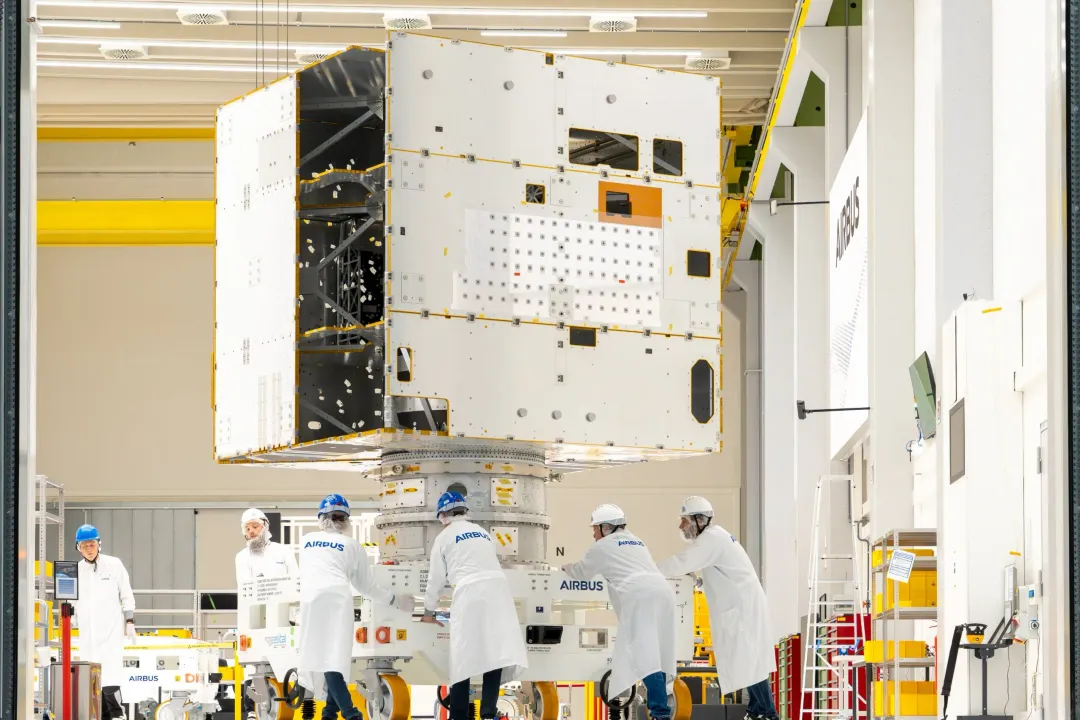
The current state of the space economy demonstrates significant momentum. Data points to a rapidly expanding workforce necessary to support this growth. [7] This expansion isn't just about launching more satellites; it involves terrestrial infrastructure, advanced manufacturing, in-space servicing, and even nascent concepts like space pharmaceuticals, which have seen notable investment. [2] When an industry scales this quickly, its structural needs scale with it. Industrial policy, for example, becomes critical for governing the growth of this emerging economy, ensuring that national benefits are achieved while potential externalities—like orbital crowding—are managed. [1] This focus on industrial policy itself requires a cadre of professionals skilled in economic regulation, international trade, and technological foresight.
It is insightful to consider the gap between technological capability and regulatory preparedness. We are currently witnessing an industry pushing technological boundaries daily, yet the legal and governance structures often lag by decades. If the trend of rapid workforce expansion seen in the sector continues, as suggested by recent quarterly reports, [2][7] the demand for specialized policy roles will outpace the supply of uniquely qualified individuals who understand both the technical realities of space operations and the intricacies of international law. This lag creates an immediate governance deficit that must be addressed by career development in the near term.
# Labor Shortages

The expansion mentioned above is not happening without friction. Several indicators point to a significant struggle to staff the necessary positions across the board. Reports show a growing need for skilled labor within the space workforce overall. [2] Industry leaders consistently express the need for action to fill these developing workforce gaps. [6] While a lot of attention goes to the specialized engineers and mission controllers, governance and policy roles present their own distinct hiring challenges.
For instance, government agencies like the US Space Force face budget concerns that can complicate recruitment and retention efforts, potentially impacting the very structures meant to oversee the domain. [2] Furthermore, the workforce needs are diverse. While technical roles are prominent, the complexity of modern space operations—involving everything from cybersecurity to orbital debris mitigation—means that roles requiring expertise in data privacy, international treaty interpretation, and intellectual property law are becoming just as mission-critical. Without these governance professionals, commercial expansion risks becoming chaotic, leading to market instability or international friction. [1]

# New Competencies
The types of careers that will dominate the space sector in the next decade are not entirely defined yet. Many roles that will be essential to future space operations likely don't exist in a formal capacity today. [3] This unpredictability requires career paths that are flexible and interdisciplinary.
Consider the impact of emerging technologies like Artificial Intelligence and automation. AI is poised to automate many routine tasks in the space industry, shifting the human workforce toward higher-level decision-making, oversight, and interpretation. [9] For governance professionals, this means that while AI might help analyze thousands of orbital paths or draft initial regulatory text, the final judgment on novel ethical dilemmas or setting parameters for autonomous systems will require human expertise deeply versed in governance principles. [9] The skills needed move toward managing the AI systems that manage the space environment.
It is an interesting parallel to observe how different sectors approach this "unseen job" phenomenon. In terrestrial tech, we see rapid iteration on product management and specialized cybersecurity roles emerge almost overnight; in space governance, the stakes are higher, as a regulatory failure could lead to physical loss of assets or international incidents, not just a service outage. Therefore, the governance roles of the future will demand a higher degree of accountability and technical literacy than their terrestrial counterparts.
# Governing Access
As more nations and private entities look to establish a sustained presence in space, governance must address fundamental questions of access and sustainability. Industrial policy needs to anticipate these scenarios, moving beyond simple launch regulations to address activities like resource utilization or manufacturing off-world. [1]
A key area where governance careers are expanding is in defining property rights and resource allocation. If a company intends to mine an asteroid or harvest lunar ice, who governs that extraction? What are the environmental standards for the Moon? These are not abstract philosophical debates; they are immediate commercial concerns that require legal and policy architects. [1] The debate over dominance loss in the space arena, as discussed by some observers, often centers on strategic advantages, but losing the ability to govern one's interests abroad—or off-world—is an equally significant strategic failure. [4] Building the workforce to effectively negotiate and enforce these rules is essential for maintaining national and commercial standing.

# Building Talent Pipelines
To meet the escalating demand, both the public and private sectors must take proactive steps to cultivate talent, especially in the niche areas where policy meets engineering. Simply hoping that existing law graduates will transition into space law or that traditional diplomats will suddenly grasp orbital mechanics is insufficient. [5] Competition for top talent is fierce across the entire sector. [5]
One crucial strategy involves public-private collaboration in education. If we look at how other critical government functions are staffed, often there are specialized fellowships or rotational programs that bridge industry experience with government service. The space sector needs more formalized paths for legal scholars, economists, and ethicists to gain direct experience in the day-to-day operations of space agencies and commercial operators. Developing targeted educational tracks that integrate technical fundamentals with regulatory studies, rather than treating them as separate university departments, would be highly beneficial. For instance, a master's program focused on orbital traffic management might require a semester dedicated entirely to drafting hypothetical compliance reports for various international bodies. [2][6]
This necessity extends to encouraging a broader demographic entry. Space industry leaders have explicitly called for action to bridge workforce gaps, suggesting that current recruitment methods may be too narrow. [6] This means actively seeking candidates with diverse backgrounds in policy, ethics, international relations, and data science, rather than relying solely on traditional aerospace engineering pipelines. If the industry is to manage growth sustainably, its governance structures must reflect the diversity of global perspectives that will ultimately utilize—and be affected by—space activities.
# Navigating International Space Law
The existing foundation for governing space—primarily the Outer Space Treaty of 1967—is showing its age relative to the current commercial environment. [1] The rise of mega-constellations, private astronaut missions, and intentions for permanent off-world settlements strains these early agreements. This strain creates a massive opportunity for careers focused on international negotiations and the interpretation of evolving norms.
Governance professionals are needed to help shape new bilateral and multilateral agreements that reflect current technological realities. This work involves understanding the nuances of existing treaties, such as the requirements for national authorization and continuous supervision of non-governmental activities, [1] and applying those principles to concepts like on-orbit servicing or debris removal liability. Who is financially responsible when a debris-removal satellite causes a secondary collision? These questions require lawyers and policy experts who can build consensus among often competing national interests. [4] The ability to translate complex engineering requirements into binding international language is a high-value skill set in this growing field.

# Career Trajectories in Governance
For those considering a career trajectory rooted in space governance, the pathways are becoming clearer, though still evolving. They generally fall into a few categories:
- Regulatory Compliance: Working within a commercial entity (launch provider, satellite operator) to ensure adherence to domestic and international licensing and operational requirements. This often requires deep familiarity with agency-specific rules (like the FCC or FAA in the US context).
- Policy Analysis and Advocacy: Working for think tanks, industry associations, or government agencies to study potential impacts and recommend new laws or international positions. This is where the foundational work for future treaties happens. [1]
- International Law and Diplomacy: Serving as a direct representative in bodies like the United Nations Committee on the Peaceful Uses of Outer Space (COPUOS) or in bilateral government-to-government negotiations concerning data sharing or spectrum allocation.
The demand in all these areas is set to increase as the volume of traffic in orbit rises. It is worth noting that many roles that govern the business of space—such as finance specialists dealing with space insurance or venture capitalists specializing in orbital infrastructure—are also functionally governance roles, deciding where capital flows based on perceived regulatory risk.
# Conclusion
Careers in space governance are not just growing; they are becoming essential preconditions for sustainable growth in the wider space economy. While the headlines focus on rocket launches and Mars missions, the scaffolding required to support those ambitions—the laws, the policies, the ethical guidelines—must be built concurrently. [1] The expansion of the overall space workforce indicates a massive need for technical talent, but the complexity of managing that talent and its activities ensures that careers in policy, law, and regulatory oversight are on a steep upward trajectory. Preparing for these roles requires interdisciplinary training that marries technical awareness with robust policy acumen, ensuring that as humanity expands its reach into the cosmos, it does so with a clear set of rules for engagement.
Related Questions
#Citations
Governing growth in the emerging space economy | Brookings
The Space Report 2025 Q1 Shows Growing Need for Skilled Labor ...
The Future of Space Sector Jobs: Careers That Don't Exist Yet
The Loss of US Space Dominance Due to Attrition and RTO : r/nasa
Building the space workforce — how to compete for top talent in a ...
Space Industry Leaders Want Action to Fill Workforce Gaps - GovTech
New Data Shows a Rapidly Expanding Space Workforce
Space Industry Growth: 5 Actions to Guide Its Trajectory - WSJ
Boosting space talent: Mapping gen AI's impact on space jobs