Are careers in lightweight materials viable?

The proliferation of advanced lightweight materials is not a future concept; it is the engine driving industrial restructuring across nearly every major manufacturing sector today. From the push for net-zero emissions mandated by global climate goals to sheer operational efficiency, the ability to reduce mass without sacrificing performance is paramount, making careers focused on these materials exceptionally viable, though increasingly specialized. [3][4] The viability hinges less on whether the field exists—it clearly does, heavily supported by regulations in aerospace, automotive, and construction—and more on where a professional chooses to focus their expertise within this rapidly evolving landscape. [4]
# Sector Growth
The demand for materials scientists and engineers specializing in lightweighting is directly tied to major industry mandates for emissions reduction and improved performance metrics. [3][4] In aerospace, for example, the material landscape has radically shifted. Aluminum, once constituting nearly 70% of a commercial aircraft's structure, now accounts for only about 20% in modern designs, largely supplanted by carbon fiber and other composites. [1] This substitution is driven by the fact that a 1% reduction in an aircraft's weight translates directly into a 0.75% decrease in fuel consumption, a critical factor when the industry aims to cut transport emissions significantly by mid-century. [4]
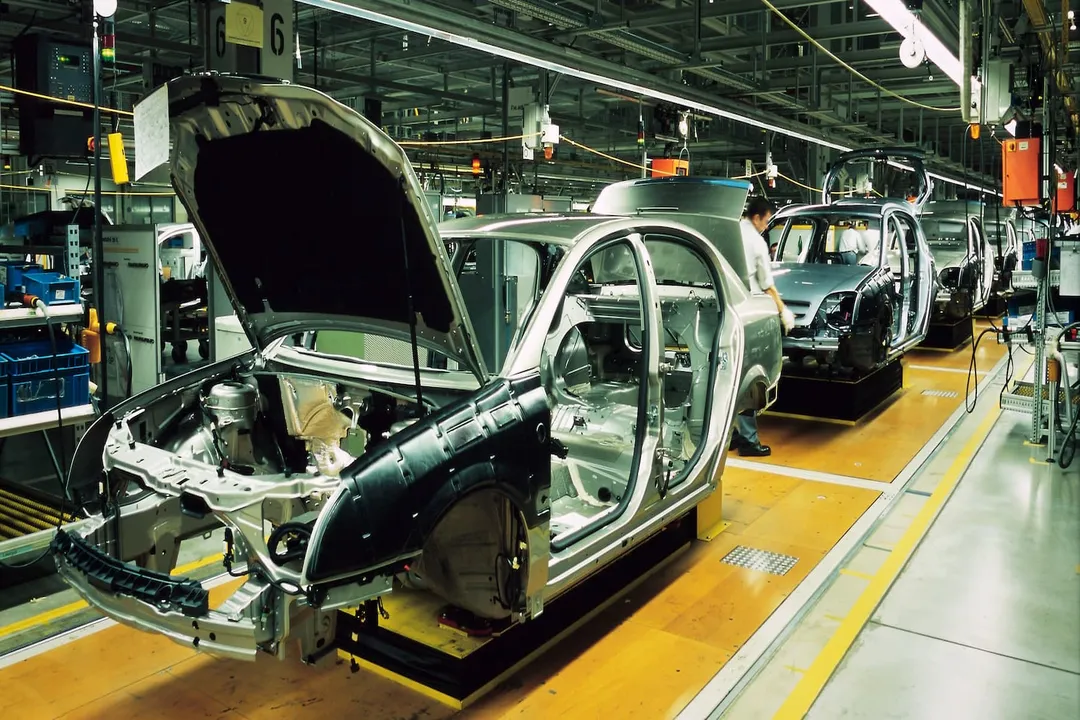
The automotive industry presents a slightly more complex, yet equally promising, scenario. The global market for automotive lightweight materials was projected to expand substantially, moving from an estimated 100 billion by 2025, covering metals, composites, and advanced polymers. [4] While traditional steel still accounts for roughly 60% of a volume vehicle's mass, light metals like aluminum and magnesium claim around 30%, and composites make up about 8%. [4] The challenge here is balancing performance with volume production costs; while some lightweight materials can be thousands of times more expensive than steel equivalents, new manufacturing techniques like pultrusion are starting to mitigate the cost barriers associated with composites, pushing them beyond niche, high-performance vehicles into broader application. [4]
Beyond transportation, the energy sector benefits immensely from lightweighting. The development of lighter turbine blades for wind energy, often using composite materials like flax-carbon fiber blends or plant-based fibers like bamboo, increases reliability and allows for the deployment of newer, more powerful designs. [4] Similarly, in construction, lightweight composites aid in meeting stringent energy efficiency standards, driving innovation in insulation and building-integrated systems. [4]
# Material Focus

Careers in this domain are naturally split along material lines: metallic alloys, traditional polymers/composites, and novel/bio-based materials. [4] Professionals deeply versed in Carbon Fiber Reinforced Plastics (CFRPs) find roles heavily concentrated in aerospace, where their durability, high-temperature resistance, and reduced maintenance requirements justify the premium cost. [1][4] The construction of fuselages and wings on aircraft like the Boeing 787 showcases the maturity of this application. [1]
However, the future of work appears increasingly focused on circularity and advanced functionalization of these lightweight structures. [4] Thermoplastic-based composites are garnering attention because they can be reshaped and remelted, solving historical recycling challenges associated with thermosets. [4] Furthermore, cutting-edge research involves incorporating nanomaterials, such as carbon nanotubes or graphene, into composites to enhance structural integrity, improve electrical conductivity, or even enable integrated Structural Health Monitoring (SHM) for predictive maintenance. [4] This ability to embed sensing or self-healing capabilities directly into the material matrix represents a significant area for materials scientists who understand both chemistry and electronic interfacing.
It is an interesting dichotomy: in aerospace, the focus remains on maximizing performance and safety over decades of service life, [1] while in automotive and construction, the emphasis is shifting rapidly toward lifecycle management, making materials that can be easily disassembled or recycled highly valued. [4] A career path that marries the material science understanding of aerospace composites with the end-of-life process knowledge of automotive recycling offers a truly unique and valuable profile.

# Skills Landscape
The viability of a materials career is inextricably linked to educational attainment and the specific skill set one brings to the table. While a Bachelor of Science degree in materials science or engineering is the foundation, securing the most strategic, growth-oriented roles often requires an advanced degree, such as a Master’s or Ph.D., especially for pure Research & Development positions. [1] For engineers focused on process development, scale-up, or quality assurance in manufacturing environments, strong practical skills coupled with a B.S. are essential, but market selectivity is increasing. [3]
The job market in 2026, for instance, signals a move away from generic laboratory science roles toward positions with a clear, measurable impact on growth, decarbonization, or resilience. [3] Recruiters are looking for candidates who can link their materials approach directly to outcomes, such as yield improvement, scrap rate reduction, or extended asset life. [3] This necessitates mastering not just traditional characterization techniques like SEM or XRD, but also digital competencies. [3]
Materials professionals are increasingly expected to manage data science workflows. Familiarity with tools like Python or R for analyzing large datasets generated by high-throughput experimentation, or using machine learning to predict material properties, is becoming a differentiator rather than a bonus. [3] Those who can blend the fundamental understanding of crystalline structures or polymer rheology with digital modeling capabilities are positioned well.
If one considers the entire lifecycle, the challenges inherent in manufacturing and sustainability define career opportunities. While materials like lightweight alloys offer significant weight reduction, issues like corrosion resistance historically limited their use until protective coatings (like plasma electrolytic oxidation on magnesium alloys) were perfected. [4] Similarly, the complexity of fiber-matrix composites makes recycling difficult, creating a high-value niche for specialists in separation processes, mono-material design, or developing recyclable thermoset solutions. [4]
We see that foundational knowledge remains critical, but the execution environment is changing. A materials engineer working in volume automotive production today must be as familiar with process control parameters on a plant floor as they are with failure analysis in a lab, and perhaps even more so with the regulatory framework governing the material's eventual disposal or reuse. [3]
# Career Trajectories
For those entering the field, strategic choices regarding specialization will define long-term viability. Choosing to specialize in one or two key "platforms"—such as battery materials (cathodes, electrolytes), hydrogen storage alloys, or specific classes of lightweight composites—while maintaining broad materials fundamentals, seems to be the recommended path for aligning with hiring trends. [3] Candidates should be ready to articulate their experience across the development chain, from initial lab formulation to successful scale-up and qualification. [3]
Furthermore, the governance aspect of materials science is becoming formalized into distinct career paths. Roles like Sustainable Materials Engineer, Lifecycle Assessment (LCA) Analyst, or Materials Compliance Specialist are growing in importance, directly addressing regulatory requirements like REACH or environmental product declarations. [3] These positions require strong materials fundamentals augmented by an understanding of policy, risk assessment, and the circular economy. [3]
It’s worth noting that even though turbulence exists in some industrial sectors, experienced materials talent, particularly in areas linked to the energy transition (batteries, hydrogen), remains in short supply, supporting steady salary growth for proven experts. [3] For early-career candidates facing an entry-level squeeze—where automation handles more routine testing—targeting stepping-stone roles like applications engineer or process operator within materials-rich environments can provide the necessary applied experience to transition later into dedicated R&D or design roles. [3]
An original insight into the current market viability is recognizing the necessary translation layer between high-performance materials development and high-volume process engineering. For instance, a career focused solely on synthesizing a novel, ultra-lightweight graphene-polymer matrix might yield exceptional lab data, but its viability is zero until a Process Engineer can develop a process—perhaps using advanced additive manufacturing or continuous mixing—that delivers that material at a cost point acceptable to the automotive sector, which might only tolerate a 10-20% cost increase over current light metals, rather than the multi-thousand-percent increase seen in initial R&D stages. [4] Therefore, the most marketable individuals are those who structure their portfolios not just around what material they developed, but how they solved the manufacturing bottleneck to make it commercially attainable for its target industry.
Another area demonstrating career viability involves the integration of modeling and simulation, which complements experimental work. Since many new materials and processes are inherently expensive or difficult to test destructively in large batches, the ability to accurately model their performance becomes economically crucial. A professional who can use computational tools to simulate the long-term fatigue life of a novel composite component or predict the performance degradation of a battery cathode before committing to a pilot run is providing immediate cost savings. [4] This skill, sometimes termed Materials Informatics, allows a materials specialist to operate effectively across the entire technology readiness level (TRL) scale, making them invaluable whether supporting fundamental research or production quality control.

# Challenges Remain
Viability doesn't negate difficulty. Lightweight manufacturing inherently introduces complexity. While materials are lighter, the processes used to join them—especially dissimilar ones like bonding a carbon fiber composite to an aluminum frame—can be challenging, often involving specialized adhesives or welding substitutes. Furthermore, the cost structure, particularly for advanced composites, remains a major barrier to ubiquitous adoption outside of high-value applications like defense and premium aerospace. [4] A career in lightweight materials will therefore often involve being a problem-solver for adhesion, joining, inspection, and—increasingly—end-of-life management. Recycling composites, for example, requires specialized, often energy-intensive, processes to separate the fiber from the polymer matrix, presenting a trade-off between resource conservation and immediate energy demand that needs material scientists dedicated to resolution. [4]
Ultimately, careers in lightweight materials are not just viable; they are necessary for industries facing global pressure to decarbonize and improve efficiency. The demand is high, but the expectation is higher: professionals must bring platform-specific expertise, digital fluency, and a clear understanding of the commercial and regulatory context in which their materials will perform. [3]
Related Questions
#Citations
Materials Science Hiring Trends 2026: What to Watch Out For (For ...
How Advanced Lightweight Materials Are Transforming Key Industries
Trends in automotive materials engineering - Keronite Blog
Carbon Fiber in the Aerospace Industry: Past, Present, and Future