What roles exist in ocean data platforms?
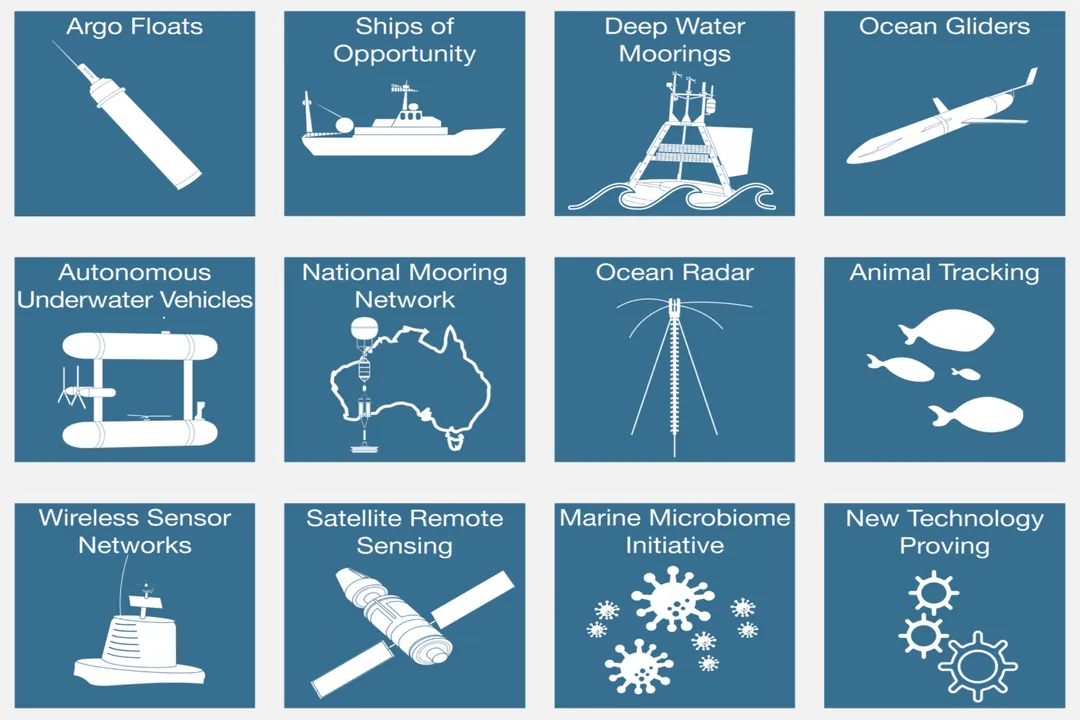
The modern exploration and stewardship of our oceans rely heavily on sophisticated digital infrastructure, giving rise to a specialized set of roles dedicated to managing, interpreting, and acting upon the vast amounts of data generated beneath the waves. These positions bridge the traditional gap between marine science and information technology, creating necessary expertise for platforms designed to handle everything from deep-sea sensor readings to satellite imagery.
# Scientific Core
The foundation of ocean data platforms often rests on roles that directly apply scientific understanding to the collected information. The Ocean Data Scientist exemplifies this blend, requiring a deep appreciation for oceanographic principles alongside strong computational skills. [1] This is not simply a data scientist working on ocean problems; the title suggests a necessary convergence of expertise where domain knowledge informs the modeling and analysis approaches used on the data. [1]
# Data Analysis
A slightly more focused role is the Oceanographic Data Analyst. These individuals are central to transforming raw measurements into actionable insights. [9] In some organizational structures, this position might be an entry point or a co-op experience, focusing on the practical application of statistical methods to environmental datasets. [9] Similarly, a Geospatial Data Analyst focusing on ocean ecology applies specific geographic information systems (GIS) skills to map and understand spatial patterns in marine environments, perhaps tracking species distribution or monitoring changes in critical habitats. [3] This specialization requires proficiency in tools that handle spatial references, a critical dimension in ocean data that standard tabular analysis often misses. [10]
It is interesting to observe the spectrum here: the Data Scientist might build a predictive model for current speed based on ten years of sensor data, while the Data Analyst might be tasked with creating the quarterly report visualizations showing seasonal temperature anomalies, and the Geospatial Analyst would map where those anomalies occur relative to known coral reefs or shipping lanes. [1][3] One can infer that success in these scientific tracks hinges less on just knowing Python or R, and more on understanding why the sensor might be giving a spurious reading—a distinction many generalist data roles do not have to consider.
# Engineering Backbone
Data platforms cannot function without dedicated engineering roles ensuring that data flows reliably and that the analytical environment is stable and scalable. This is where the Data Engineer becomes indispensable. [2] Their primary mission often involves designing, building, and maintaining the pipelines that ingest, clean, and store the incoming ocean data. [2] Consider the sheer volume and variety—from continuous acoustic streams to sporadic ship-based bottle samples—the Data Engineer constructs the systems that handle this heterogeneity without failing. [2]
# Platform Stability
Moving beyond just the data flow, there are roles dedicated to the computational infrastructure itself. The Staff DevOps Engineer or Platform Engineer focuses on the operational health of the entire system. [8] This involves automating deployment, managing cloud resources, ensuring system uptime, and creating the tools that the scientists and analysts use to run their computations efficiently. [8] Without this layer, even the best analytical models would be stuck waiting for server access or struggling with outdated software environments.
In a growing marine data organization, the interaction between the Data Engineer and the Platform Engineer is key. The Data Engineer might request a new storage bucket or a specialized processing cluster, and the Platform Engineer ensures that this resource is provisioned securely, cost-effectively, and in a way that standardizes the experience for all other users of the platform. [2][8] This collaboration is what transitions a collection of scripts into a scalable platform.

# Data Stewardship
Ocean data platforms handle information that is often collected through public funding or international agreements, meaning its longevity, accessibility, and trustworthiness are paramount. This necessitates specialized roles focused purely on governance and curation.
The Data Management Specialist is an excellent example of this stewardship. [4] A position focused on something like the Global Ocean Observing System (GOOS) would require someone deeply familiar with metadata standards, data archival protocols, and quality assurance procedures. [4] Their concern is less about immediate analysis and more about ensuring that data collected today remains usable, understandable, and findable by researchers decades from now. [4]
This stewardship function often involves:
- Standardizing formats across different instruments. [10]
- Implementing quality checks to flag erroneous entries before they pollute models. [4]
- Managing access controls for sensitive or proprietary datasets. [4]
When we contrast the Ocean Data Scientist with the Data Management Specialist, we see a difference in temporal focus. The scientist looks forward—predicting or modeling—while the manager looks backward and sustains—documenting and preserving. If a data platform lacks strong management roles, it risks becoming a "data swamp," where data exists but is difficult to trust or retrieve years later, regardless of how good the initial modeling work was. [5]
# Domain Variety in Ocean Careers
It is important to recognize that these roles are not always siloed into one single "ocean data platform" department; rather, they exist across various organizations, from government agencies like NOAA to private marine technology companies. [5][7] A general career in oceanography often involves data work, even if the title isn't explicitly "data scientist". [5]
For instance, data analysis skills are crucial even for traditional oceanographers or those in fieldwork who need to process on-site sensor outputs immediately. [7] Jobs focusing on specific oceanographic domains, like coastal processes, require data handling tailored to that environment—understanding how riverine input and tidal cycles affect data interpretation is domain-specific knowledge that general data roles might overlook. [10]
# Job Market Context
Looking at regional job postings provides a snapshot of current demand. Positions advertised specifically for "Ocean Data Science" in areas like California, for example, indicate a market demand that requires a mixture of skills, often listing requirements that span cloud computing, statistical programming, and marine biology knowledge. [6] This suggests that employers are often seeking the hybrid individual who can manage the engineering stack and contribute scientific interpretation, sometimes consolidating roles that might be separated in a very large institution. [1][6]
To illustrate how these skills converge in a practical setting, consider a hypothetical project to monitor harmful algal blooms (HABs).
| Role | Primary Data Lifecycle Stage | Key Deliverable Example |
|---|---|---|
| Data Engineer [2] | Ingestion & Storage | Automated pipeline for processing satellite chlorophyll data every six hours. [2] |
| Data Management Specialist [4] | Curation & Access | Metadata record ensuring all HAB data links back to the originating sensor calibration files. [4] |
| Geospatial Analyst [3] | Spatial Analysis | A dynamic map highlighting areas exceeding the toxicity threshold in the last 48 hours. [3] |
| Ocean Data Scientist [1] | Modeling & Prediction | A machine learning model predicting the probability of a new bloom forming in the next week. [1] |
This table helps clarify that a successful ocean data platform requires a chain of specialized contributions. The breakdown of responsibility prevents any single person from becoming a bottleneck, though it highlights the necessity for clear communication interfaces—the language spoken between the Data Engineer and the Ocean Data Scientist must be mutually understood. [1][8]

# Synthesis and Future Needs
The array of roles—from Data Engineers building the pipes [2] to Data Management Specialists locking the archive [4] and Data Scientists building predictive models [1]—paints a picture of a mature, specialized ecosystem. There is a clear need for individuals who understand the unique challenges of ocean data: extreme sparsity in some areas, overwhelming redundancy in others, and the need to integrate disparate sensor types that measure different physical phenomena. [10]
A critical takeaway for those entering this space, whether as a developer or a scientist, is the value of contextualizing the code. While a DevOps Engineer might focus on containerization efficiency, [8] the most valuable Platform Engineer in this space is one who understands that pausing a deep-sea sensor collection routine might cost a year's worth of critical climate data, thus prioritizing reliability over aggressive cost-cutting in certain modules. [8]
Ultimately, the future success of ocean data platforms rests not just on having these roles, but on cultivating an environment where the pure engineering expertise (DevOps, Data Engineering) respects and incorporates the deep scientific expertise (Oceanography, Data Science, Geospatial Analysis). [1][5] This cross-pollination ensures the technology serves the science, rather than the technology dictating what science can be done. [7]
Related Questions
#Citations
Ocean Scientist… Data Scientist… Ocean Data Scientist?
Data Engineer
Geospatial Data Analyst - Ocean Ecology @ Hub Ocean
We're Hiring! Apply to GOMO's Data Management Specialist ...
9 Careers in Oceanography (With Salary Information)
Ocean Data Science Jobs in California (NOW HIRING)
A Sea of Opportunities: See Yourself as an Ocean Explorer
Oceanographic Data Analyst – Co-op
Ocean data query - Coastal Processes, Environments & Systems