What Jobs Are Best in Artificial Intelligence?

The artificial intelligence landscape is experiencing an explosion in opportunity, shifting from a futuristic concept to a practical business imperative across nearly every industry, from finance to healthcare. This boom means that while some fear job displacement, a wide array of new, in-demand, and often highly compensated careers are opening up for those ready to build, apply, or manage these intelligent systems. Demand for AI-focused roles is growing substantially, with positions in computer and information research projected to expand by 20 percent between 2024 and 2034, according to the U.S. Bureau of Labor Statistics (BLS). The best roles span a wide spectrum, demanding expertise ranging from advanced mathematics and programming to ethical reasoning and business strategy.
# Engineering Core

At the technical heart of the AI revolution are the engineers responsible for building the mechanisms that power machine learning and intelligent systems. These roles are foundational and often command the highest median compensation packages.
# Machine Learning Engineer
The Machine Learning Engineer (ML Engineer) is tasked with the tangible creation and deployment of algorithms. Their work involves designing feature pipelines, rigorously testing and tuning models—frequently using libraries like TensorFlow or PyTorch—and ensuring these AI systems function reliably in live production environments. While the lines often blur, the ML Engineer typically focuses more on the operationalization and performance of established ML techniques than the pure research. The average base salary for this role sits around $172,000 as of mid-2025, with top offers easily exceeding this figure. Strong Python proficiency, combined with expertise in ML frameworks, is non-negotiable for securing these positions.
# AI Engineer
The AI Engineer role often overlaps with the ML Engineer but can carry a broader mandate for developing and implementing complete artificial intelligence systems. These professionals are responsible for building the models and algorithms, cleaning the requisite data, and ensuring the system performs optimally. In the U.S., the average annual salary is cited around $160,757, placing it among the most lucrative technical tracks. Success here requires a mixture of deep technical skills, knowledge of statistics, and fluency in core programming languages.
# Deep Learning Specialist
Diving deeper into complexity, the Deep Learning Engineer specializes in using advanced neural networks to unlock capabilities that standard machine learning might struggle with, such as processing highly complex patterns in massive data sets. They develop and execute sophisticated network architectures, often collaborating with data scientists to push the frontiers of what's possible with systems capable of learning from enormous volumes of raw input. The average annual compensation for this specialization hovers near $141,435 in the U.S..
# Data Perception And Interaction
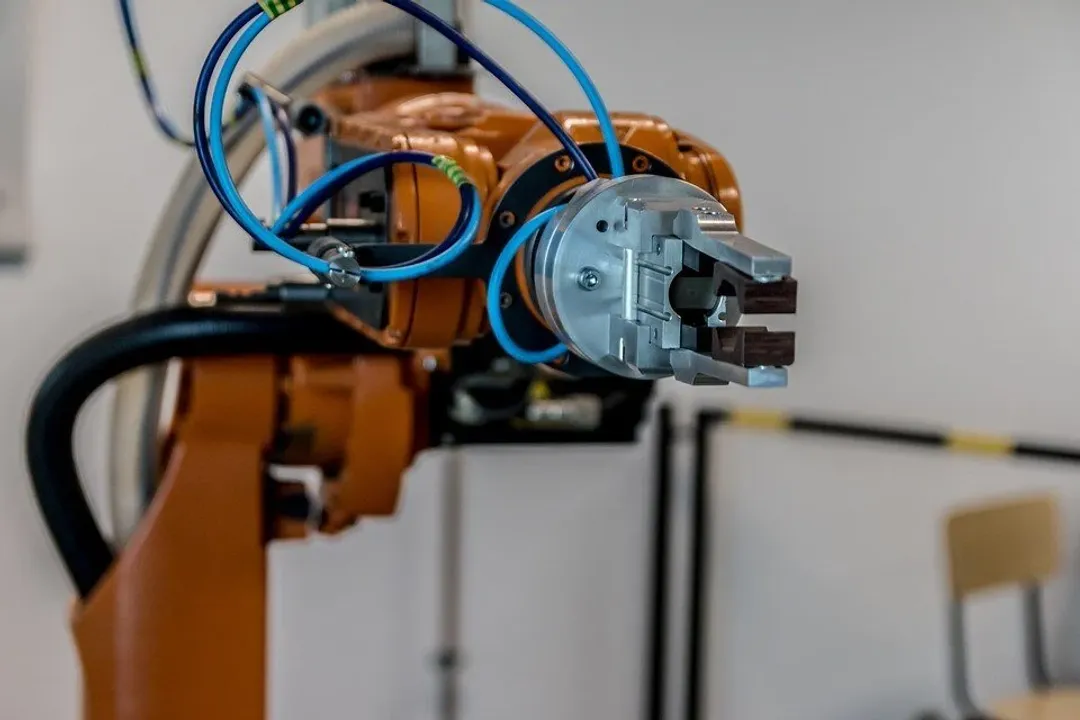
Beyond general model building, specialized roles focus on how AI perceives and interacts with different forms of data—visual, textual, or raw information streams.
# Data Scientist
The Data Scientist acts as a translator, determining the critical questions an organization needs answered and then designing the algorithms to find those answers within complex datasets. Their duties involve feature engineering, prototyping predictive models, and translating business requirements into solvable algorithmic problems. While median reported salaries can range lower, at \112,590** to **\153,000, top data scientists working in AI-heavy environments command much higher compensation. The skill set is heavily weighted toward statistics, programming in Python or R, and strong data visualization capabilities for communicating findings to non-technical leaders.
# Computer Vision Engineer
For tasks involving sight, the Computer Vision Engineer combines AI and machine learning to enable computers to understand and interpret visual data like images and videos. This expertise is critical for developing systems used in facial recognition, autonomous vehicle navigation, and medical image analysis. These engineers are highly sought after where accurate, real-time perception is paramount, often earning salaries around \162,000 to \168,803 annually. Mastery of deep learning frameworks and tools like OpenCV is central to this specialization.
# Natural Language Processing Engineer
The Natural Language Processing (NLP) Engineer bridges the gap between human language and machine understanding. They design systems that handle speech recognition, text analytics, sentiment analysis, and language translation, essentially turning unstructured human discourse into something a computer can process meaningfully. NLP engineers frequently work with large text corpora and fine-tune transformer models, and their compensation is competitive, often similar to ML engineering roles, with a U.S. median around $113,000.

# Strategy And Application

Not every high-value AI job requires developing a novel neural network architecture from scratch. Many lucrative positions focus on applying existing AI capabilities to business problems, managing the pipeline, or ensuring responsible deployment.
# AI Product Manager
The AI Product Manager is essential for translating technical potential into market value. This role guides the entire lifecycle of an AI-based solution, requiring the individual to possess expertise in both deep/machine learning and product strategy. They act as the crucial link between the engineering team and business stakeholders, setting scope, scheduling, and defining success metrics based on what the technology can realistically achieve. Salaries average around \103,000** but can reach as high as **\162,000 for high-stakes strategic projects.
# AI Consultant and Business Development
For those with extensive experience who are not coders, like IT managers looking to transition, roles that require domain knowledge and strategic communication are excellent fits. The AI Consultant advises businesses on integrating AI and machine learning to drive efficiency, reduce costs, or increase revenue. Separately, the Business Development Manager specializing in AI focuses on securing new market opportunities and creating strategic alliances, which the data suggests is one of the highest-paid generalist roles in the field, averaging nearly $196,491 annually. These roles reward experience in a specific industry combined with an understanding of AI capabilities.
# The Human Element
As AI models become more powerful, the governance around them becomes equally critical. The AI Ethics Specialist ensures that systems are built and used responsibly, focusing on issues like bias, fairness, and regulatory compliance. This role is growing rapidly and often attracts professionals with backgrounds in philosophy, law, or policy who can bridge ethical theory with technical implementation.
In considering a shift toward AI, especially for those with established management or IT experience but little coding background, focusing on the application layer is a smart maneuver. An individual with decades of IT experience might find a smoother entry as an AI Product Manager or AI Consultant than trying to compete directly with recent PhDs in ML engineering. Their value lies not in coding the model, but in knowing precisely which problem the model should solve and managing its deployment into an existing, complex organizational structure. For example, an experienced IT manager already understands infrastructure, which is vital when working with Data Engineers who manage the massive pipelines on platforms like AWS or Azure.
# Education And Entry Barriers
The path into these demanding roles usually requires a strong educational foundation, though practical application can sometimes supplement formal degrees. Most AI jobs generally mandate at least a bachelor’s degree, often in computer science, mathematics, or a related field, with many specialized engineering and research roles preferring a Master’s or even a Ph.D..
Key technical skills are frequently cited across multiple job descriptions:
- Programming: Python is dominant, supported by R for statistics and SQL for database interaction.
- Mathematics: A firm grasp of statistics, linear algebra, and calculus underpins most algorithm development.
- Data & Deployment: Experience with big data tools (Hadoop, Spark) and cloud platforms (AWS, Azure, GCP) for handling and deploying models is expected.
However, the current environment also values tangible proof of skill. One perspective suggests that diligent self-study, particularly using modern tools like Large Language Models as personalized tutors for learning Python and core libraries like NumPy or Pandas, can augment existing credentials quickly. Building a public portfolio on platforms like GitHub showcases practical application and problem-solving abilities, potentially serving as an alternative to a higher degree for certain roles.

# Automation Contrast
It is instructive to contrast the high-growth, high-paying AI jobs with the roles that possess the lowest risk of automation entirely. Research indicates that jobs with a 0.0% automation risk probability are those that require profound human qualities that current AI struggles to replicate: high degrees of social skill, emotional intelligence, complex physical dexterity, and creativity in unpredictable scenarios.
For instance, roles like Nurse Practitioners are projected to grow by 45.7% by 2032, yet this is due to the necessity of patient care, persuasion, negotiation, and social perceptiveness. Similarly, Choreographers require originality and social skills that defy rigid algorithmic replication. This contrast reveals a critical bifurcation in the future job market: one path involves mastering the creation and deployment of AI tools for high technical reward, and the other involves mastering uniquely human interaction and creativity for high job security. While the AI sector is booming, the most "future-proof" careers might not be in the sector itself, but in the human-centric fields that AI will augment, not replace.
Related Questions
#Citations
9 Artificial Intelligence (AI) Jobs to Consider in 2026 - Coursera
What AI Jobs Need Filling? I Want To Work in AI but it's so vast, I'm ...
16 Artificial Intelligence Career Paths - California Miramar University
Top 65 Jobs Safest from AI & Robot Automation - U.S. Career Institute
Top 10 Highest Paying Artificial Intelligence Jobs & Salaries 2026
12 Exciting Careers in Artificial Intelligence to Explore