How Important Is a Cover Letter?
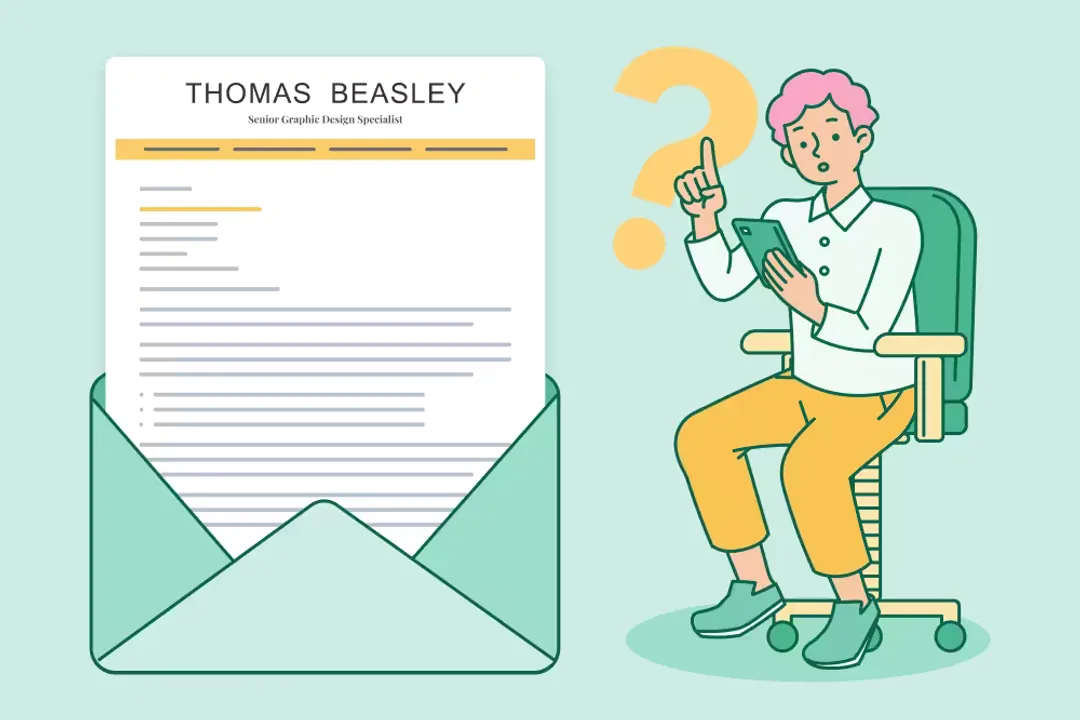
The persistence of the cover letter in the digital application age is a frequent point of debate among job seekers. Whether this document is an essential formality or an obsolete artifact largely depends on whom you ask—the applicant, the recruiter sifting through hundreds of emails, or the hiring manager reviewing the final shortlist. [1][4] Fundamentally, the cover letter’s importance isn't a fixed point; it's a sliding scale influenced by industry, company size, the specific role's requirements, and the sheer volume of applications received. [1] At its best, the letter transforms a sterile resume into a compelling narrative, providing context and demonstrating authentic interest that bullet points simply cannot capture. [2][6]
# Recruiter Stances
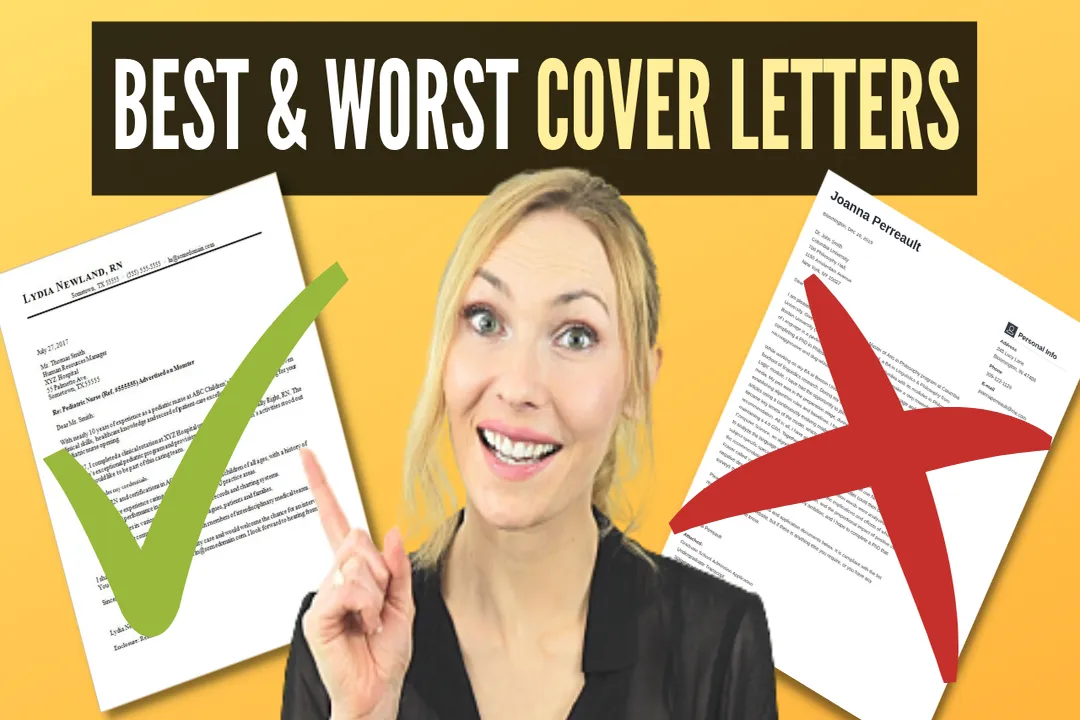
The most direct feedback on cover letter importance often comes from the professionals tasked with reading them. Their experience reveals a spectrum of necessity. For many high-volume roles, recruiters admit that a letter might be skimmed or skipped entirely, especially if the accompanying resume strongly matches the minimum qualifications or if the application system emphasizes quick keyword scanning. [1][4] If a hiring manager is faced with hundreds of submissions, the sheer time constraint makes deep reading of every supplemental document unrealistic. [1]
However, to categorize the cover letter as universally unimportant because some recruiters don't read them is to miss the context of when they are read. Recruiters often state that while they might not review it for the first 50 applications, if a candidate is on the borderline, or if two candidates are nearly identical on paper, the cover letter becomes the crucial tie-breaker. [1][2] The letter offers qualitative evidence of communication skills and professional personality that a resume review alone cannot provide. [2] Furthermore, the sheer effort put into a personalized letter signals a level of genuine motivation that a generic application lacks. [6] Some recruiters report that while many submissions are just recycled summaries of the resume—which wastes the reader’s time—a well-crafted one stands out immediately. [10]
# Necessity Defined
There are absolute thresholds where the cover letter stops being optional and becomes mandatory. If a job posting or application portal explicitly requires a cover letter, failing to include one is often grounds for immediate disqualification, regardless of how impressive your work history appears on the resume. [3][7][9] This rule holds true across many professional sectors, though perhaps most rigidly in fields where written advocacy is key, like law or specialized consulting. [2]
Even when the requirement is absent, the utility remains high. For roles that demand significant writing, persuasion, or client interaction, the cover letter functions as an unpaid writing sample. [2] It’s an opportunity to prove you can articulate complex ideas clearly and professionally. [2][6] Conversely, some sources suggest that in certain highly technical fields where quantifiable results (certifications, specific tool proficiencies) are paramount, a generic letter might add little value if the resume speaks volumes on its own. [9] Yet, even in these scenarios, the letter can contextualize career gaps or explain a pivot in professional direction that the standardized resume format struggles to accommodate. [2]

# Modern Relevance
In the digital hiring landscape, which often relies on Applicant Tracking Systems (ATS) to filter candidates based on keywords, many assume the narrative-driven cover letter has faded into obsolescence. [9] The argument suggests that if the ATS passes you through, the hiring manager looks only at the hard data on the resume. However, authoritative voices in business publications suggest this view is incomplete: cover letters still matter, even when not formally demanded. [5]
The digital environment has not eliminated the need for human connection; it has simply concentrated it. Once a candidate makes it past the initial digital screening, the hiring manager is looking for subjective reasons to move someone forward, and this is where the letter shines. It allows the applicant to address the hiring manager directly and explicitly state why their skills fit this specific company, something a template resume rarely achieves well. [6] A strong letter provides the narrative thread connecting disparate experiences into a cohesive story tailored for the employer's needs. [2]
Original Insight: The Value Threshold Calculation
When considering the importance, it helps to visualize the hiring funnel. If a recruiter receives 400 applications, they might spend 30 seconds scanning resumes to reduce the pool to 50 viable candidates. At this 400-to-50 stage, the letter holds low weight because the initial screen is purely resume-driven. However, once the pool is reduced to those 50, the recruiter shifts focus to the letter to narrow it down to the top 10 interviews. At this shortlist differentiation stage, the letter’s importance skyrockets, often becoming the single most important document besides the resume itself. If your application lands in the first 50, the letter is a low-priority "nice-to-have"; if it lands in the second 50, it's a potential game-changer.
# Crafting Impact
The value of the cover letter is directly proportional to the effort put into customizing it. A template letter that simply rephrases resume points is often viewed critically, serving only to confirm that the applicant followed instructions without adding insight. [10]
Effective construction focuses on three main areas:
- Connection: Clearly state the specific role and immediately articulate why you are interested in that opportunity at that organization. [6]
- Evidence: Select one or two key achievements from your past that directly map onto the most challenging requirements listed in the job description. Don't list ten; deep-dive on two compelling examples, explaining the result and how that same success mechanism will benefit the new employer. [2]
- Enthusiasm: Convey genuine excitement for the company’s mission, recent projects, or culture. This demonstrates pre-application research and engagement. [6]
The document must be concise. Brevity shows respect for the reader’s limited time. [6] A standard letter should fit easily onto a single page, often taking three to four focused paragraphs to deliver its message effectively. [2]
Original Insight: Industry-Specific Weighting
The weight assigned to a cover letter should align with the industry's communication demands. In highly regulated or client-facing sectors like financial compliance or high-stakes sales, where nuanced communication and adherence to formal structures are daily requirements, the letter carries more weight. A slight error in formatting or tone signals a lack of attention to detail that could be career-limiting in those fields. Conversely, for roles heavily focused on back-end development or lab science, where technical execution and documented metrics are the primary screening criteria, the letter’s role shifts more towards explaining career trajectory rather than serving as a primary assessment tool.

# Common Missteps
Knowing what not to do is just as important as knowing what to include. The most frequently cited mistake is using the cover letter as a narrative redundancy for the resume. [10] If the reader feels they are wasting time reading information they already saw in bullet points, the letter detracts from the application rather than adding to it. [10]
Other detrimental errors include:
- Generic Submissions: Sending a form letter with only the company name changed. [6] This signals laziness to the reader. [1]
- Overly Formal or Stilted Language: While professionalism is key, overly archaic or robotic phrasing can sound inauthentic and disinterested. [6]
- Focusing Only on Self: Writing extensively about what you want from the job, rather than what you can offer the company. [2]
- Length Bloat: Exceeding one page drastically reduces the likelihood of the letter being fully read. [2]
Ultimately, a poorly executed cover letter can actively harm an application, but a well-executed one acts as a powerful advocacy tool. It is the applicant's opportunity to make a direct, personal, and context-specific appeal that transcends the standardized data points of a resume. [5][6] While technological efficiencies might reduce the frequency with which recruiters read them, the impact of a quality letter on the final hiring decision remains significant when it is presented to the decision-maker. [1][5]
Related Questions
#Citations
Recruiters, how important is a cover letter? : r/jobs - Reddit
[PDF] The Importance of the Cover Letter - Sturm College of Law
The Importance of a Cover Letter (Plus Writing Tips) | Indeed.com
How important is a cover letter when applying for jobs today? - Quora
Cover Letters Still Matter—Even If They're Not Required
Are Cover Letters Necessary in 2026? - Coursera
Do I Need a Cover Letter in 2025? Are Cover Letters Mandatory?
Do I Need a Cover Letter in 2026? [Latest Research] - Resume Genius
Is A Cover Letter Necessary? Our Survey Results Might Surprise You!
I've read 1000+ cover letters, and THIS is what will get you the ...